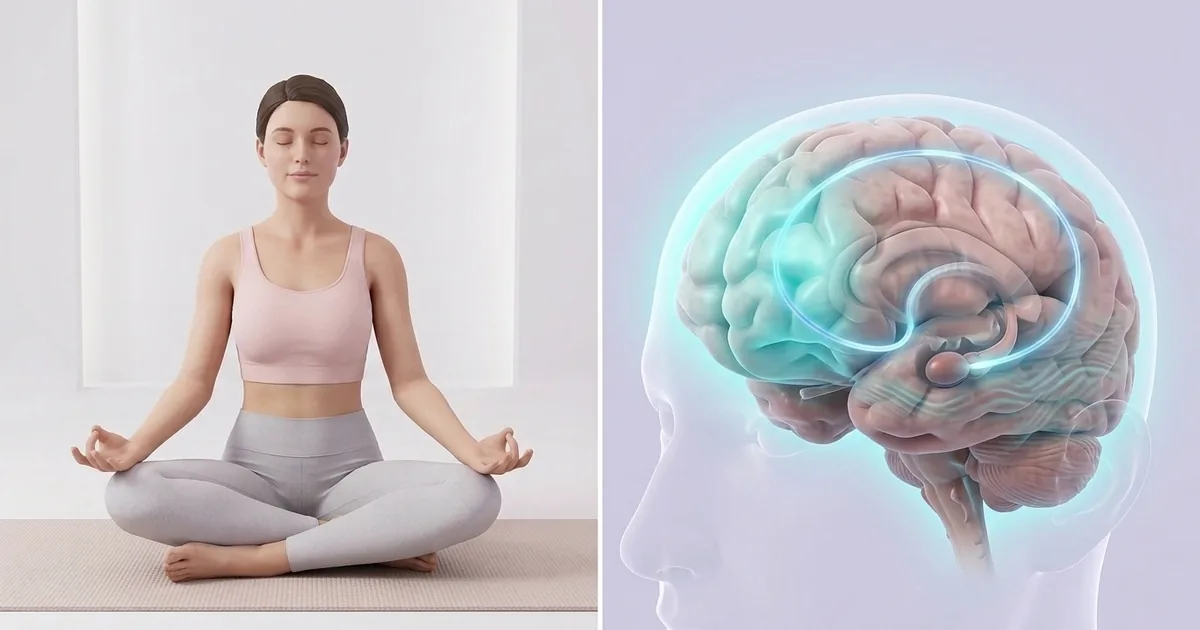
Prenatal yoga and breathing: calm for you, space for your baby
Between medical appointments, work and the endless list of things to get ready, your mind never stops for a minute. Prenatal yoga offers the exact opposite: a moment each day where only your breath, your body and your baby exist. You don't need to be flexible or to have ever set foot on a mat. All you need is a quiet corner, comfortable clothes and ten minutes. The rest follows on its own.
What prenatal yoga really gives you
Moving gently during pregnancy has well-documented benefits: less lower-back pain, better sleep, a brighter mood and a body that arrives at labour with more to draw on. Prenatal yoga gathers all of that into a single practice because it combines two ingredients: gentle mobility and conscious breathing. It isn't about performance or the perfect magazine-cover pose. It's about feeling a little better today than yesterday — and reaching the big day knowing your body and trusting it.
Four star poses, simple and safe
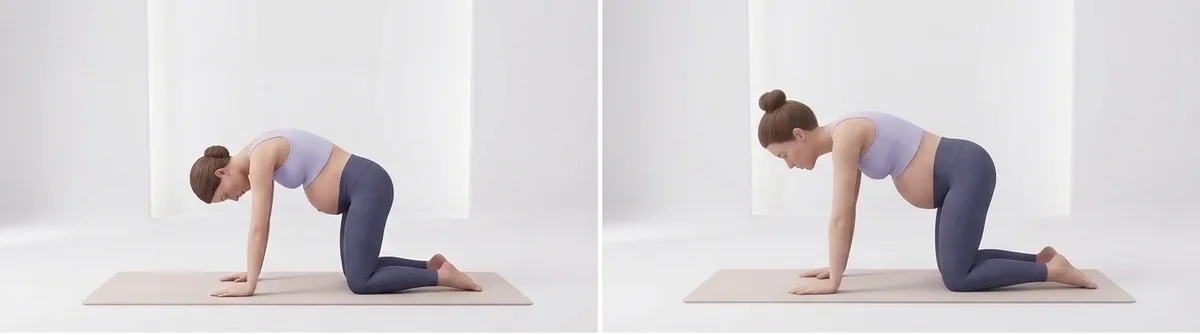
The first is the classic cat-cow: on all fours, hands under your shoulders and knees under your hips, round your back as you exhale and open it gently as you inhale. That rocking motion mobilises the whole spine and brings direct relief to a tired lower back. The second, easy pose: sitting cross-legged, spine long but not stiff, hands on your knees or your belly, breathing slowly through your nose. The third, side stretches: one arm toward the sky and a gentle lean to the opposite side — they open space between the ribs and give you room to breathe, which is welcome as your baby takes up more space. And the fourth, an adapted child's pose: from all fours, take your hips back toward your heels with your knees wide apart to make room for your bump, arms stretched out in front and forehead resting down. This is your pause: come back to it whenever you need it.
The breath: your anchor today… and on the day you give birth
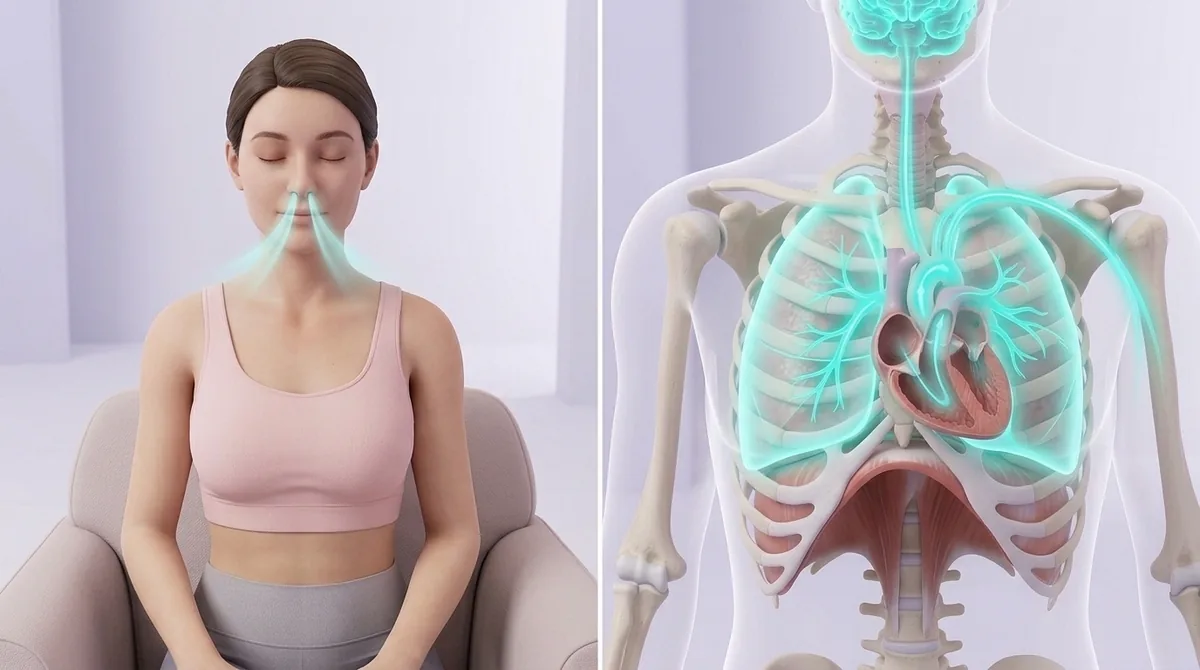
The secret fits in one sentence: breathe out for longer than you breathe in. For example, inhale to a count of 4 and exhale to a count of 6, through your nose if that feels comfortable. That lengthened exhale switches on your calm mode: your shoulders drop, your rhythm softens, your mind stops racing. And there's more: this same breath is a direct tool for the day you give birth. It's what will help you move through contractions one by one, without fear taking over. Every minute you practise now is a resource you'll have to hand on that day. A few minutes daily is enough.
What's best avoided with a bump
Prenatal yoga is safe precisely because it adapts. During pregnancy, a few things come off the mat: lying flat on your back for long stretches in the third trimester, deep closed twists (gentle open ones are fine), face-down poses, hot yoga, and bouncing or risky balances. And one golden rule: listen to your body. During pregnancy, relaxin makes your joints looser — you'll notice you reach further than before in stretches, and that's exactly why you shouldn't push for the maximum. Stay within a comfortable range, keep well hydrated and stop at any discomfort. Better five pleasant minutes than twenty forced ones.
So where do I start?
The ideal is a prenatal yoga group with a certified teacher: they correct your poses, adapt each exercise to your trimester and, along the way, you meet other mums-to-be. If there's no group nearby or you'd rather stay in your living room, always choose videos made specifically for pregnancy — a "regular" class isn't designed for your body right now. And do mention at your antenatal check that you've started: the answer will almost always be a "go ahead".
Your questions, answered
From which week can I start?
If your pregnancy is going well, almost always from the start: gentle activity is recommended throughout pregnancy. Confirm it at your next antenatal check — especially if you have any particular condition — and start slowly, with short sessions.
How long per session?
You don't need an hour. With 10-20 gentle minutes you already feel the benefits, especially if you're consistent. Regularity beats length: better a little almost every day than one big session a week.
What if I've never done yoga?
Perfect: prenatal yoga is designed for starting from scratch. The poses are simple, the pace is slow and no one will ask you to be flexible. In fact, many women discover yoga precisely during pregnancy.
Does it really help with labour?
Long-exhale breathing and opening positions (such as all fours or knees wide) are classic tools of labour. Ask in your antenatal classes how to bring them in: reaching the big day with them already rehearsed makes a difference.
Also worth reading: Prenatal vitamins: the essentials (and what to skip) · Back pain in pregnancy: the moves that bring relief
Your mat is waiting in the app
Mama4care includes 9 guided prenatal yoga videos, made for pregnancy and for practising at home at your own pace. Log your activity when you finish and watch how, week by week, calm becomes a habit.
Download the appThis article is for information only and has been reviewed by the Mama4care team. It does not replace medical advice: for any question about your health or your baby's, talk to your midwife, doctor or paediatrician. In an emergency, call your local emergency number.