Back pain in pregnancy: the moves that really bring relief
The lower back that aches by the end of the day, the pelvis that protests as you get up off the sofa… If your back is complaining, you haven't done anything wrong: more than one in two pregnant women experiences lower-back pain during pregnancy. It's one of the most common minor complaints — and one of those you can genuinely do something about, with simple everyday moves. Here are the ones that make a difference.
Why your back takes a beating (it's not your fault)
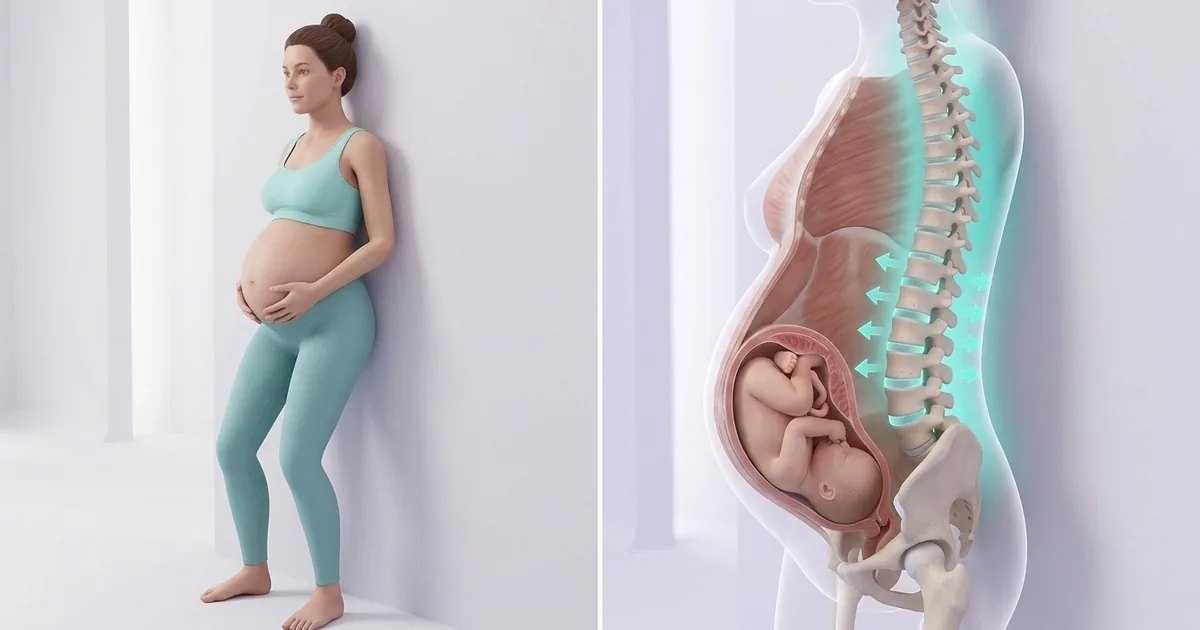
Three mechanisms gang up on your lower back. First, the weight of the bump shifts your centre of gravity forward: your back compensates by arching more, and this increased curve tires the lower-back muscles. Next, pregnancy hormones — including the famous relaxin — soften ligaments and joints to prepare the pelvis for birth: very useful for the big day, less so for everyday stability. Add tiredness and broken nights, and you have the full cocktail. Understanding this changes everything: your back isn't "fragile", it's working extremely hard.
The everyday moves that protect you
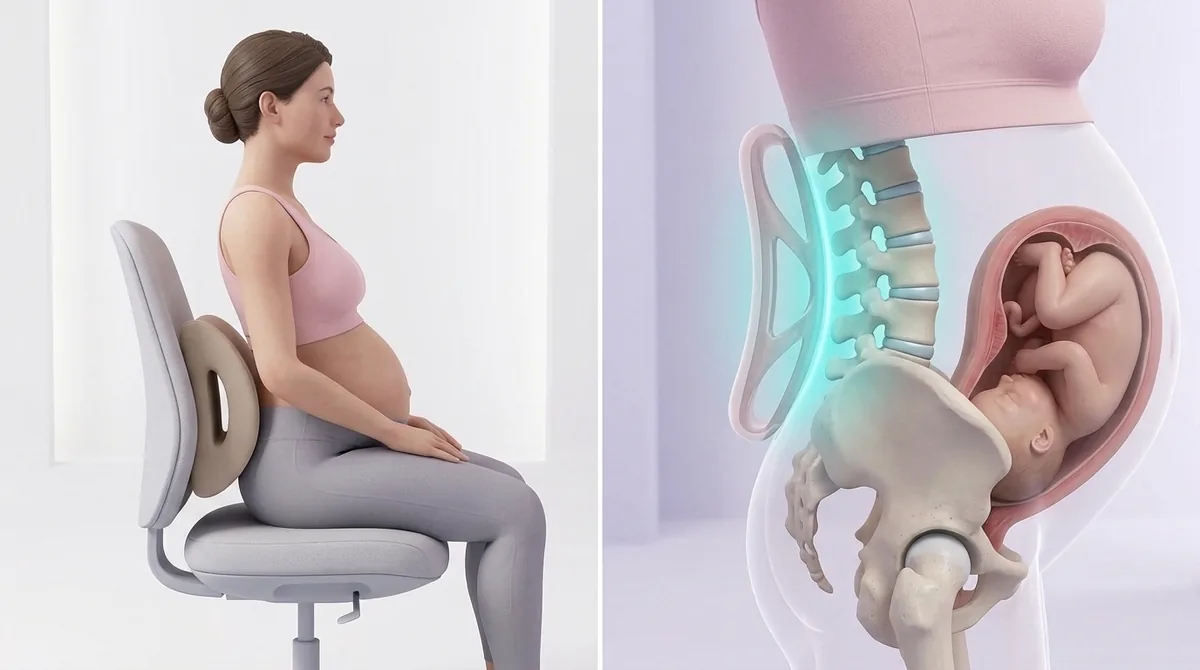
The first reflex: to pick something up off the floor, bend your knees, keep your back straight and the object close to your body — it's the legs that push, not the back that pulls. Avoid carrying heavy loads on one side (the handbag that weighs a tonne, your older child always on the same hip): spread the load, or hand it over without a second thought. As for shoes, go for stable models with a small heel: high heels deepen the arch, and completely flat soles cushion nothing. If you work sitting down, a lumbar cushion supports the small of your back; sitting or standing, give yourself regular breaks to change position, walk a few steps, stretch.
Moving, the best remedy of all
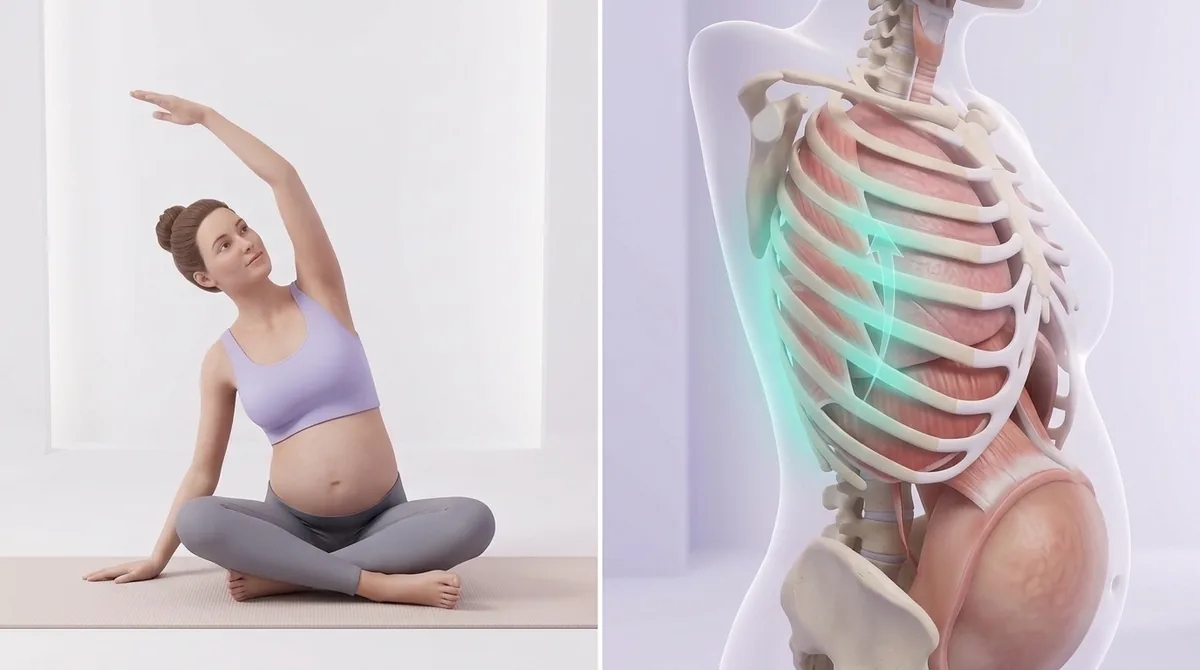
Instinct says "rest", but the opposite is what helps: staying still makes lower-back pain worse, whereas gentle physical activity, suited to pregnancy and done regularly, improves it. The safe bets: walking, swimming or prenatal aquafit (the water carries the bump, a real break for the back), prenatal yoga and gentle stretches. The star exercise remains the cat stretch: on all fours, gently round the back as you breathe out, then return to neutral — a few repetitions a day are enough to release the whole lower-back chain. And gentle heat nicely complements movement: a warm (never scalding) hot-water bottle on the lower back or a warm shower at the end of the day relaxes the muscles.
The support belt: a helping hand, not a permanent crutch
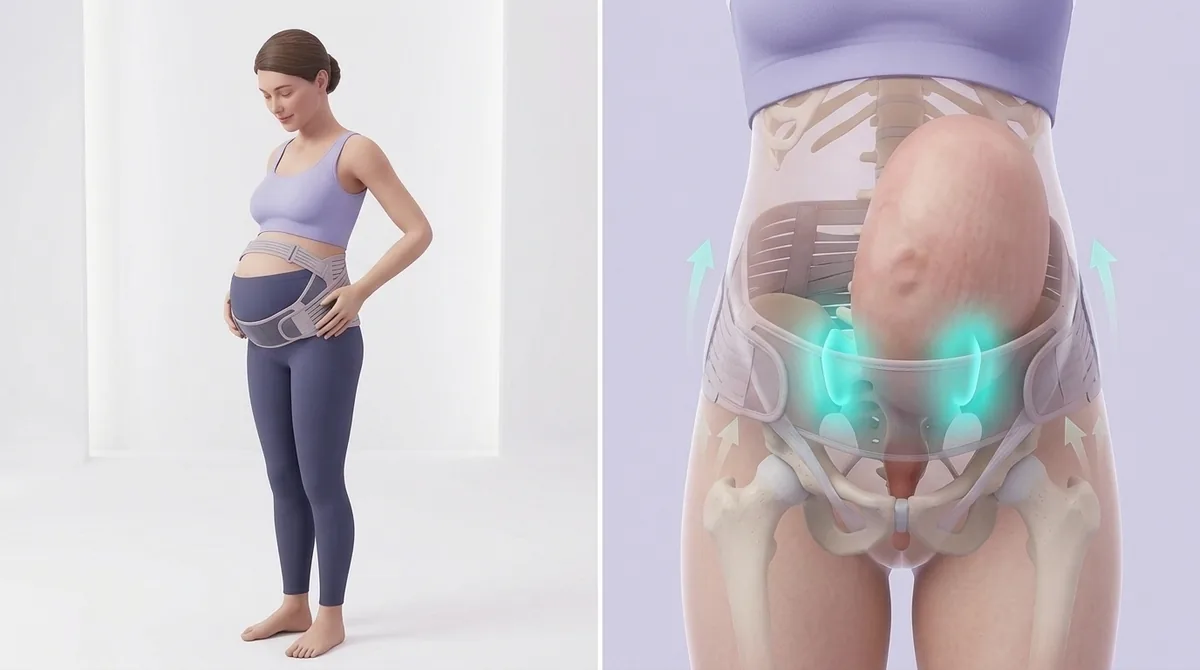
The lumbar or pelvic support belt can genuinely bring relief, particularly on long walks, journeys or busy days. But it's used occasionally, as a top-up, not continuously: worn all day, it would do the job in place of your muscles, which precisely need to stay active. Ask your midwife or a physiotherapist for advice on choosing the right model and the right positioning. And if the pain sets in, follow-up with a physiotherapist or osteopath used to working with pregnant women can help a lot — raise it at your next appointment.
And at night? The back heals in sleep too
A good part of the relief happens in bed: sleep on your side, a pillow between your knees to align the pelvis, and possibly a small pillow under the bump to support it. A nursing pillow does the job very well. To get out of bed without waking the pain: roll onto your side first, legs out of the bed, then push up on your arms — the back stays straight, and it'll thank you when you wake.
Your questions, answered
Can I wear the support belt all day?
No — it's used as a top-up, for targeted moments (a long walk, a day on your feet, a journey). Continuously, it would take over from your muscles, which need to stay active. Your midwife or physiotherapist will help you find the right balance.
Pain going down into the buttock or leg: is it sciatica?
Possibly — or a similar syndrome, such as piriformis syndrome, which is common during pregnancy. Only a professional can tell them apart: talk to your midwife or doctor, who can refer you to a physiotherapist. Tailored sessions bring good relief.
Am I allowed to take a painkiller?
Only the one approved by your doctor or midwife, at the dose they specify. No self-medicating during pregnancy, even with over-the-counter products or things already in your medicine cabinet: some are not recommended. If the pain resists the simple moves, see a professional.
Will the back pain go away after birth?
In most cases, yes, gradually: your centre of gravity settles back and your hormones normalise over the weeks. If the pain persists after the birth, raise it at your postnatal check-up — rehab (the pelvic floor, then the back and abdominals) is there precisely for that.
Also worth reading: Sleeping well while pregnant: the positions and tips that change everything · Your hospital bag: the stress-free checklist
A soothed back is maintained every day
In Mama4care, follow the guided prenatal yoga sessions on video — gentle exercises designed for pregnancy — and log your pain in the symptom journal: the summary will be ready to talk through at your next appointment.
Download the appThis article is for information only and has been reviewed by the Mama4care team. It does not replace medical advice: for any question about your health or your baby's, talk to your midwife, doctor or paediatrician. In an emergency, call your local emergency number.