The hospital bag: the checklist that takes the stress away
It sits in a corner of the bedroom, half open, and it crystallises a lot of worry over not very much: the hospital bag is, at heart, just a matter of comfortable clothes and well-organised paperwork. Packed at the right time, in the right categories, it comes together in one afternoon — and it lifts a real weight off your shoulders. Here is the sensible checklist, without the forty "essential" items that are never used.
When should you pack it? Around the eighth month
The right window is around the eighth month, at roughly 32 to 36 weeks. Early enough to be ready if baby decides to arrive a little ahead of schedule, late enough that you won't spend two months deprived of your favourite nightdress. There's no need to buy everything: most of it is already in your cupboards. The goal isn't a perfect bag, it's a finished one. And to find your way around it on the day, think of it as four sets: labour, your stay, baby, the paperwork.
For labour: a small bag inside the bag
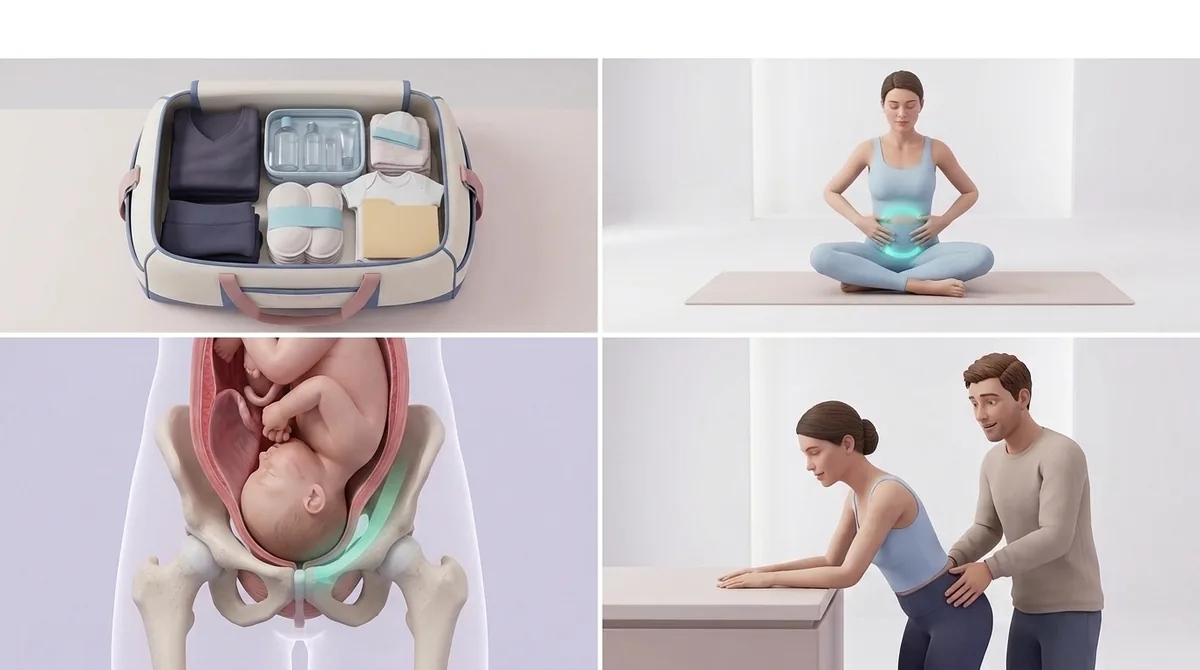
During labour, you'll only need a few things — but the right ones, gathered in a bag that's easy to grab: a loose T-shirt or a comfortable nightdress (one you won't mind getting stained), a facial mist spray, a lip balm — the air in delivery rooms is very drying — warm socks, a hair tie, your charger with a long cable (sockets are rarely next to the bed), your earphones and a playlist that does you good. And some snacks for your birth partner: labour can last for hours, so best to avoid a hungry teammate.
For your stay: comfort first
Plan for three to four days on the ward, a little longer after a caesarean. In the bag: nightdresses that open at the front if you plan to breastfeed, nursing bras, very comfortable knickers — disposable or cotton, it doesn't matter, as long as they don't dig in — highly absorbent maternity pads (the bleeding of the first few days is heavy, and that's expected), your washbag, a bath towel, and a soft going-home outfit: the one from your sixth month of pregnancy, not from before. The belly takes weeks to settle back down, and that's exactly as it should be.
For baby: two sizes, always
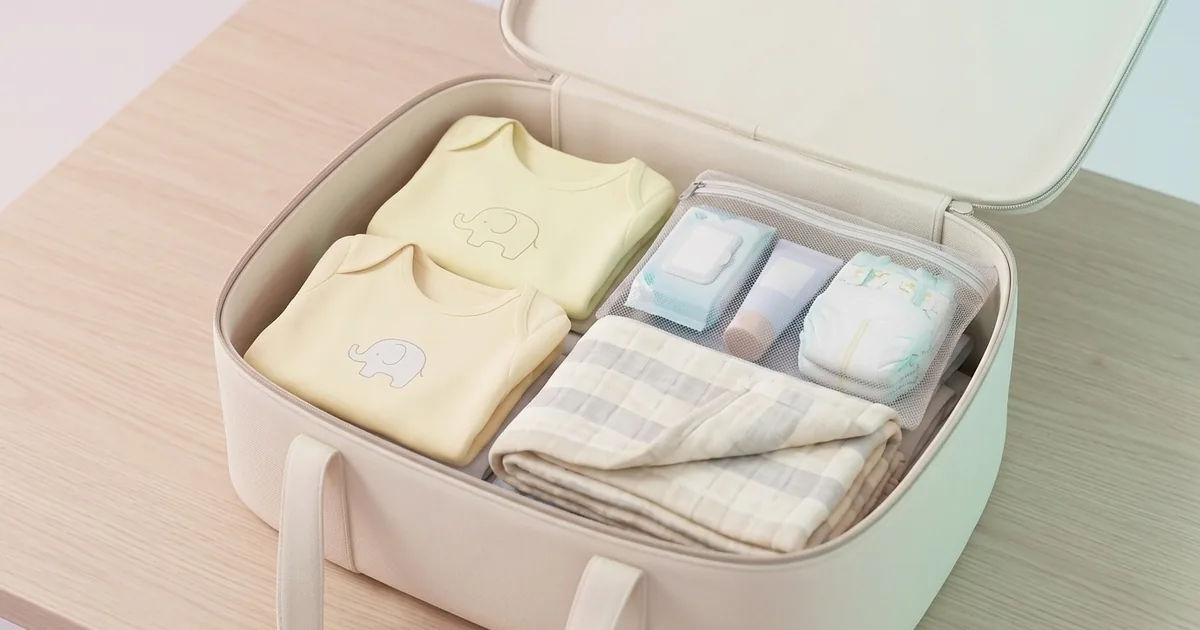
The classic slip-up: packing only "newborn" size for a baby who arrives straight into 1-month clothes. The workaround: slip in 6 to 8 bodysuits in each of the two sizes, newborn and 1 month, with matching sleepsuits. Add a sleeping bag, a hat, a warm cardigan and a blanket — newborns still regulate their temperature poorly — a pack of newborn nappies and a going-home outfit suited to the season. And above all, the car seat: it's compulsory for the drive home, rear-facing, and it goes in ahead of time, calmly — not in the hospital car park with a newborn in your arms.
The paperwork: the pouch that opens doors
This is the least fun part and the most important: your pregnancy notes with your latest test results, your ID, your health or insurance card depending on your country, your family record book if you have one, and your birth plan if you've written one. Gather it all in a dedicated pouch, placed on top of the bag: in case of a sudden departure, that's the part that really matters.
Your questions, answered
What if I give birth before the bag is finished?
Breathe: the essentials come down to two things — the document pouch and the car seat. Everything else can be brought by a loved one during your stay, or covered by the maternity unit for the first few hours. No one has ever had a worse birth because of an unfinished bag.
How many days should I plan for?
Plan for three to four days for a birth without complications, a little longer after a caesarean. There's no need to overpack: a loved one can always bring a change of laundry if the stay runs on.
Should the partner or birth companion pack a bag too?
Yes, a small one: a change of clothes, a washbag, some snacks, their charger. Labour can be long, and they'll be far more useful rested and fed than off hunting for a sandwich at the wrong moment.
Do I need to bring milk and bottles?
Generally, the maternity unit provides what's needed during your stay, including if you aren't breastfeeding. Arrangements vary from one place to another: ask at your pre-admission appointment — that's what it's for.
Also worth reading: Contractions: how to recognise real labour · After birth: your first month of recovery
Your birth plan, ready at the same time as the bag
With Mama4care, fill in your preferences calmly in the built-in birth plan (Postpartum section), export it as a PDF for the document pouch, and tick off your appointments in the checklist — it's all in one place.
Download the appThis article is for information only and has been reviewed by the Mama4care team. It does not replace medical advice: for any question about your health or your baby's, talk to your midwife, doctor or paediatrician. In an emergency, call your local emergency number.