
After birth: your first month of recovery, no taboos
We talk a lot about birth, and very little about what comes after. Yet the first postpartum month is a genuine convalescence: your body has just run a marathon, and it's repairing itself. Here, with no taboos, is what's normal, what should send you to a professional, and how to help yourself — starting by laying down one thing: recovery is measured in weeks, and no one should "bounce back" in a fortnight.
Lochia and afterpains: the uterus clears out
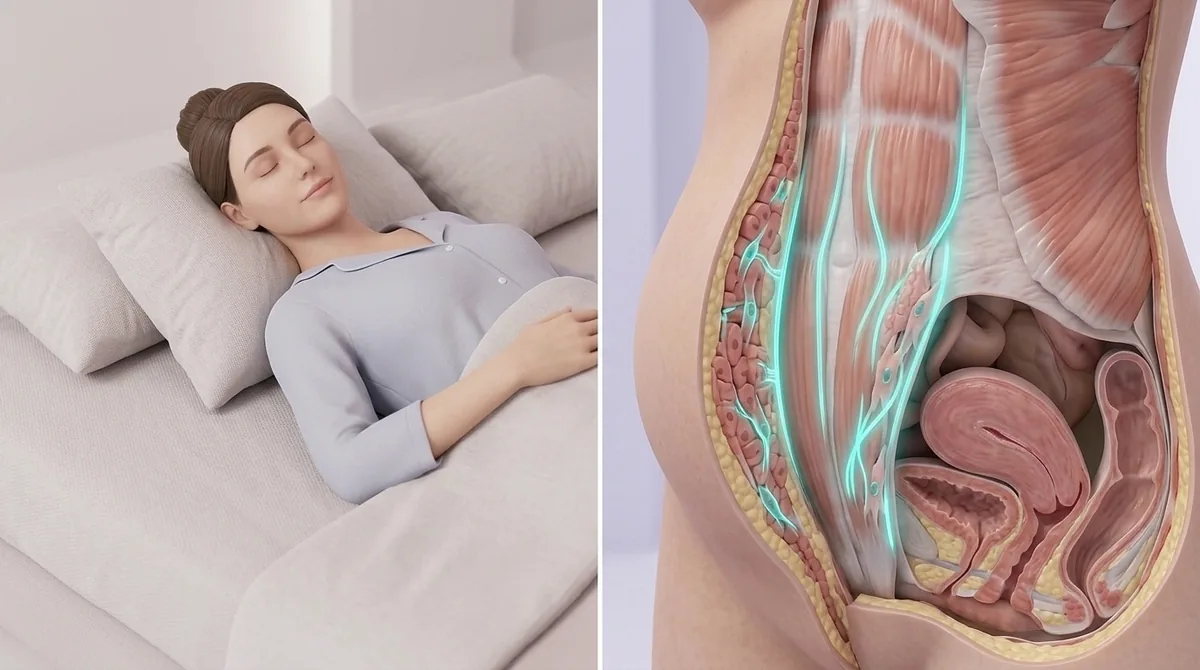
After the birth, bleeding known as lochia lasts 2 to 6 weeks: red in the first few days, then brownish, then lighter and lighter. It's a sign that the uterus is cleaning itself and gradually returning to its size. This process comes with afterpains: contractions that are sometimes sharp, more pronounced during feeds — breastfeeding stimulates the uterus — and often stronger from the second baby onwards. Uncomfortable, but normal and temporary.
Perineum, scars: gentleness required
The perineum gave a great deal, and it's tender — with or without stitches. The good habits: simple hygiene with water, drying by patting rather than rubbing, a cushion to sit on if needed. If there are stitches, a bath will wait for the green light from a professional. After a caesarean, remember it's real abdominal surgery: for six weeks, don't lift anything heavier than baby, and keep an eye on the scar — redness, discharge or pain that's increasing all warrant a professional's opinion.

Sleep and delegate: your real to-do list
"Sleep when baby sleeps" isn't a grandmother's cliché: it's the strategy. Broken nights are made up in small doses during the day, not with one miracle night. The rest follows a simple rule: everything that isn't baby and you can be delegated. The shopping, the laundry, the meals, the visits that tire you more than they help: say yes to concrete help, no to guests you have to entertain. Your only mission this month: recover, feed baby and get acquainted.
The postnatal check-up: the appointment not to skip
Between 6 and 8 weeks after the birth, the postnatal check-up gives a full review: healing, bleeding, mood, contraception — and a prescription for pelvic floor rehabilitation. It's this appointment that gives the green light to return to high-impact exercise (running, jumping, ab work), never before. Gentle walking, on the other hand, can resume as soon as you feel comfortable, at your own pace.
Baby blues or postnatal depression: telling them apart
Around the third to fifth day, many new mums go through the baby blues: tears for no reason, heightened sensitivity, emotions on a rollercoaster. It's very common, and it fades within about two weeks. If it lasts beyond that, if the sadness or anxiety are intense, if you feel nothing for your baby or if dark thoughts appear, it may be postnatal depression: it's common, it's treatable, and talking about it early with your midwife or doctor isn't an admission of weakness — it's an act of strength.

Your questions, answered
When can I go back to exercise?
Gentle walking, as soon as you feel comfortable. For everything else — running, strength training, high-impact sports — wait for the postnatal check-up and pelvic floor rehabilitation: that's the order that protects your pelvic floor for years to come.
When is it okay to have sex again?
When you feel ready — and not before. Many couples wait until the postnatal check-up, and that's absolutely fine. Apprehension, dryness, tiredness: all of that is common and can be raised openly with your midwife, who has solutions.
I cry every evening, is that normal?
In the first two weeks, it's very likely the baby blues: common, linked to the upheaval of birth, and temporary. If the crying persists beyond that, or if the sadness is intense from the start, talk to your midwife or doctor without waiting for the 6-week check-up.
How long does the bleeding last?
Lochia usually lasts 2 to 6 weeks, getting lighter progressively. If it turns bright red and heavy again after easing, or if it smells bad, seek advice: it may be a sign that you're doing too much, or that a quick check is in order.
Also worth reading: Skin-to-skin: why it's so precious · Baby sleep: the simple habits that keep it safe
A month of recovery, supported day after day
Mama4care's postpartum mode follows you step by step: day-by-day recovery check-offs, mood tracking, a clear report to show your midwife — and the assistant available at any hour, even when the whole house is asleep.
Download the appSources
This article is for information only and has been reviewed by the Mama4care team. It does not replace medical advice: for any question about your health or your baby's, talk to your midwife, doctor or paediatrician. In an emergency, call your local emergency number.