Safe baby sleep: the simple habits that protect your baby (0-6 months)
During the first nights with a newborn, you check their breathing every ten minutes — that's normal, and it passes. The good news: the habits that truly protect your baby's sleep are few, simple, and the same for everyone. Once they're in place, they become second nature and you'll sleep (a little) more easily.
On the back, for every sleep
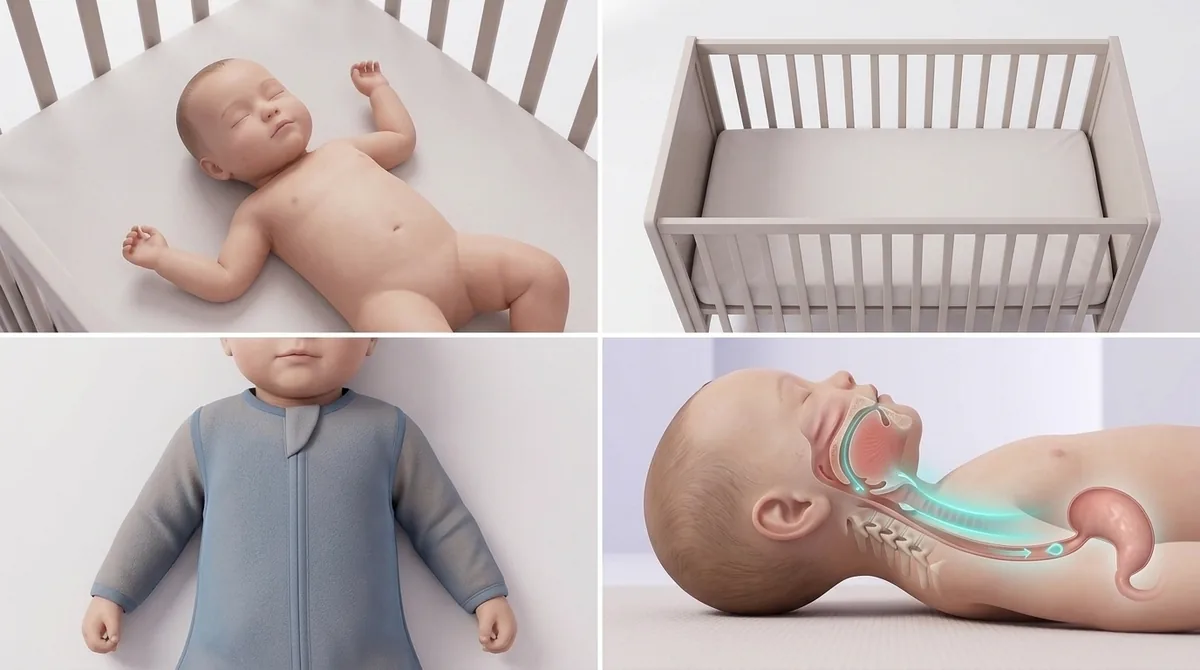
This is THE thing to remember: your baby sleeps on their back, for the night as for every nap, until their first birthday. This position keeps the airways clear, and it's the habit whose protective effect against sudden infant death is best proven. Don't worry about spit-up: on their back, a healthy baby naturally swallows it or brings it back up. And once they can roll over on their own both ways, there's no need to reposition them — simply lay them down on their back to begin with.
An empty crib — truly empty
The perfect bed for a baby looks like an almost bare bed: a firm mattress that fits the crib, a well-tucked fitted sheet, and that's all. No blanket, no pillow, no bumper, no positioning cushion, no soft toy — even the cutest one will have to wait until the first birthday. To keep your baby warm, the solution is the sleep sack (baby sleeping bag): it keeps them warm without ever riding up over the face.
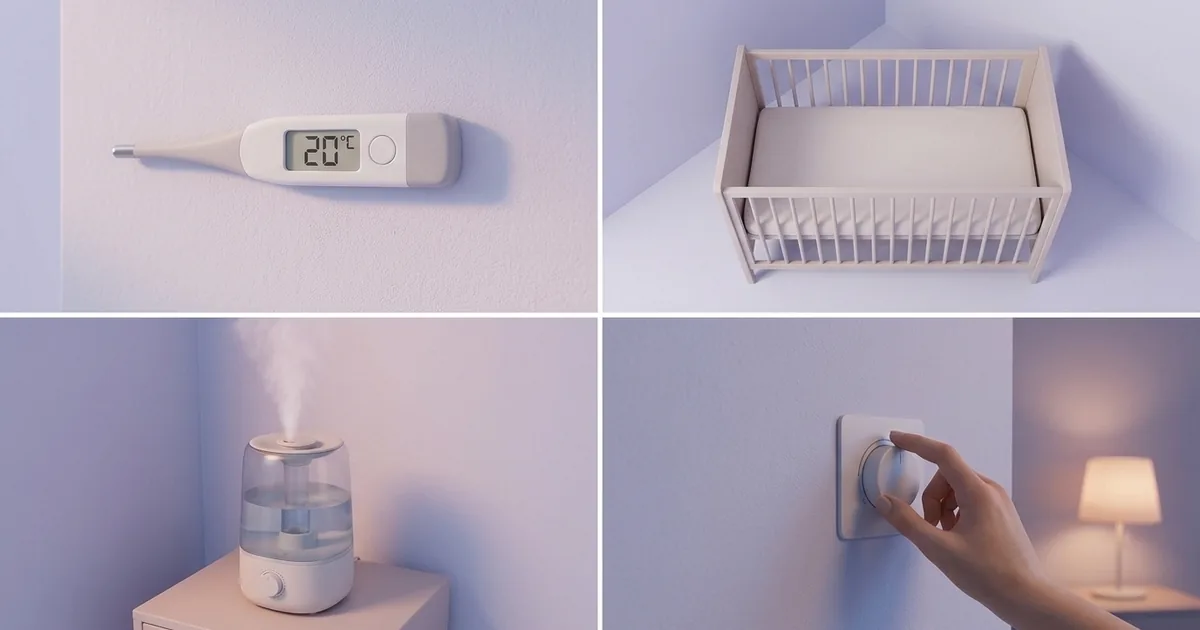
A room around 18-20 °C
A baby is not good at protecting themselves from heat, and overheating is one of the identified risk factors. Aim for a room between 18 and 20 °C — cooler than you might imagine. To tell whether your baby is too warm, don't rely on their hands (often cool, which is normal): place two fingers on the back of the neck. Damp and hot? Take off a layer. A hat is for outdoors: never for sleeping.
In your room, not in your bed
Having your baby sleep in the parents' room, in their own bed, is recommended at least for the first 6 months: you hear them, they sense you, and this closeness is itself protective. Sharing the adult bed, on the other hand, increases the risks — a duvet, pillows and a soft mattress don't offer the same margin as a baby's bed. The good compromise: a bassinet or bedside (co-sleeper) crib pushed up against your bed.
The other allies of safe sleep
Three additions that count: a smoke-free environment (during pregnancy and after), breastfeeding when it's possible — both are associated with a reduced risk —, and a dummy (pacifier) as your baby falls asleep, if they accept it (without attaching it with a cord, and without forcing it back in if it falls out). Finally, the bouncer, the car seat and the sofa are not places for sleep: to sleep, move your baby onto a flat, firm surface.
Your questions, answered
My baby sleeps better on their tummy — what do I do?
Many babies seem to sleep "better" on their tummy — precisely because they sleep more deeply, which isn't desirable at this age. Keep the back for all sleep; the tummy is for supervised awake time (the famous tummy time), excellent for their motor development.
When can I give them a blanket?
The simple rule: no blanket or pillow before one year. Until then, a sleep sack suited to the season covers all needs, from high summer to the depths of winter.
Is a baby positioner or anti-flat-head cushion a good idea?
No — no positioning device is recommended in the crib, and some are explicitly advised against. To prevent a flat head, what works is varying the head's orientation at bedtime and increasing awake time on the tummy.
What about swaddling?
If used, always on the back, hips free, and stop at the first signs of rolling over — usually around 2-3 months. If in any doubt, ask your midwife for a demonstration.
Nights are easier to get through together
With Mama4care, track your baby's nights and naps with one tap from the widget, spot the rhythm as it settles in, and ask the assistant your sleep questions — even at 3 a.m.
Download the appSources
This article is for information only and has been reviewed by the Mama4care team. It does not replace medical advice: for any question about your health or your baby's, talk to your midwife, doctor or paediatrician. In an emergency, call your local emergency number.