
Skin-to-skin: why it's so precious (and how to do it well)
A newborn baby, just arrived, laid against your chest, skin against skin. This age-old gesture is also one of the most studied moments of birth: it soothes, it warms, it helps breastfeeding get started — and it needs no equipment at all. Here's why skin-to-skin is worth its weight in gold, and how to practise it safely, in hospital and then at home.
What skin-to-skin brings to baby (and to you)
Against you, your baby rediscovers everything they know: your smell, your voice, the beat of your heart. The observed benefits are concrete: skin-to-skin helps the newborn regulate their temperature, their heart rate and their blood sugar, they cry less, and the start of breastfeeding is made easier — many babies crawl towards the breast on their own within the first hour. And the calming effect is mutual: the contact does the parent good too. For premature or low-birth-weight babies, this practice has a name, "kangaroo care", and the WHO recommends it because it saves lives.
The first hour: a golden window
The WHO recommends skin-to-skin from birth and uninterrupted for the first hour, when the mother's and the baby's condition allow. Non-urgent care (weighing, measurements) can often wait. Good news: in many maternity units, it's also possible after a caesarean, in the operating theatre or as soon as you reach recovery. Don't hesitate to talk to the team about it before the day, and to write it into your birth plan: asking is already halfway to making it happen.

Dad or partner too
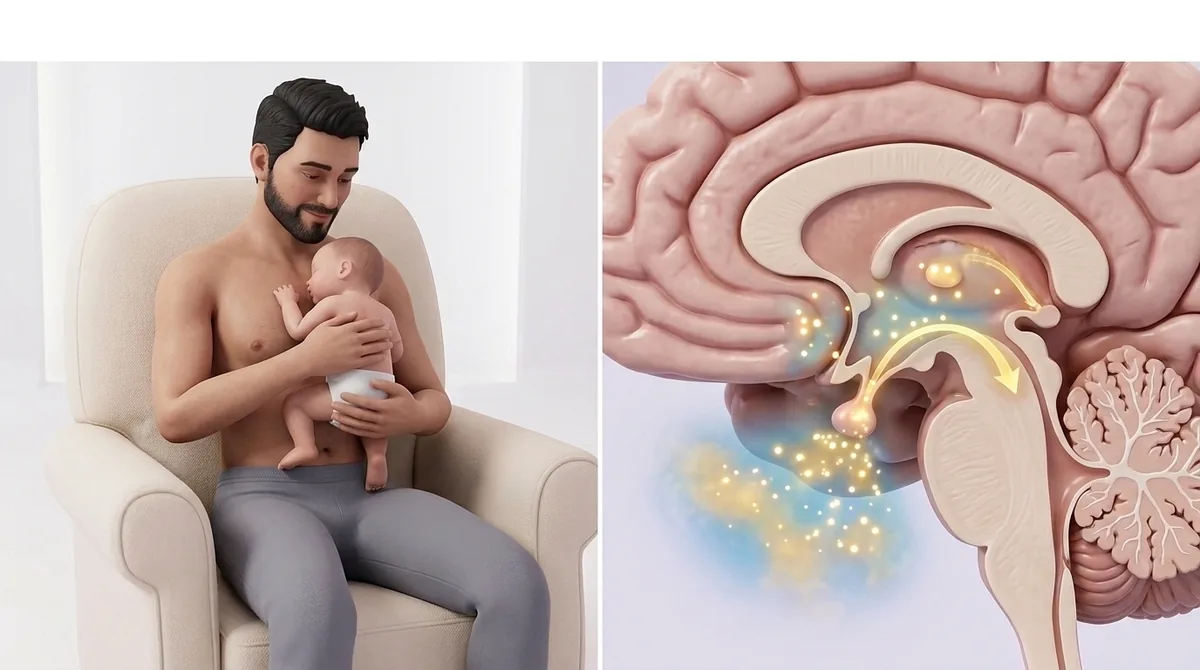
Skin-to-skin isn't just for mum. Against dad's or the partner's chest, baby enjoys the same soothing effects, and the bond forms from the very first hours. It's especially valuable after a caesarean, when mum is still in recovery: the partner steps in, and baby stays warm against someone who loves them. Many dads describe this moment as their true first meeting with their child.
How to do it well
The method is simple, but every detail matters. Baby is naked, in just a nappy, laid against your bare chest, in a vertical position. Their head is turned to the side, their face always visible and clear: nose and mouth free, nothing covering them. For warmth, a blanket goes over baby's back — never over their head. And one golden rule: during skin-to-skin, the parent stays awake and attentive. If tiredness gets the better of you — which is common and quite normal in the first few days — put baby on their back in their cot, or hand them to someone. You never fall asleep together in an armchair or on a sofa.
And at home, it continues
Skin-to-skin doesn't stop at the maternity unit's doors. In the first few weeks, treat yourself to regular sessions: during feeds, after the bath, in those moments of crying when nothing else seems to work. Settle in comfortably, in a quiet spot, with no clock watching. These pauses help baby regulate, support breastfeeding — and give you, too, a real break.
Your questions, answered
How long should a skin-to-skin session last?
There's no strict rule: even 20 to 30 minutes already bring benefits. Do it as much as you like, according to your wishes and baby's — it's the shared pleasure that counts, not the clock.
Up to what age can you do skin-to-skin?
For as long as you and your baby enjoy it! The first few weeks are the most precious time, but there's nothing to stop you carrying on with skin-to-skin cuddles over the months.
What about after a caesarean?
It's often possible, in the operating theatre or as soon as you reach recovery, depending on your condition and how the maternity unit is set up. Otherwise, the partner steps in for the time being. The simplest thing: ask the team before the birth.
Baby brings up milk during skin-to-skin, is that normal?
Yes, small posits are common in newborns, in skin-to-skin as elsewhere. The vertical position even tends to limit them. Keep a muslin within reach, and mention it to your midwife if they seem significant to you.
Also worth reading: After birth: your first month of recovery · Baby sleep: the simple habits that keep it safe
These first moments, keep a record of them
With Mama4care, track feeds, sleep and your skin-to-skin moments day by day, and ask the assistant your questions — it answers gently, at any hour.
Download the appSources
This article is for information only and has been reviewed by the Mama4care team. It does not replace medical advice: for any question about your health or your baby's, talk to your midwife, doctor or paediatrician. In an emergency, call your local emergency number.