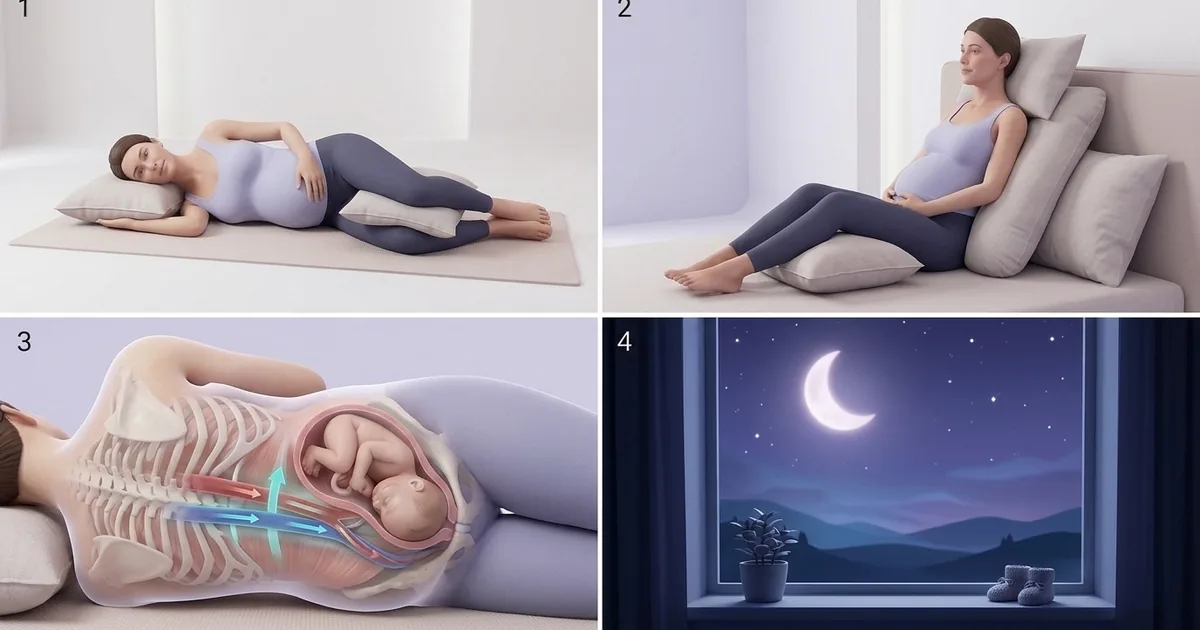
Sleeping well while pregnant: the positions and tips that change everything
A growing belly, a baby wriggling about, an urgent need to pee at 2 a.m. then again at 4… and a brain that redecorates the nursery in the middle of the night. If your pregnancy nights look like this, you're in excellent company: sleep goes off the rails for most mums-to-be, especially in the third trimester. The good news is that a well-chosen position and a few well-placed pillows genuinely change things. Here's everything you need to know, without the pressure.
From the third trimester: fall asleep on your side
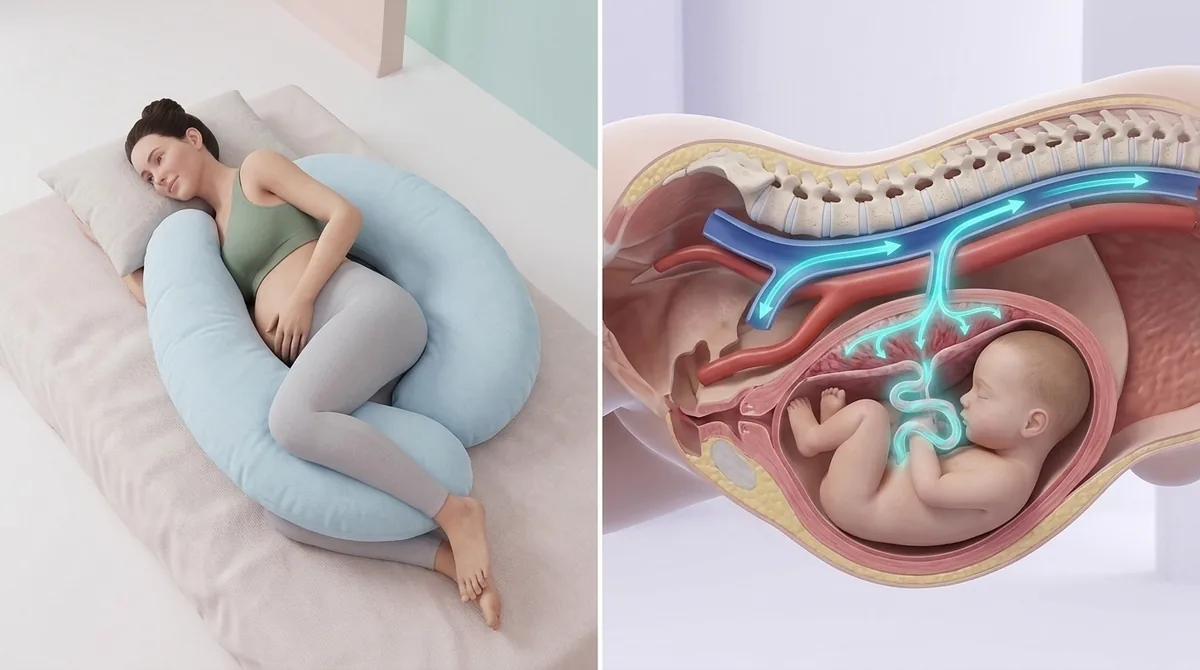
This is THE thing to remember: from the third trimester onwards (around 28 weeks), the guidance is to fall asleep on your side rather than on your back. Why? Lying flat on your back, the uterus — now nice and heavy — presses on the vena cava, the large vessel carrying blood back up to the heart. The result: poorer circulation, for you and for your baby. Studies have in fact linked falling asleep on the back late in pregnancy with an increased risk of stillbirth, which led campaigns such as Tommy's "Sleep on side" to recommend the side for every night and every nap of the final trimester.
The left side is often cited as the most favourable for circulation, but the key point is simple: a side, whichever one, rather than the back. And in early pregnancy? Sleep however you're comfortable — it really is in the third trimester that position matters.
Woke up on your back? Breathe, all is well
This is the question that causes the most anxiety, so let's say it clearly: waking up on your back is not a problem. We move naturally in our sleep, no one controls their night-time positions — and it's the falling-asleep positions that have been studied and that matter. If you open your eyes flat on your back, gently roll back onto your side and drift off again. That's all. No guilt, no sleepless night standing guard over yourself. A pillow tucked behind your back can also help you stay on your side for longer.
Pillows, your best allies
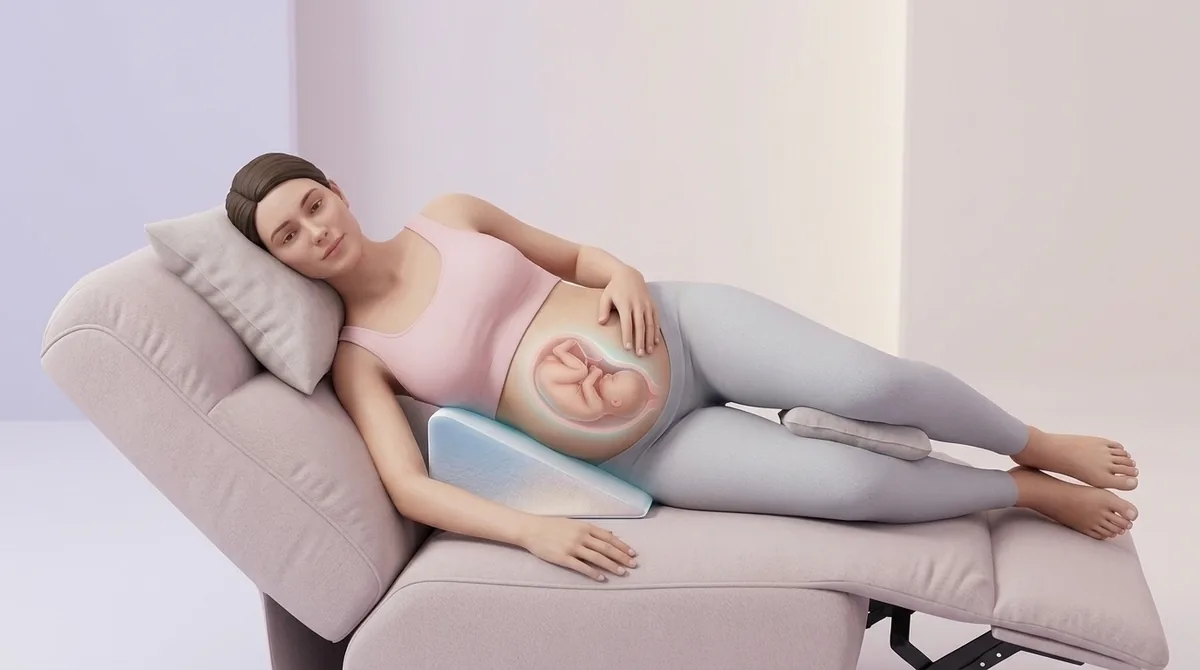
Sleeping well while pregnant is often a matter of architecture. The winning combination: a pillow between your knees (it aligns the pelvis and eases the lower back), a small pillow under the bump to support it, and possibly a third behind your back. The nursing pillow, with its banana shape, does all of this on its own — and it'll come in handy again after the birth, making it one of the most worthwhile buys of pregnancy. If your legs feel heavy in the evening, end the day with your legs slightly raised.
Reflux, urgent trips, waking up: the tips that help
Is heartburn waking you up? Raise the head of the bed or sleep in a semi-upright position, and adjust your dinner: light, and finished 2 to 3 hours before bed. For the night-time trips to the toilet, the right move is to drink well throughout the day and ease off on fluids in the evening — without ever restricting yourself overall. As for sleep hygiene, the classics work in pregnancy too: caffeine well away from bedtime, screens off early, a cool dark bedroom, and a small calming routine (reading, a warm shower, slow breathing).
Third-trimester insomnia: common, and normal
Waking up repeatedly, struggling to fall back asleep, a racing mind: late-pregnancy insomnia is extremely widespread. Between the cumbersome bump, the baby's movements, cramps and a mind anticipating the birth, your body has good excuses. Be kind to yourself: resting quietly while lying down, even without sleeping, is already rest. And if the tiredness becomes overwhelming, talk to your midwife — there are gentle, suitable options, no need to grit your teeth alone.
Your questions, answered
Can I sleep on my front in early pregnancy?
Yes, as long as it's comfortable. Your baby is well protected in its bubble of amniotic fluid. It's usually the bump that decides the timing: when the position becomes uncomfortable, you'll naturally switch to your side.
I often wake up on my back — should I worry?
No. What's been studied is the position you fall asleep in. If you wake up on your back, simply roll back onto your side and go back to sleep. A pillow behind your back helps limit the night-time rolling.
Can I take a sleeping pill or a "natural" sleep aid?
Never without medical advice — including over-the-counter products, herbal remedies and melatonin. Some are not recommended during pregnancy. Talk about your sleep difficulties with your midwife or doctor: they'll point you to suitable solutions.
A pregnancy pillow — genuinely useful or a gimmick?
Genuinely useful for many mums-to-be: it supports the bump, aligns the pelvis and helps you stay on your side. A banana-shaped nursing pillow does the same job and will come in handy again for feeds or bottles — no need for a pricey model.
Also worth reading: Back pain in pregnancy: the moves that bring relief · Your baby's movements: what's normal, when to worry
Your nights deserve tracking too
With Mama4care, log your nights and your tiredness in the sleep tracker to spot what really helps you — and put your night-time questions to the assistant, even at 3 a.m. when everyone else is asleep.
Download the appSources
This article is for information only and has been reviewed by the Mama4care team. It does not replace medical advice: for any question about your health or your baby's, talk to your midwife, doctor or paediatrician. In an emergency, call your local emergency number.