
Your baby's movements: what's normal, and when to call
It's one of the loveliest milestones of pregnancy: the first time your baby makes itself known. Then, very quickly, another question arrives: "Is it moving enough right now? And yesterday, wasn't it moving more?" Rest assured: feeling your baby, learning its rhythm and knowing when to pick up the phone — all of that is learned. And it's probably the most precious reflex of the entire third trimester.
The first movements: between 18 and 22 weeks
Most mums-to-be feel the first movements between 18 and 22 weeks of pregnancy. For a first baby, it's often towards the end of that window — or even a little after — simply because you don't yet know how to recognise the sensation. For later pregnancies, it's often noticed earlier. At the start, it doesn't feel like kicks at all: more like bubbles, brushes, butterfly wings. Then the weeks go by, your baby gains strength, and the real kicks arrive — sometimes sharp enough to make your partner jump, hand resting on the bump.

Around 28 weeks, your baby has ITS rhythm — and that's your benchmark
From around 28 weeks, the movements become regular and your baby settles into a rhythm of its own: times of day when it's active, others when it sleeps. Some babies are evening dancers, others get lively after meals. There's no universal "right" number of kicks — and that's exactly why the benchmark is you. You don't compare your baby to the neighbour's: you compare your baby to itself. Your task, very simple: learn its usual rhythm, day after day. It's that knowledge that will let you notice immediately if something changes.
No, your baby doesn't move less late in pregnancy
It's a stubborn myth, and it needs debunking once and for all: movements don't decrease as the due date approaches. They do change in nature: your baby has less room, so the spectacular big kicks give way to rolls, pushes and stretches you feel travel from one side to the other. But the frequency of the movements stays the same right up to the birth. A baby that's moving noticeably less is never "a baby getting ready to be born": it's a baby that needs checking.
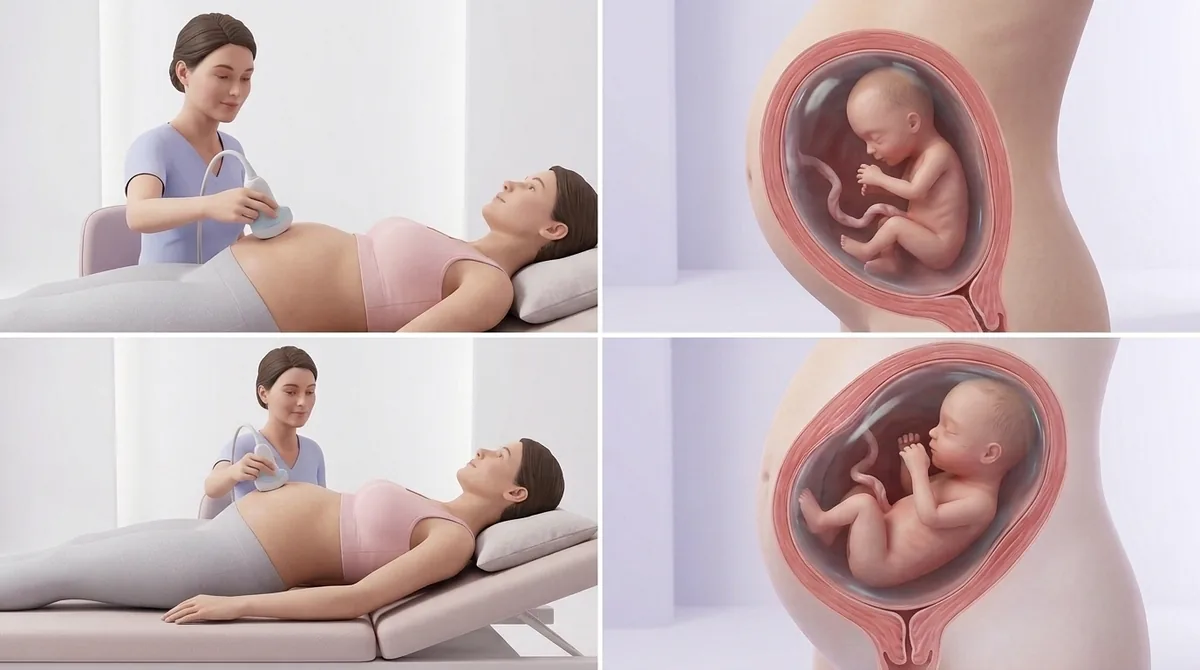
If the rhythm changes: call, straight away
If you feel your baby is moving less than usual, or that its rhythm has clearly changed, the reflex is simple: call the maternity unit immediately, at any hour of the day or night. The number is on your maternity notes — save it to your favourites right now. You don't wait until the next morning, you don't wait until the next appointment, you don't "give it one more chance" until the evening.
And forget the false solutions: the home doppler isn't reliable in untrained hands (hearing a heartbeat says nothing about your baby's condition — it may even be yours), and the great classic of the iced fruit juice isn't a medical test. If you want to settle down before calling: lie on your side, somewhere quiet, for one to two hours, and focus on the movements. But at the slightest doubt that persists, you call — without waiting for the count to finish. The teams say it themselves: they'd rather have ten false alarms than one call that comes too late. You'll never be a bother.
Your questions, answered
Does the baby's hiccups count as a movement?
These small, regular, very recognisable jolts are a sign of well-being: your baby is practising. On the other hand, hiccups don't count as a "real" movement when you're observing its activity — we're interested in kicks, rolls and stretches.
My baby moves mostly at night — is that normal?
Very common! During the day, your own movements rock it; in the evening, when you finally settle down, it wakes up. Many babies have their activity peak just as you go to bed — that's its rhythm, and it's perfectly normal.
I still don't feel anything — from when should I raise it?
Every perception has its own timeline, especially for a first baby or depending on the placenta's position. But if you still haven't felt anything by 24 weeks, mention it to your midwife or doctor at your check-up: a simple check will confirm all is well.
Its kicks in my ribs hurt — what can I do?
Late in pregnancy, your baby's feet often find their way to your ribs — painful, but harmless. Changing position, stretching with your arms raised or going onto all fours for a few moments often encourages it to reposition. If pain becomes intense or unusual, mention it to your midwife.
Also worth reading: Sleeping well while pregnant: the positions and tips that change everything · Contractions: recognising true labour
Its rhythm, in one curve
Mama4care's built-in kick counter records each session with a single tap, and the curve draws out your baby's usual rhythm over the days — the ideal benchmark for noticing any change and talking it through calmly with your midwife.
Download the appThis article is for information only and has been reviewed by the Mama4care team. It does not replace medical advice: for any question about your health or your baby's, talk to your midwife, doctor or paediatrician. In an emergency, call your local emergency number.