Prenatal vitamins: the essentials (and what to skip)
You get to the pharmacy and find a whole shelf of bottles "for pregnancy": premium formulas, 90-day packs, promises everywhere. Breathe. The science of prenatal vitamins is far calmer than the marketing: the essentials fit in a few lines, cost little… and the rest, almost always, is surplus. Let's make it clear.
The foundation is your plate, not the bottle
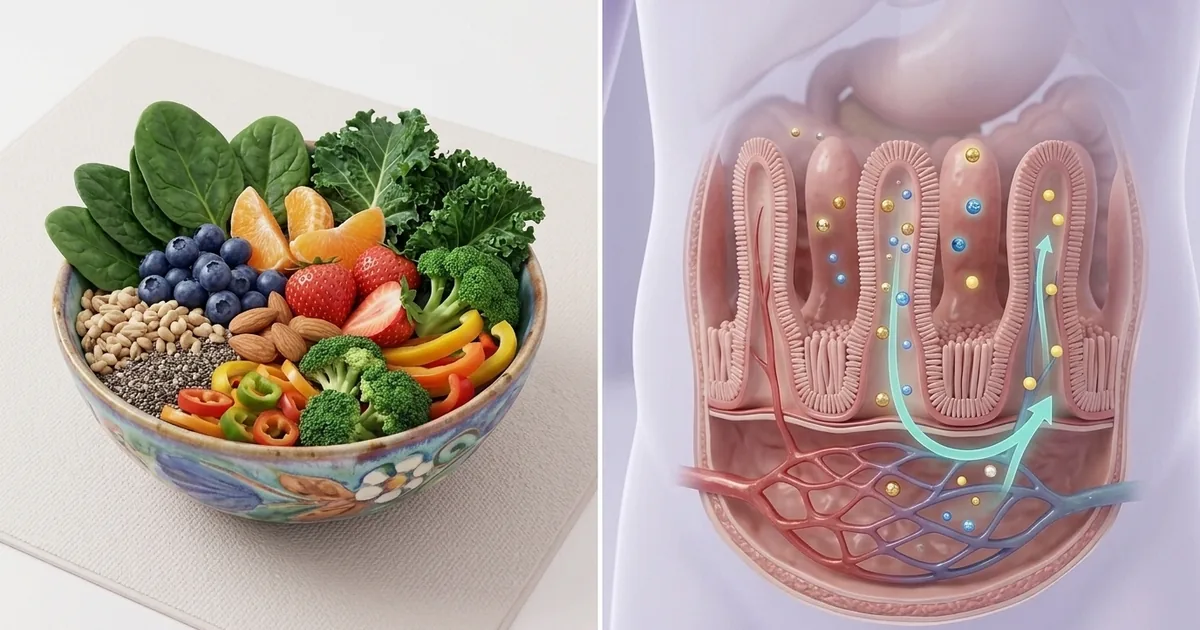
No supplement replaces a varied diet. A colourful plate — vegetables, fruit, pulses, nuts, wholegrains — covers most of what your body and your baby need, and it does so with fibre, flavour and pleasure. Supplements are named for a reason: they complement, they don't replace. Think of them as a nutritional seatbelt — important, yes, but it's the plate that does the travelling.

Folic acid: the non-negotiable
If you take away only one name, make it this one. The recommendation from the WHO and the NHS is clear: 400 µg of folic acid a day, ideally from before conception and throughout the first trimester. This nutrient plays a part in forming the neural tube — the structure from which your baby's brain and spinal cord will grow — which closes in the first few weeks. That's why timing matters so much. Found out about the pregnancy later and didn't take it beforehand? Start today and mention it at your check-up. No guilt: it's a very common situation.
Vitamin D and iron: with nuances
The vitamin D is the other common recommendation: a daily dose according to your country's guidance (the NHS, for instance, recommends 10 µg a day). It's especially relevant if you spend little time outdoors. Iron, on the other hand, isn't automatic: only if your midwife or doctor advises it after a blood test. Taking iron "just in case" isn't a good idea — too much has effects too, and unpleasant ones. The rule is simple: test first, supplement after, and always on professional advice.
What's surplus (and what to avoid)
Two things to cross off the list. The first: supplements with high-dose vitamin A as retinol, and also liver and pâtés — too much vitamin A is not recommended during pregnancy (NHS). Check the label: standard prenatals already account for this. The second: "miracle" multivitamins at an outrageous price. They offer nothing more than a standard prenatal; they just cost more. Your money goes further at the market, buying real fruit and veg.
The secret isn't willpower: it's habit
The best supplement is the one you don't forget. Rather than relying on memory (which does its own thing in pregnancy), anchor the dose to something you already do every day: right after brushing your teeth, or with your first glass of water in the morning. A reminder on your phone closes the loop. And if first-trimester nausea makes swallowing capsules hard? Don't suffer in silence: mention it at your check-up, because there are options — changing when you take it, taking it with food, trying another format.

Your questions, answered
I'm already pregnant and didn't take folic acid before — am I too late?
Don't be hard on yourself: start right now and mention it at your next check-up. So many women find out they're pregnant once it's already under way — your team sees this every week and will advise the right approach. What matters is the step you take today.
Does the prenatal ease my nausea… or cause it?
Neither, as a rule. Some women feel a bit of stomach upset when they take it: try taking it with food or at night before sleep. If it still doesn't sit well, mention it at your check-up — changing the format or the routine usually sorts it out.
Do coffee and tea matter here?
Yes, in two ways. Caffeine is best kept moderate during pregnancy. And tea, if you drink it with meals, interferes with iron absorption — better between meals, especially if iron is a concern in your case.
How long do I keep taking the supplement?
It depends on your regimen: the decision belongs to your midwife or doctor. What is clear is that folic acid is key above all during the first trimester. At each check-up, ask whether to keep on, adjust or stop.
Also worth reading: Prenatal yoga and breathing: calm for you, space for your baby · Eating well in the first trimester: the 5 things that count
Leave consistency to the app
Mama4care's vitamin reminder makes sure no dose slips by, and when in doubt at the supermarket you can scan foods straight from the app. You just bring the glass of water.
Download the appSources
This article is for information only and has been reviewed by the Mama4care team. It does not replace medical advice: for any question about your health or your baby's, talk to your midwife, doctor or paediatrician. In an emergency, call your local emergency number.