
Washing your baby’s face: eyes, nose and ears, gently
You don’t need a shelf full of products to keep your newborn’s face clean and comfortable — warm water and a little patience do almost all the work. In the early weeks, a gentle daily wipe of the eyes, a quick check of the nose, and a soft clean around the ears is really all it takes. The guiding idea is “less is more”: a baby’s skin is delicate, and much of what their little body makes — tears, earwax, a bit of mucus — is there for a reason. Here’s how to keep everything fresh, one small area at a time.
Everyday face washing — water is enough
For day-to-day cleaning, you don’t need soap or lotion on your baby’s face. Warm water and a clean cotton pad or soft cloth are plenty. Dampen a fresh piece of cotton wool in warm (or cooled boiled) water, wipe gently, then pat dry with a soft towel — paying attention to the folds under the chin and around the neck, where milk and dribble like to collect. Done once a day, often as part of bath time or a quick top-and-tail wash, this keeps things comfortable without stripping away the skin’s natural protection.
Eyes — one wipe per eye, corner to corner
Your baby’s eyes need the gentlest touch of all. Using cooled boiled water or sterile saline and a fresh piece of cotton wool, wipe from the inner corner outwards in a single stroke. The rule that matters: one clean piece of cotton per eye — never the same one for both, so nothing travels from one eye to the other. A weepy or sticky eye is very common in newborns: the tear duct is still narrow and can take months to open fully, so tears pool and dry into little crusts. A soft wipe with warm water usually settles it, and it very often clears on its own with time.
Nose — saline drops, never cotton buds
Babies breathe mainly through their nose, so a blocked one can make feeding and sleeping harder. The good news is you rarely need to do much. When the nose is congested, saline drops in single-dose vials are the gentle fix: lay your baby on their side, put a drop or two into the upper nostril, wait a moment, then wipe away whatever comes out. A soft baby nasal aspirator can help if you need a little more. One firm rule: never push a cotton bud inside the nose — it only risks pressing mucus further in or hurting the delicate lining.

Ears — the outside only
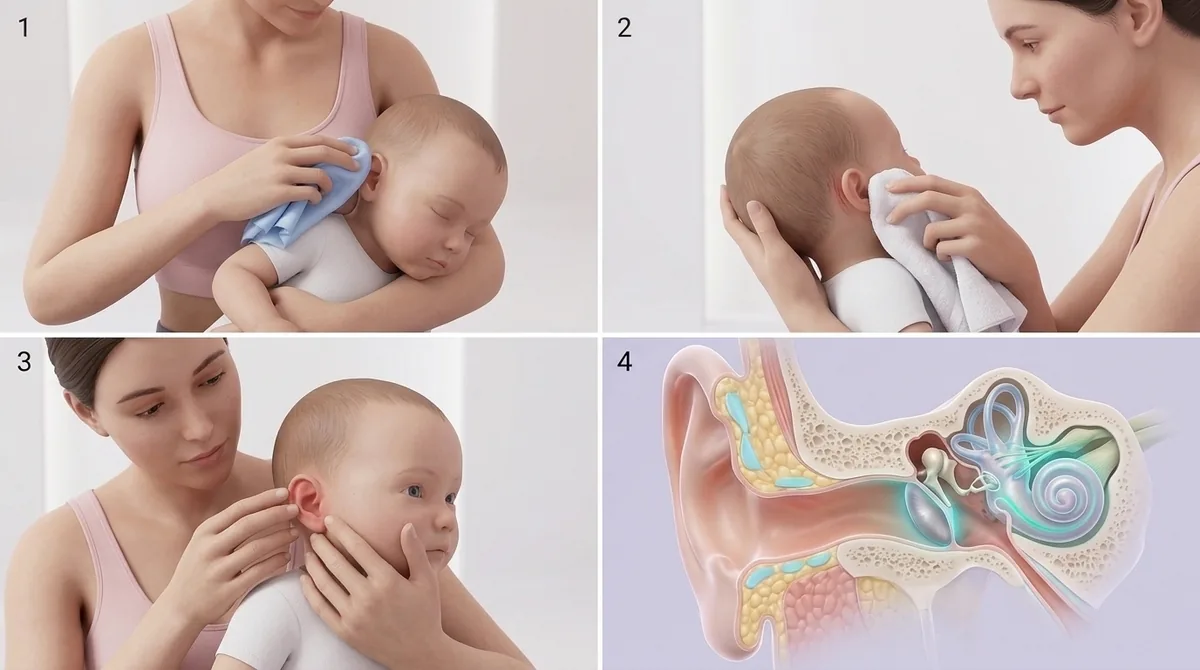
Ears are the easiest of all, because they mostly look after themselves. Wipe only the outer ear and behind it with a damp corner of a flannel or soft cloth. Never put a cotton bud — or anything — inside the ear canal. Earwax naturally works its way out on its own, and poking around only pushes it deeper, risking a blockage or a little scratch. If you can see some wax right at the entrance, leave it be; it will make its own way out in time.
Your questions, answered
Do I need to use saline drops every day?
No. Saline is for the moments when the nose is genuinely blocked and it’s bothering your baby — not a daily routine. For the face itself, plain warm water once a day is all a healthy newborn needs.
My baby’s eye weeps and gets sticky — is that normal?
It’s very common in the first months, usually because the tear duct is still narrow. Gentle wipes from the inner corner outwards, one fresh piece of cotton per eye, keep it comfortable, and it often clears by itself. If the eye becomes red, swollen or full of pus, have your doctor check it.
Can I use cotton buds to clean the ears?
No — outer ear only, with a damp cloth. Cotton buds pushed into the canal can pack the wax down and cause a blockage or a scratch. The canal is designed to clear itself.
What product should I use on my baby’s face?
For a newborn, water really is enough. There’s no need for soap, wipes or lotion on the face day to day — plain warm water avoids irritating that delicate skin.
Also worth reading: Trimming your baby’s nails without the stress and Umbilical cord care, made simple.
The little daily-care questions, answered
With Mama4care, keep your baby’s care diary in one place, note the small things you want to remember, and ask the assistant about the everyday moments of doubt — day or night.
Download the appSources
This article is for information only and has been reviewed by the Mama4care team. It does not replace medical advice: for any question about your health or your baby's, talk to your midwife, doctor or paediatrician. In an emergency, call your local emergency number.