Trimming your baby’s nails without the stress (or the tears)
Few small jobs make new parents as nervous as this one: those tiny fingernails are soft, but they grow surprisingly fast, and a baby waving their hands around can leave little scratches on their own cheeks. The good news is that trimming them is easier than it looks, especially once you pick the right moment and the right tool. No rush, no drama — here’s how to keep those little nails tidy while keeping everyone calm.
Pick a calm moment — sleep is your friend
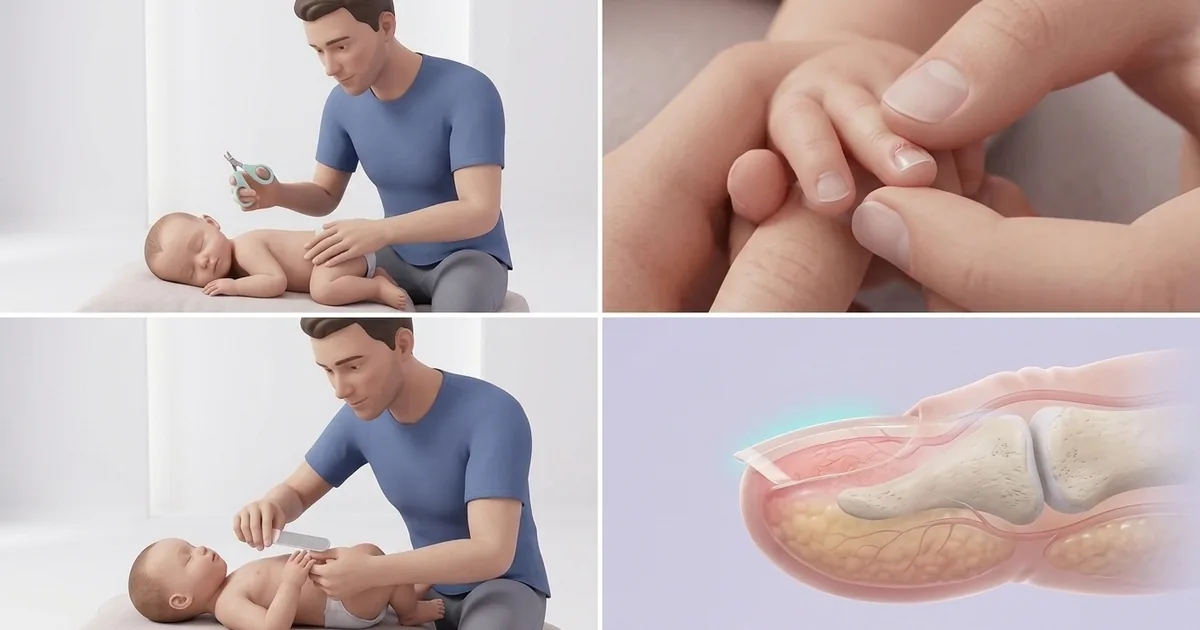
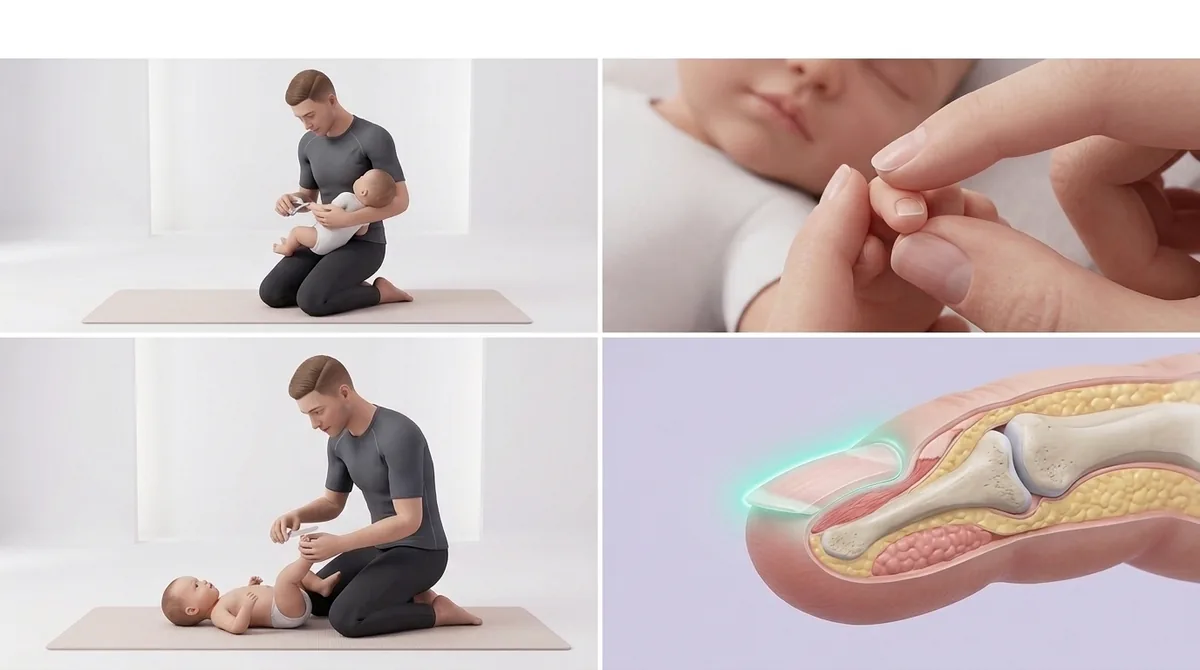
The single biggest trick is timing. A wriggling, wide-awake baby makes this harder than it needs to be. Instead, trim or file while your baby is asleep or deeply relaxed — a nap, a milk-drunk cuddle, or the quiet after a feed all work beautifully. Just after a bath is another good window, when the nails are softest. Work in good light so you can clearly see where the nail ends and the fingertip begins. Hold the finger steady and gently press the soft pad away from the nail, so there’s a little clearance to work with.
The right tools — and file first, in the early weeks
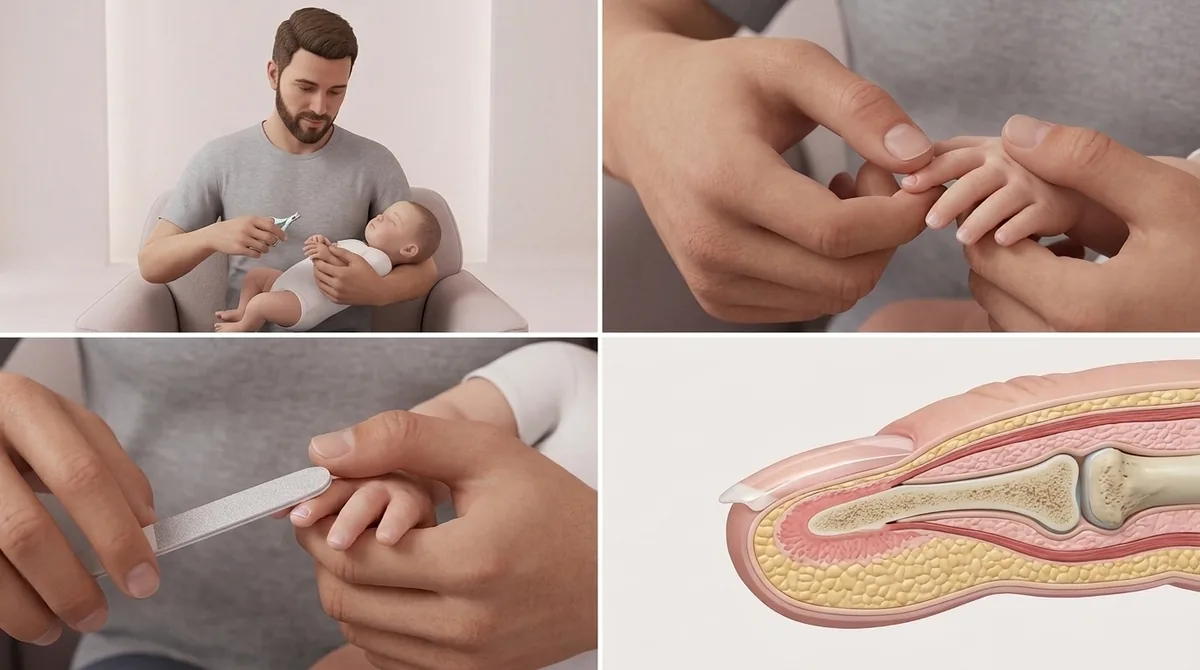
You have three friendly options: baby scissors with rounded tips, a baby nail clipper, or a simple emery board (nail file). There’s no single “best” — it comes down to what feels safest in your hands. In the very first weeks, many parents find filing easier than cutting: the nails are so soft and small that an emery board smooths them down with zero risk of a nick. As your baby grows and the nails firm up, clippers or rounded scissors become quicker. Whatever you use, keep it clean and just for your baby.
Fingers follow the curve, toes go straight across
There’s one small rule worth remembering. On the hands, follow the gentle curve of the nail. On the toes, cut straight across instead — this helps prevent ingrown toenails, where the corner of the nail digs into the skin as it grows. Take a little off at a time rather than aiming for one clean sweep, and stop while there’s still a sliver of white nail showing. One thing to avoid entirely: never bite or pull off your baby’s nails. It’s tempting when they’re soft, but it can tear the skin and let in infection.
If you nick the skin — don’t panic
It happens to almost every parent sooner or later, and it looks far more dramatic than it is. If you catch a bit of skin and there’s a spot of blood, simply press gently with a clean piece of gauze or cloth — the bleeding usually stops quickly on its own. Resist the urge to reach for a plaster: a small plaster can come loose and become a choking hazard for a baby. Give your little one a cuddle, take a breath, and try again another time. A tiny nick heals fast and is nothing to feel guilty about.
Your questions, answered
When should I trim my baby’s nails for the first time?
There’s no fixed date — you trim when the nails are long enough to scratch. In the newborn weeks, filing with an emery board is often the gentlest way to keep them short until they firm up a little.
Scissors, clippers or a file — which is best?
Whichever feels safest in your hands. Rounded-tip baby scissors, baby clippers and emery boards all do the job. Many parents file in the early weeks and switch to clippers or scissors once the nails are firmer.
I cut too far and drew blood — what do I do?
Stay calm. Press gently with a clean piece of gauze or cloth until the bleeding stops, which is usually quick. Skip the plaster (it’s a choking risk) and try again at a calmer moment. If you later see redness, swelling or pus, check in with your doctor.
Straight across or rounded?
Fingers follow the natural curve of the nail; toes are cut straight across to help prevent ingrown toenails. Either way, take off just a little at a time and leave a small edge of nail.
Also worth reading: Washing your baby’s face, gently and Cradle cap: what it is and how to ease it.
Keep the little care routines on track
With Mama4care, keep your baby’s care diary handy, jot down the small reminders that slip your mind, and ask the assistant whenever an everyday question pops up.
Download the appSources
This article is for information only and has been reviewed by the Mama4care team. It does not replace medical advice: for any question about your health or your baby's, talk to your midwife, doctor or paediatrician. In an emergency, call your local emergency number.