Cradle cap: what it is, and how to ease it gently
One morning you spot them: yellowish, slightly greasy, flaky patches across your baby’s scalp. It can look a little alarming the first time — but this is cradle cap, and it’s one of the most common and most harmless things a newborn’s skin can do. It doesn’t hurt, it isn’t catching, and — this matters — it has nothing to do with how well you clean your baby. Here’s what’s really going on, and the gentle steps that help it on its way.
What cradle cap actually is
Cradle cap — its medical name is infant seborrhoeic dermatitis — shows up as yellowish or brownish, greasy, scaly patches, usually on the scalp. It’s very common in the early months, completely benign, and not contagious. It’s also not a sign of poor hygiene or anything you’ve done wrong — it simply happens. The most reassuring part: it very often clears on its own over a few weeks or months, without any treatment at all. In other words, doing nothing is a perfectly valid choice.
The gentle routine that helps
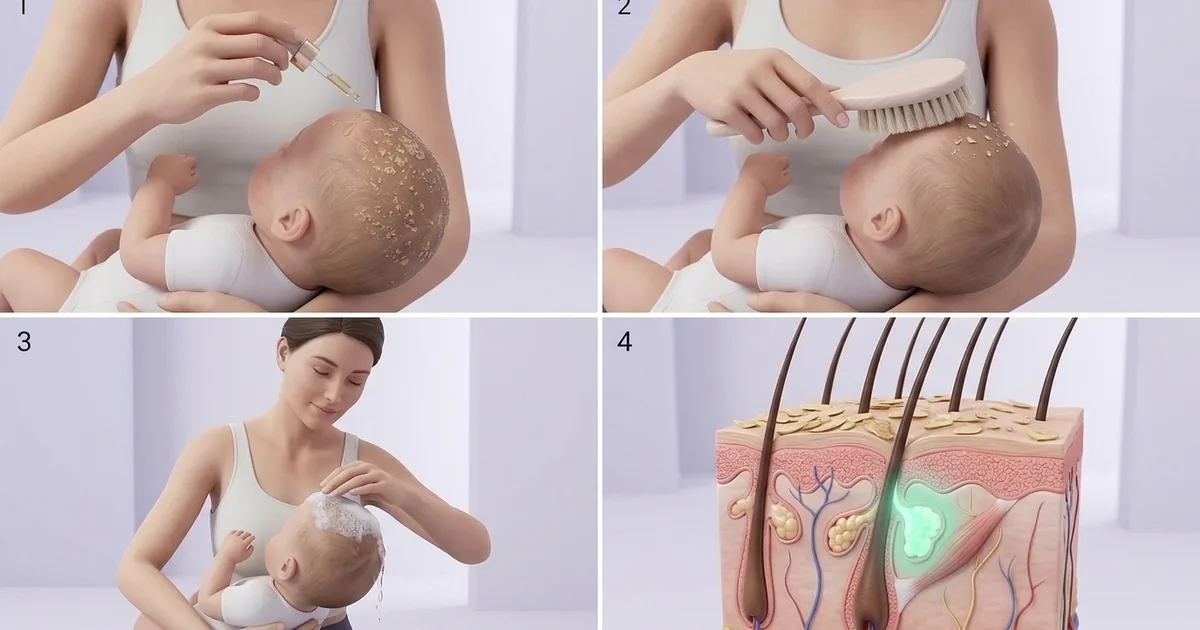
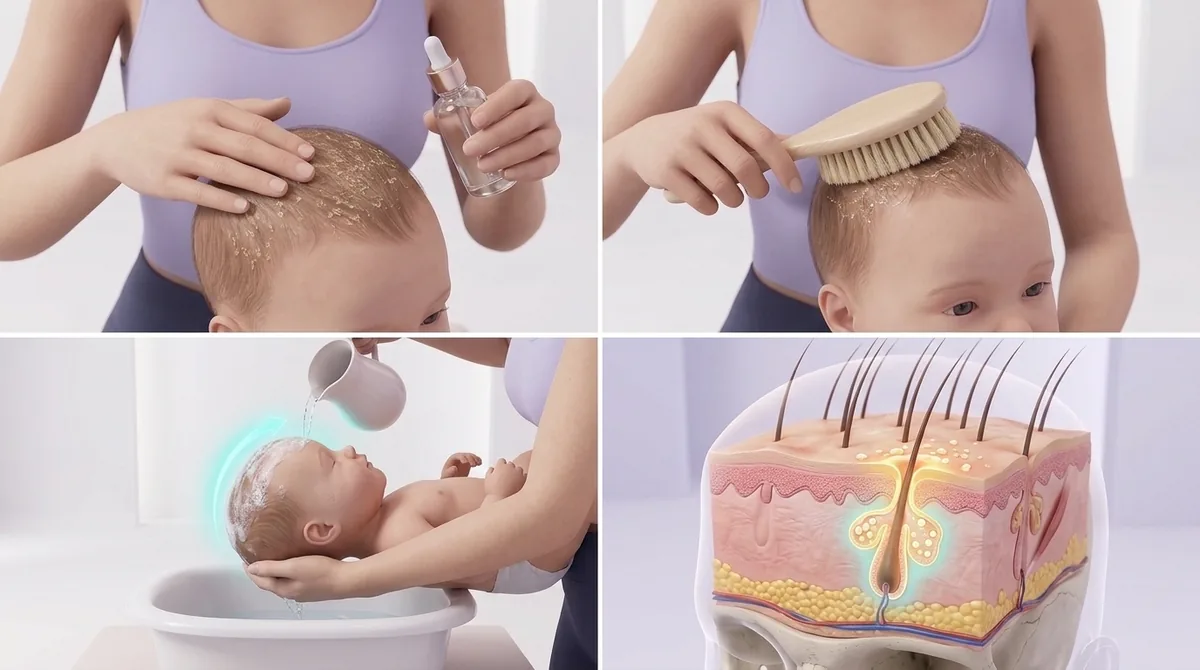
If you’d like to help it along, gentleness is the whole game. Massage a little plant-based oil — sweet almond, olive, or a baby oil — into your baby’s scalp and let it sit for a while: anything from around 15 minutes to a few hours softens the scales nicely. Then brush very gently with a soft baby brush to lift the loosened flakes, and finish by washing with a mild baby shampoo to rinse away the oil. Repeated now and then, this simple loop — soften, loosen, wash — gradually clears the patches without any fuss. There’s no need to do it every day, and no reward for rushing: a gentle session every few days, whenever it suits you, is plenty. Some of the scales will lift each time and new ones may appear for a while — that back-and-forth is normal, and patience does more than pressure ever will.
The one thing not to do: don’t pick
However tempting those flakes are, the golden rule is don’t scratch or pick them off. Prising at scales that aren’t ready to lift can leave the skin red, sore, and open to infection — the opposite of what you want. Let the oil and the soft brush do the work, and only lift what comes away easily. Cradle cap isn’t only a scalp thing, either: you may notice the same patches on the eyebrows or behind the ears, and the same gentle approach works there too. In most cases, no medicated treatment is needed at all — it isn’t an illness to cure so much as a phase to wait out, and your baby isn’t bothered by it even when it looks dramatic to you.

Your questions, answered
Is cradle cap caused by not washing my baby enough?
No — this is worth saying clearly. Cradle cap is not about hygiene and it isn’t anything you’ve done wrong. It’s a common, harmless skin pattern of the early months that often clears by itself.
Can I just pick the flakes off?
Please don’t. Picking or scratching at the scales can make the skin red, sore and prone to infection. Soften them with a little oil, lift gently with a soft brush, and only remove what comes away on its own.
Which oil should I use?
A plant-based oil such as sweet almond or olive oil, or a baby oil, works well to soften the scales before brushing and washing. Massage in a small amount, let it sit, then brush gently and rinse with a mild baby shampoo.
Is it contagious?
No. Cradle cap can’t be passed to you or to other children. It’s a harmless skin condition of your baby’s own, and it tends to fade over weeks to months.
Also worth reading: Washing your baby’s face, gently and Trimming your baby’s nails without the stress.
The little skin questions, sorted
With Mama4care, keep your baby’s care diary in one place, note what you want to remember, and ask the assistant about the everyday skin questions that come up along the way.
Download the appThis article is for information only and has been reviewed by the Mama4care team. It does not replace medical advice: for any question about your health or your baby's, talk to your midwife, doctor or paediatrician. In an emergency, call your local emergency number.