Umbilical cord care: simple, and nothing to worry about
That little stump left where the umbilical cord was cut can feel like one more thing to get right — but it asks very little of you. Left clean and dry, it dries out and drops off entirely on its own, usually within a couple of weeks. There’s no cleaning ritual to master and, in most cases, nothing to disinfect. Here’s what to expect as it heals, the two habits that help, and the handful of signs that tell you when to check in with someone.
What happens, and how long it takes
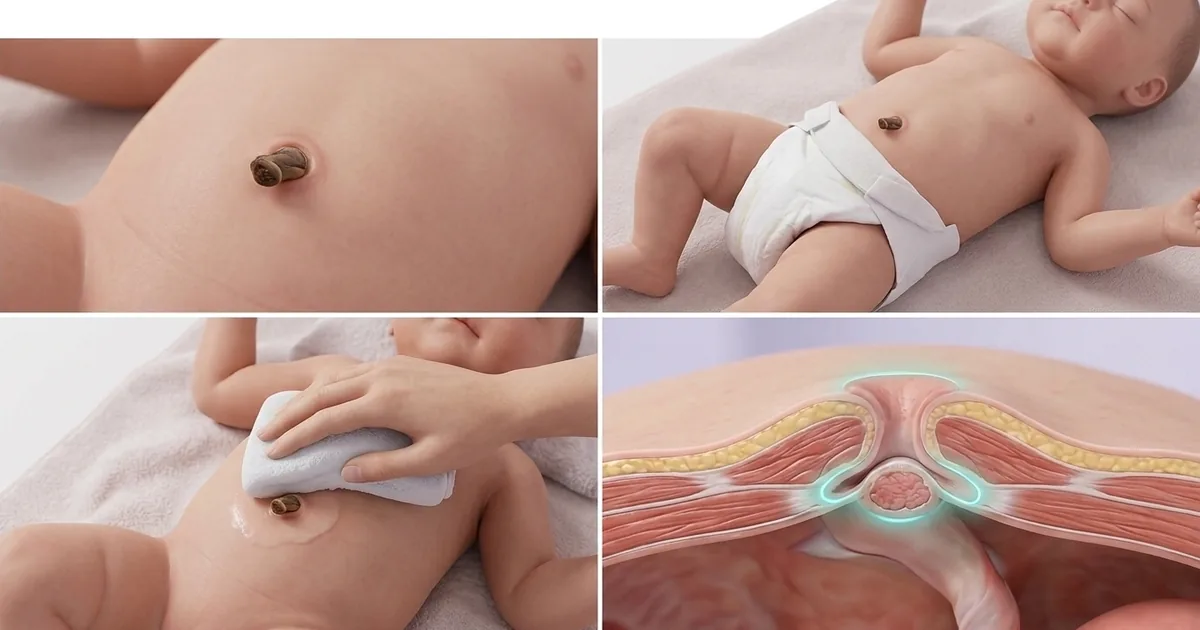
The stump dries, shrivels and falls off by itself, most often somewhere between 5 and 15 days after birth. Along the way it will darken and harden, turning brown, then almost black — that’s completely normal and part of drying out, not a sign anything is wrong. You don’t need to help it off or pull at it, even if it’s hanging by a thread; it will separate when it’s ready. When it does come away, a little oozing or a few spots of blood at the base is normal and usually settles quickly.
Keep it clean and dry — that’s the whole job
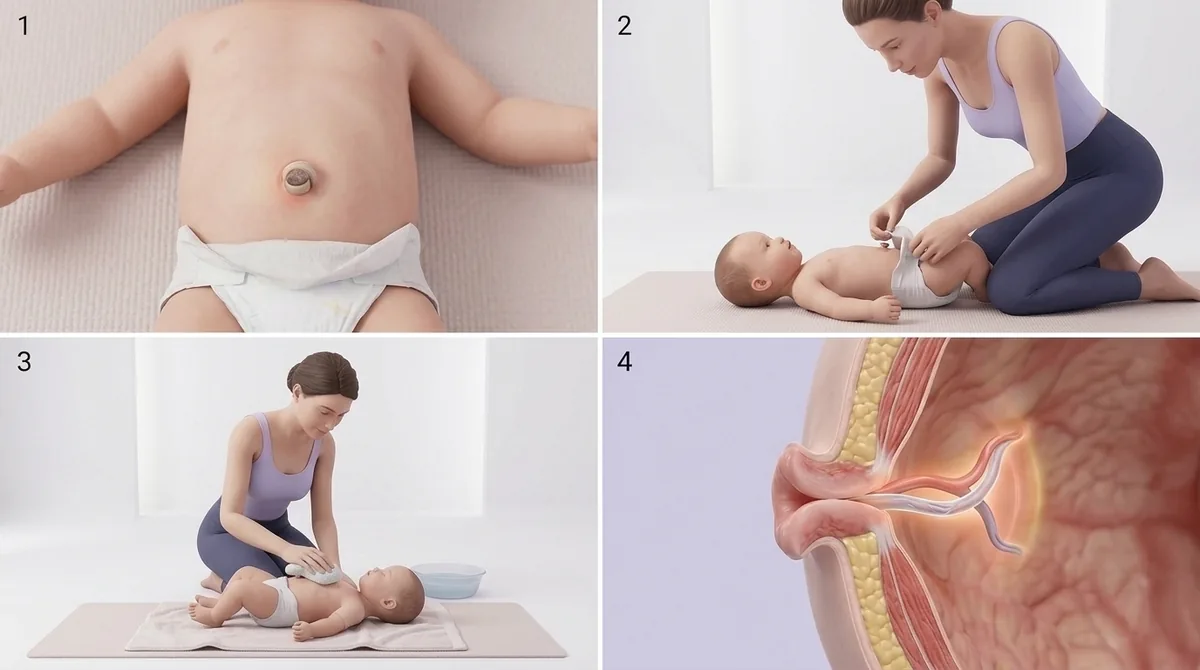
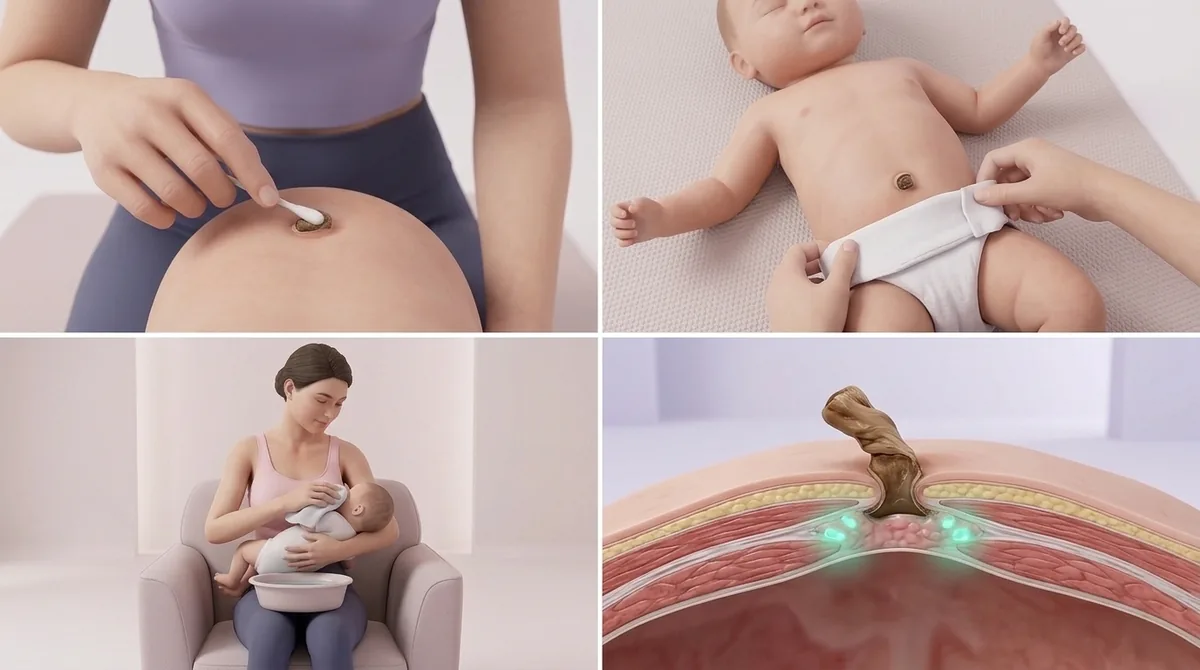
The two words to remember are clean and dry. If the stump gets dirty — with a bit of wee, say — clean it with plain water and dab it dry gently; there’s no need to scrub. Fresh air genuinely helps it dry, so fold the top of the nappy down below the stump rather than letting it rub or soak against a damp nappy. Loose clothing over the top is all you need. Short baths are fine, too; just dry the area gently afterwards so it isn’t left damp. Try not to soak or scrub the stump, and there’s no need to tuck or bandage it — the more it’s left alone in the open air, the better it dries. If a little discharge marks the vest now and then, that’s to be expected while it heals; a fresh, breathable outfit keeps everything comfortable.
Dry care: no alcohol, no antiseptic in routine
You may have heard of dabbing the cord with surgical spirit or antiseptic — that advice has changed. The modern approach in well-resourced settings is “dry cord care”: keeping it clean and dry, without routine alcohol or antiseptics, unless your midwife or doctor advises otherwise for a specific reason. Less really is more here. Handling it as little as possible, with clean hands, and simply letting air do its work is exactly what supports it to heal and drop off on schedule. If you were given different guidance in hospital, or your midwife recommends a specific product for your baby, follow that — but for most healthy newborns, keeping it clean, dry and undisturbed is the whole of it.
Your questions, answered
When does the cord stump fall off?
Usually somewhere between 5 and 15 days after birth. It darkens and hardens first, which is normal, and it separates on its own — there’s no need to pull it off, even if it looks ready.
Can I bathe my baby before it falls off?
Yes — short baths are fine. The key is to dry the area gently afterwards so the stump isn’t left damp, since keeping it dry is what helps it heal and drop off.
Do I need to disinfect it?
In most well-resourced settings, no. The current advice is dry cord care: keep it clean and dry, without routine alcohol or antiseptic, unless your midwife or doctor tells you otherwise for a particular reason.
It bled a little — is that normal?
A small amount of oozing or a few spots of blood, especially around the time the stump comes away, is normal and usually settles quickly. Bleeding that keeps going, or redness, swelling, pus or a fever, is a reason to seek advice without delay.
Also worth reading: Bathing your baby, step by step and Washing your baby’s face, gently.
Track the little firsts, day by day
With Mama4care, keep your baby’s birth diary and daily-care notes in one place, mark the day the cord drops off, and ask the assistant whenever a small question comes up.
Download the appSources
This article is for information only and has been reviewed by the Mama4care team. It does not replace medical advice: for any question about your health or your baby's, talk to your midwife, doctor or paediatrician. In an emergency, call your local emergency number.