Baby's bath step by step: stress-free and safe
The first bath is daunting: a tiny baby, water, and moves you've never made before. Rest assured — with a little preparation and a few simple pointers, the bath quickly becomes one of the sweetest moments of the day. Here's the step by step, from filling the tub to the cuddle in the towel.
How often? Less often than you think
Good news for busy evenings: 2 to 3 baths a week are enough in the first months. A baby's skin is fragile, and bathing too often can dry it out. Between baths, a daily wash of the face, hands and bottom does the job very well. If the evening bath is part of your ritual and your baby's skin tolerates it, that's fine too — the key is to stay gentle and brief.
Until the cord has fallen off
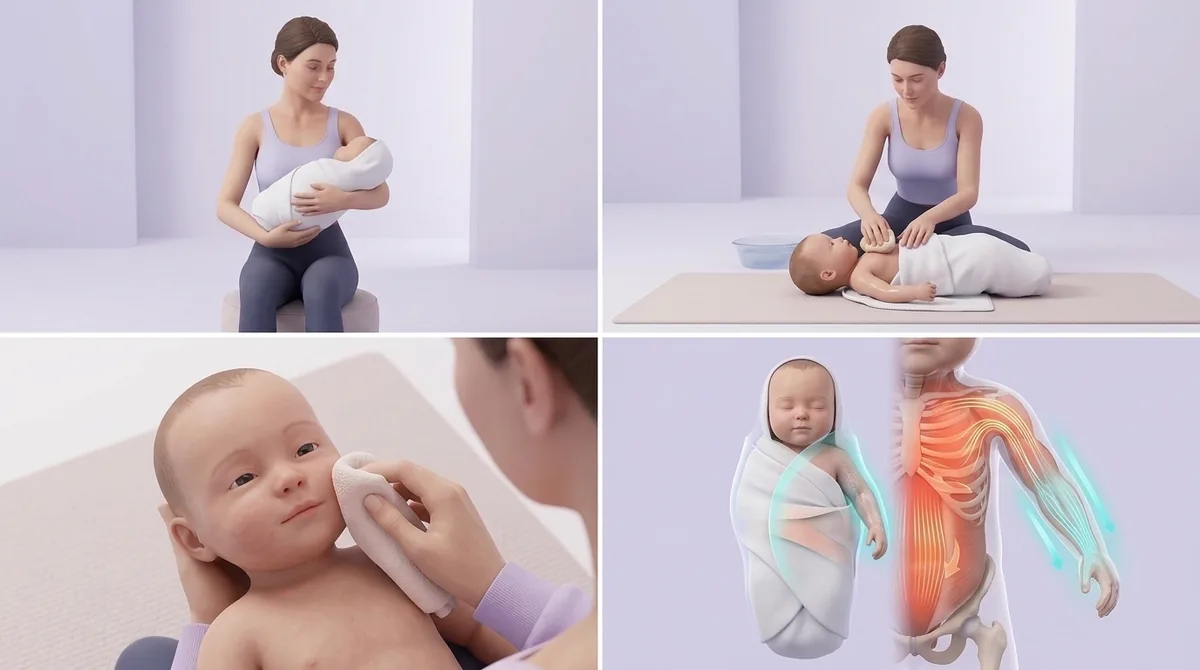
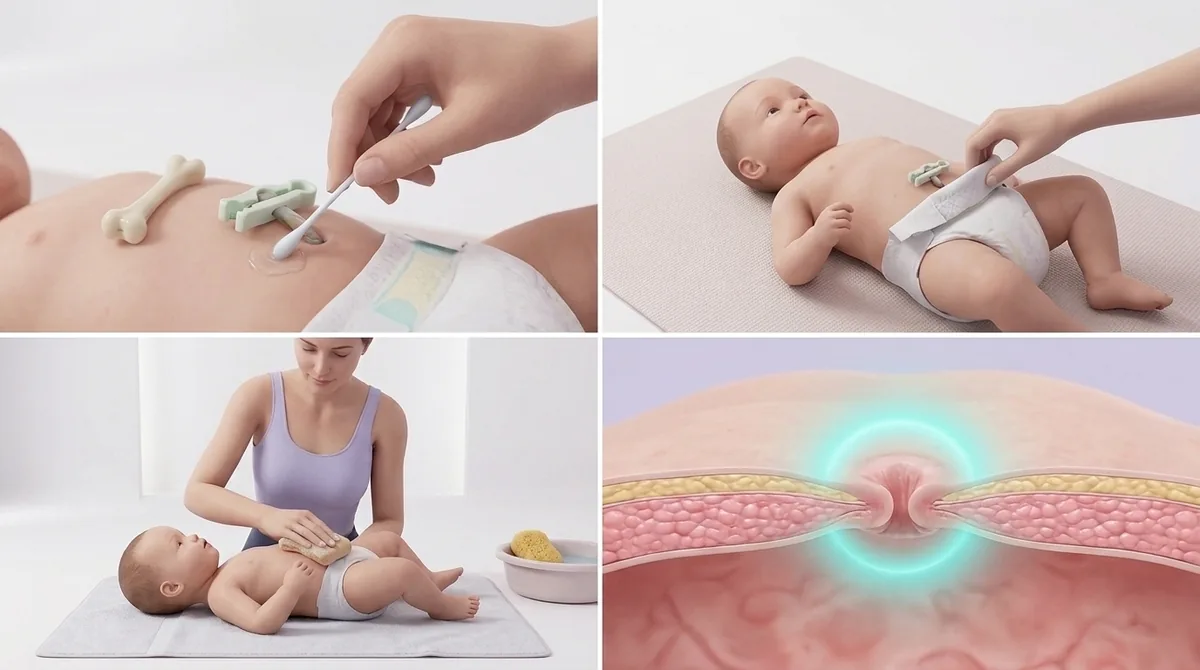
The umbilical cord usually falls off between 5 and 15 days after birth. Until it has fallen off and healed well, many parents prefer a washcloth or sponge bath on the changing table: it's just as effective and very tender. A short bath is still possible, as long as you keep the cord clean and dry it well afterwards, patting gently. Don't panic if it looks a little strange as it dries: that's the normal process.
Get everything ready first: the key to a calm bath
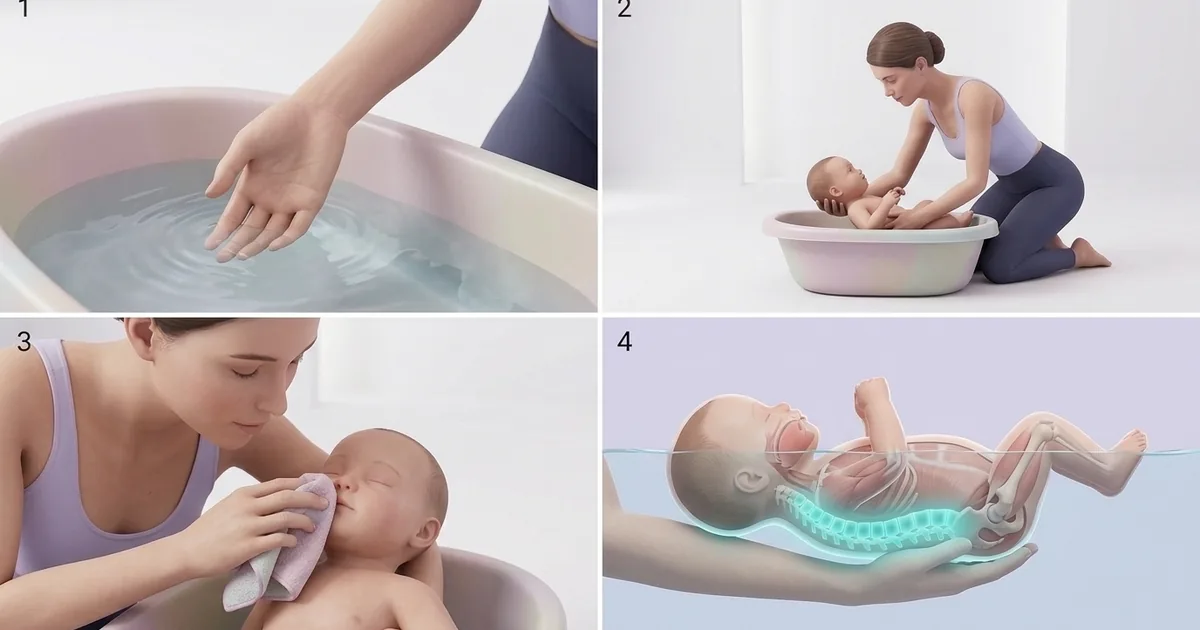
The secret to a stress-free bath is settled… before the bath. Get everything within reach: an unfolded towel, a clean nappy, clothes, and a gentle, fragrance-free wash product if you use one. Warm the room to around 22-24 °C. Pour in 8 to 10 cm of water — no more — at a temperature of about 37 °C, checked with a bath thermometer and confirmed with your elbow or the inside of your wrist: the water should be pleasantly warm, never hot. And once your baby is in the water, stop running any more hot water: the tap temperature can change all of a sudden.
During the bath: one hand that never lets go
Ease your baby in gently, talking to them: your voice reassures them more than any toy. One hand always supports the head and neck — your forearm under the neck, your hand holding the opposite armpit — while the other washes. Wash from cleanest to dirtiest: the face first, with plain water, then the body, and the bottom last. The first baths are short, 5 to 10 minutes: the water cools quickly, and so does your baby.
And the one absolute rule of the bath: never leave your baby alone in the water. Never, not even for a second, not even in 3 cm of water, not even to grab a towel. If you absolutely must step away, lift your baby out of the water, wrap them up and take them with you. The ringing phone can wait — during the bath, it doesn't exist.
After the bath: dry, cuddle
Lift your baby out of the water and wrap them immediately in their towel, hood over the head. Dry by patting, without forgetting the folds: neck, armpits, groin, behind the knees. It's the perfect moment for a gentle massage or a long skin-to-skin cuddle before the pyjamas — many babies love it, and it sets the night up beautifully.
Your questions, answered
Bath in the evening or in the morning?
It doesn't matter! Choose the time when you're most available and your baby is calm. If you go for the evening, regularity helps set up the bedtime ritual: bath, pyjamas, feed, sleep.
Which wash product should I choose?
A gentle, fragrance-free product made for newborns — and not necessarily every day: plain water is often enough in the first weeks. The fewer products on your baby's skin, the better it does.
My baby cries at bath time, what should I do?
It's common at the start. Shorten the bath, check the water is warm enough (around 37 °C, never more), lower your baby in gradually, feet first, talking to them. You can also try a different time of day: some babies prefer the morning.
When should we move to the big bathtub?
When your baby sits up well on their own, usually around 6 months or more. Always with very little water, a non-slip mat — and the same absolute rule: never alone in the water, not even for a second.
Also worth reading: Burping your baby: 3 techniques that work · Colic: the massages and moves that soothe
Baby's logbook, always within reach
In Mama4care, note baths, cord care and your evening rituals in your baby's logbook — and if in doubt, ask the assistant your question, any time.
Download the appThis article is for information only and has been reviewed by the Mama4care team. It does not replace medical advice: for any question about your health or your baby's, talk to your midwife, doctor or paediatrician. In an emergency, call your local emergency number.