Burping your baby: 3 techniques that work (and the real questions)
Three in the morning, your baby has finished feeding, and there you are patting their back, waiting for THE burp… which doesn't always come. Breathe: burping is anything but an exact science, and it's far less compulsory than people think. Here are the three positions that really work, when to persist, and above all when to let go.
Why your baby needs to burp (sometimes)
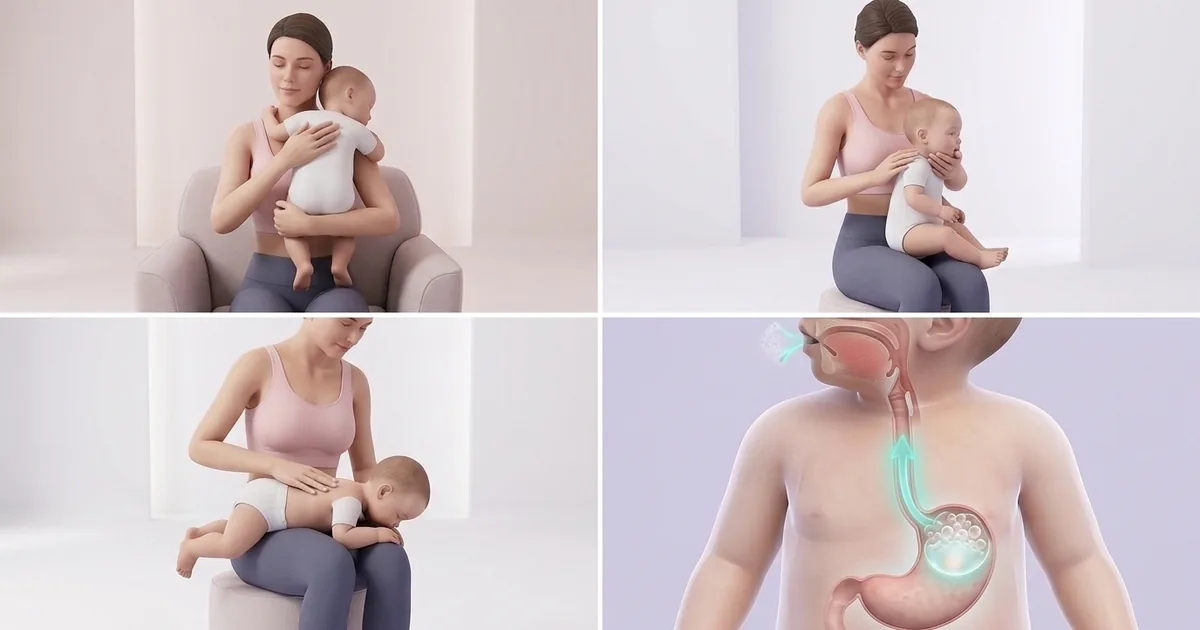
During a breast- or bottle-feed, your baby swallows milk… and a little air with it. That air forms a bubble in their stomach that can bother them: they wriggle, grunt, stop drinking or cry. The burp releases the bubble, which prevents discomfort and limits spit-up. Some babies swallow a lot of air — the greedy ones, the fast ones — while others swallow almost none. That's why there's no single rule: watch your baby, not the manual.
The 3 positions that work
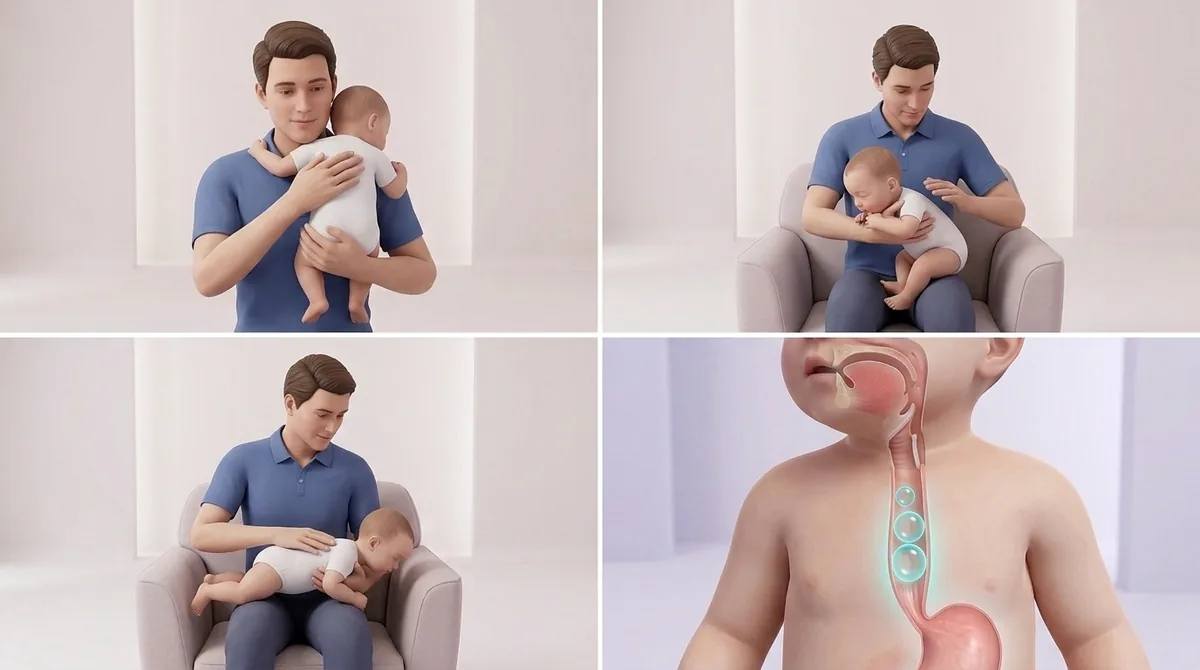
1. Over the shoulder — the classic. Your baby is upright against you, their head resting above your shoulder. One hand supports their bottom, the other pats or gently rubs their back between the shoulder blades. Keep a cloth on your shoulder: spit-up loves this position.
2. Sitting on your lap. Your baby sits, leaning slightly forward. Your hand forms a "collar" that supports the chin and chest — without ever pressing on the throat — while the other hand pats the back. Handy when you're sitting yourself, and often effective.
3. Face-down across your lap. Your baby lies tummy-down across your thighs, their head slightly higher than the body and turned to the side. Gentle pats on the back, and the light pressure of the tummy on your legs often does the rest.
When to burp, and how long to persist
The good habit: offer a burp at the end of every feed. If your baby drinks fast, is greedy or gets fussy partway through, add a burp break halfway through the bottle, or when switching breasts. A few minutes are enough: if nothing comes after 10 to 15 minutes upright, it's no big deal. Burping is not compulsory every time: some babies burp very little, especially breastfed babies, and are perfectly fine. A calm, relaxed baby after a feed has nothing to bring up — no need to pat them until dawn.

Spit-up: normal or not?
Simple spit-up — small amounts of milk that come back up effortlessly, with a calm baby who is gaining weight well — is normal and very common in the first months. It decreases on its own over time. It has nothing to do with vomiting: projectile, repeated, or greenish, that kind warrants medical advice. The difference comes down to one image: spit-up spills over, vomit shoots out.
Your questions, answered
My baby falls asleep before burping — should I wake them?
No. Lay them down on their back in the crib, as for every sleep. If they're calm and relaxed, the burp is not compulsory — sleep is.
Frequent burps and hiccups — is that normal?
Yes, hiccups are common in infants — they already had them in the womb! They disappear on their own within a few minutes and bother your baby far less than they impress you.
Does my breastfed baby need to burp?
Generally, a baby at the breast swallows less air than at the bottle: the burp is therefore rarer, and sometimes absent. Offer it when switching breasts and at the end of the feed, without persisting if it doesn't come — nothing to worry about.
Are anti-colic bottles worth it?
They can reduce the air swallowed during a feed, without any miracle promise. What matters most is a teat flow suited to your baby's age and pace, and a tilted bottle so the teat stays full of milk.
Also worth reading: Colic: the massages and moves that soothe · Baby's bath step by step
Your baby's rhythm, in black and white
Track breastfeeds, bottles and burps in Mama4care: your baby's rhythm emerges over the days, and the assistant answers your questions — even at 3 a.m.
Download the appThis article is for information only and has been reviewed by the Mama4care team. It does not replace medical advice: for any question about your health or your baby's, talk to your midwife, doctor or paediatrician. In an emergency, call your local emergency number.