Preparing and sterilising bottles: the safe method, step by step
Bottle-feeding comes with its own little ritual, and at 3 a.m. it can feel like a lot to remember. Good news: the safe routine is short and quickly becomes second nature. Wash, sterilise, make up fresh — three steps that protect a tiny tummy whose defences are still developing. Here is the method, calmly and in order, so feeding time stays a moment of closeness rather than a source of worry.
Start with clean hands and a clean surface
Before you touch a single bottle, wash your hands with soap and water, and give the worktop a quick clean. It sounds obvious, but it is the first line of defence: your hands and the surface are where stray germs hitch a ride. A clean, dry space, a clean cloth, and you are ready. This tiny habit, repeated before every preparation, does a surprising amount of the work.
Wash first — sterilising doesn't clean
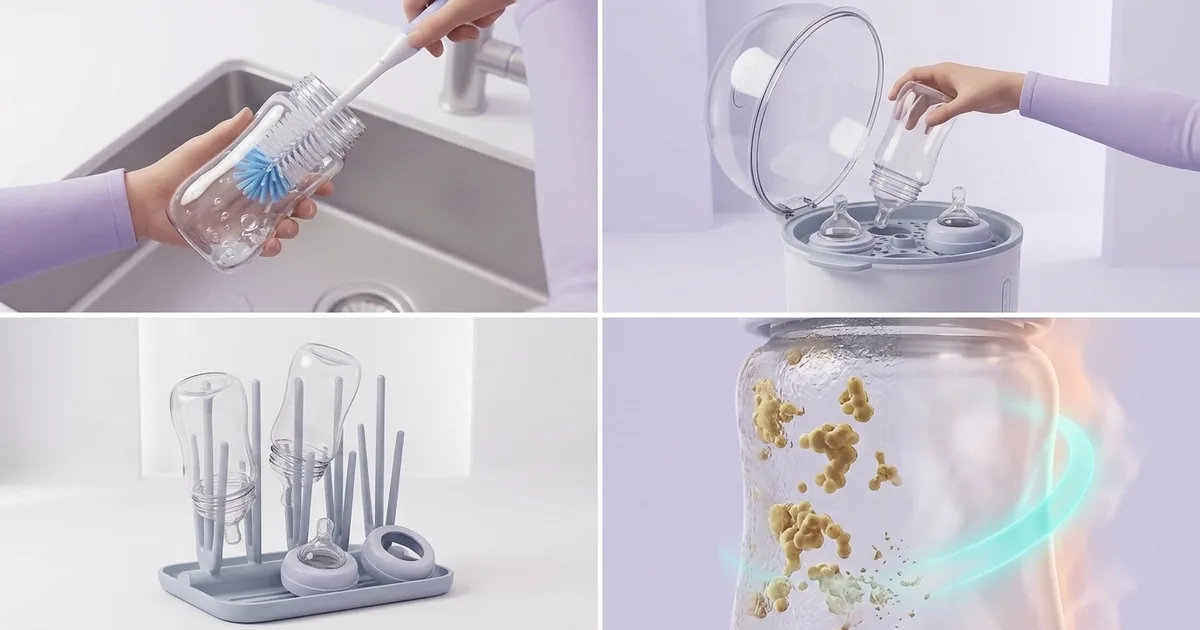
Sterilising only works on equipment that is already clean, so washing always comes first. As soon as a feed is finished, take everything apart: bottle, teat, ring, cap. Wash each piece in hot soapy water with a bottle brush, paying attention to the teat, where milk loves to hide — squeeze water through the hole to clear it. Then rinse thoroughly. A hot dishwasher cycle is a fine alternative for the washing step, though it does not replace sterilising. Whichever you choose, the goal is the same: no milk residue left behind.
Sterilising: keep it up for the first year
Because a baby's immune defences are still immature, sterilising all feeding equipment is recommended for the first 12 months. Pick the method that suits your home: an electric or microwave steam steriliser, boiling for 10 minutes in a large pan (make sure everything stays under water), or a cold-water sterilising solution. They all do the job well. One helpful habit: leave the clean items inside the steriliser until you need them, so they stay protected. If you take a bottle out and won't use it straight away, it is worth putting it back together fully — teat, ring and cap on — to keep the inside clean.
Making up a formula bottle safely
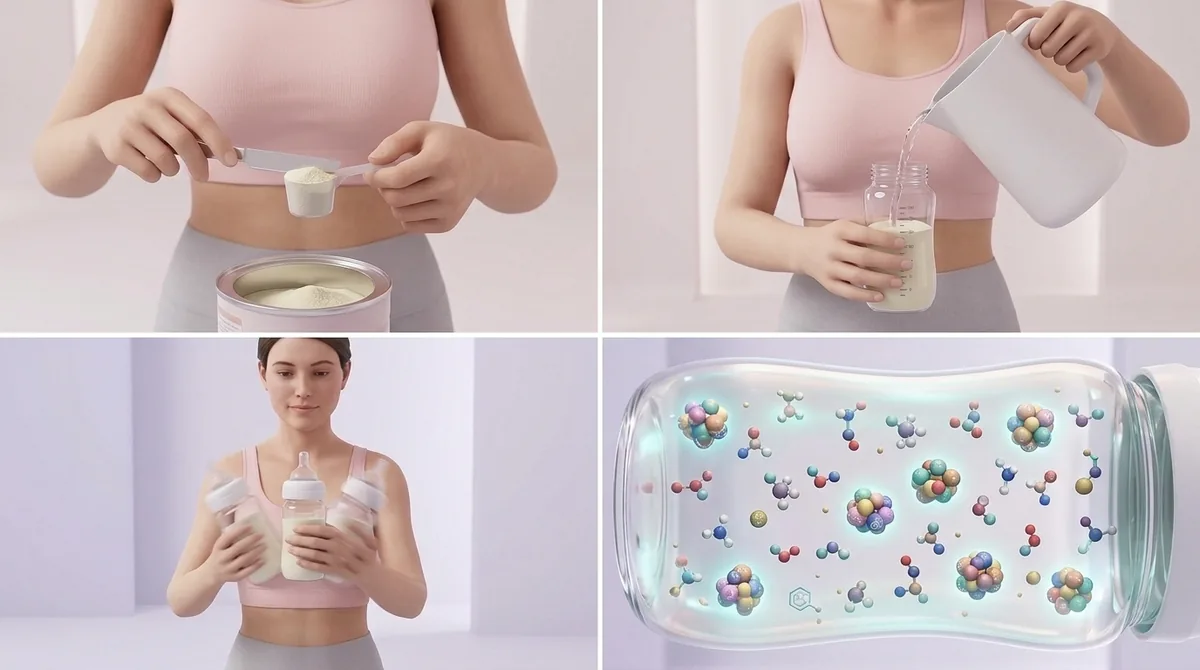
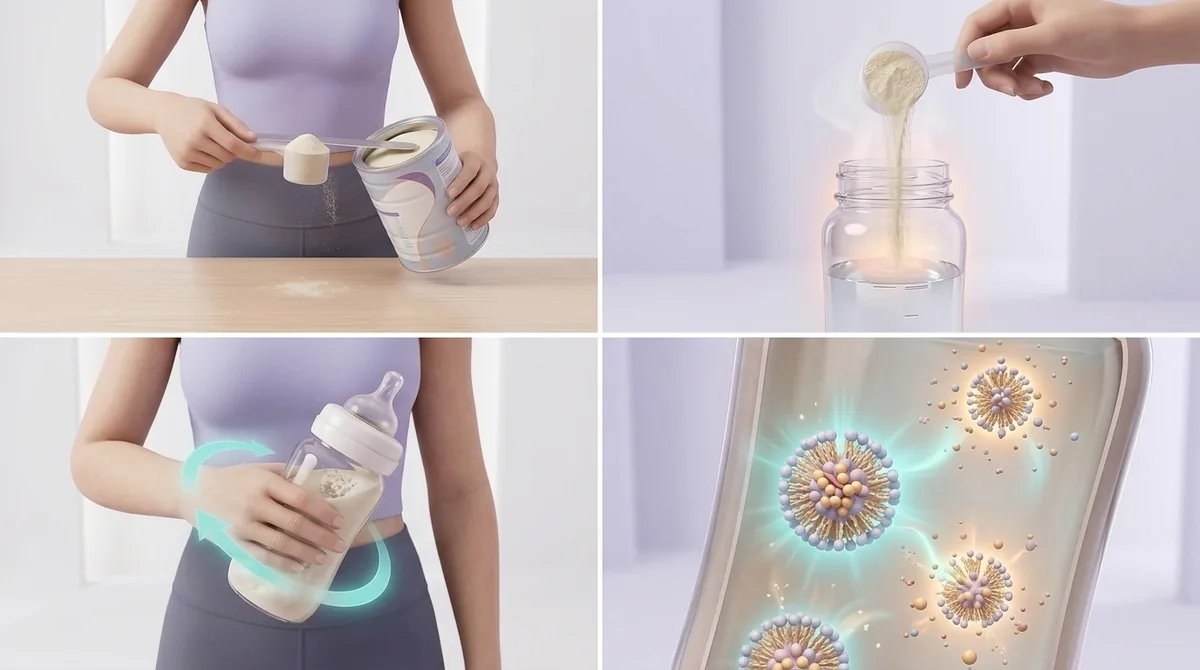
Here is the step most parents don't hear about: powdered formula is not sterile. That is why the water matters. Boil fresh water, then let it cool for no more than about 30 minutes so it is still at around 70 °C — hot enough to kill any bacteria that might be in the powder (such as Cronobacter), which is exactly why you don't let it cool further first. Pour the measured water into the bottle first, then add the powder using the scoop that came with the tin: levelled off, never packed down or heaped. Put the teat and cap on, and swirl or shake to mix.
Then cool it back down quickly: hold the bottle under cold running water (keeping the cap area out of the stream) until it feels lukewarm. Test a few drops on the inside of your wrist — it should feel warm, not hot. And whenever you can, make each bottle up fresh, at feeding time.
Fresh every feed — and never the microwave
Formula is best made up for each feed rather than in advance, because warm milk is a comfortable home for bacteria. If your baby doesn't finish a bottle, throw away what's left within an hour or two rather than saving it for later. And skip the microwave entirely for warming: it heats unevenly and creates hot spots that can scald a mouth even when the bottle feels cool. To warm a feed, stand the bottle in a jug of warm water or use a bottle warmer, then test on your wrist again. Simple, safe, done.
Your questions, answered
Do I really need to sterilise after every single bottle?
Yes, for the first year. Wash the equipment right after the feed, then sterilise it before the next use. Leaving clean, sterilised items inside a closed steriliser until you need them keeps them ready without extra fuss.
Why does the water have to be around 70 °C?
Because the powder itself isn't sterile. Water at about 70 °C is hot enough to kill any bacteria that might be in it. That's why you use freshly boiled water cooled for no more than around 30 minutes, then cool the finished bottle quickly under cold water before feeding.
Can I make up bottles in advance for the night?
The safest approach is to make each feed fresh, when your baby is hungry. If you truly need to prepare ahead, ask your midwife or health visitor about the safest way for your situation — they can guide you on storing and cooling.
Can I warm a bottle in the microwave?
No. Microwaves heat unevenly and create hot spots that can burn your baby's mouth even if the bottle feels only warm. Stand it in warm water instead, and always test a few drops on the inside of your wrist first.
Also worth reading: Expressing and storing breast milk: the practical guide · Burping your baby: gentle, effective techniques
Keep feeds on track, without the mental load
With Mama4care, log each bottle — how much and when — in a couple of taps, spot your baby's rhythm as it settles, and ask the assistant your feeding questions, even in the middle of the night.
Download the appSources
This article is for information only and has been reviewed by the Mama4care team. It does not replace medical advice: for any question about your health or your baby's, talk to your midwife, doctor or paediatrician. In an emergency, call your local emergency number.