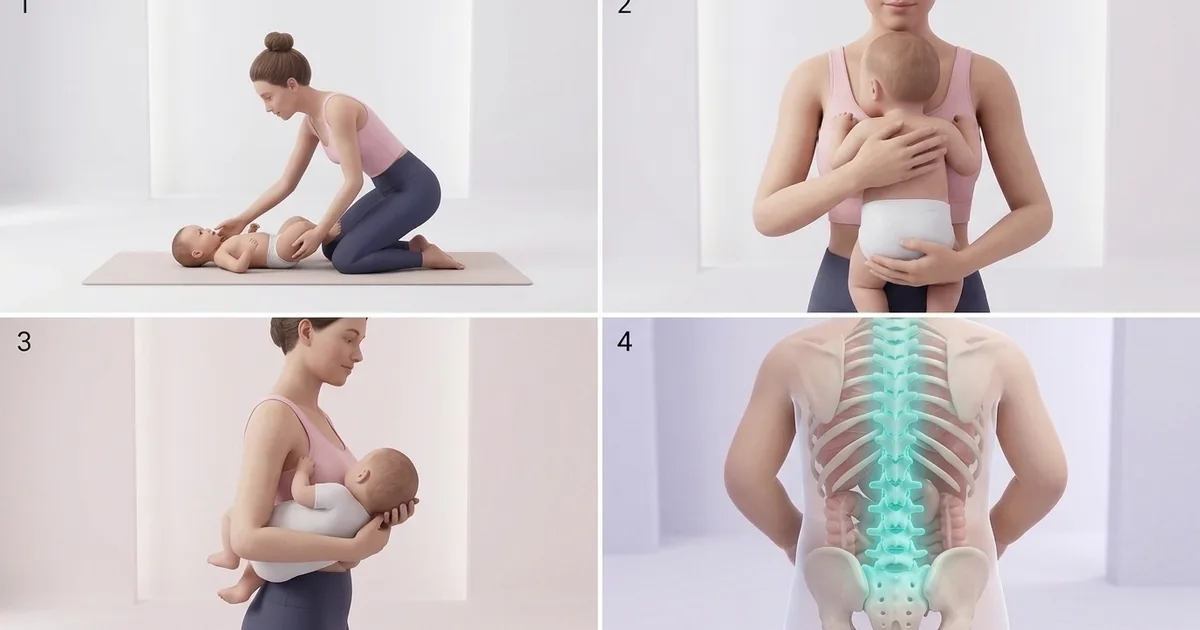
Holding your baby safely: head, back and babywearing
Picking up a newborn for the first time can feel oddly high-stakes — they seem so small, and their head lolls if you’re not ready for it. The reassuring truth is that safe holding comes down to one simple habit and a bit of confidence. A newborn can’t yet hold their own head, so you support it for them, every single time, until they can. Once that becomes second nature, lifting, cuddling and carrying your baby stops feeling fragile and starts feeling like the most natural thing in the world.
Always support the head and neck
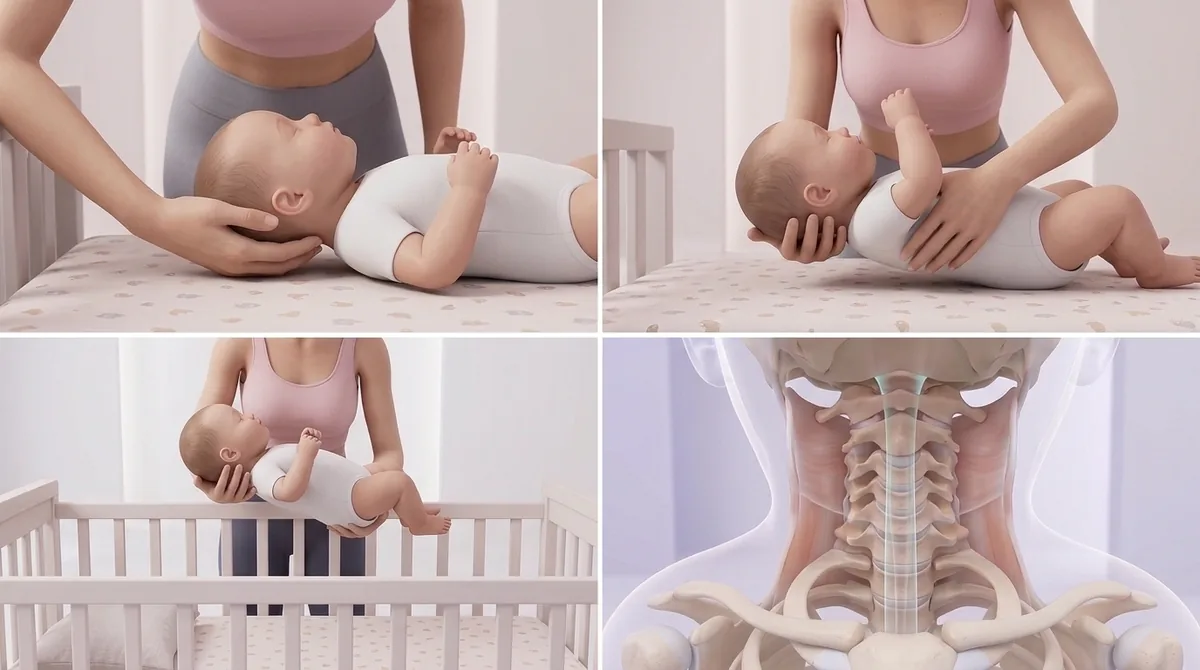
This is the one rule everything else rests on. A newborn’s neck muscles aren’t strong enough to hold their head steady, so always support both the head and the neck whenever you lift, hold, put down or carry your baby. You’ll keep doing this until they can hold their head up on their own — usually around 3 to 4 months. There’s no need to be tense about it; you just make sure a hand is always cradling that little head, so it never drops back or flops to the side unsupported.
How to lift and hold, without the wobble
To lift your baby, slide one hand under the head and neck and the other under their bottom, then draw them in close against your body — slowly, with no sudden movements. Once you’re holding them, a few comfy positions keep you both happy: up against your shoulder with their head supported, cradled in the crook of your arm, or lying tummy-down along your forearm, which can be wonderfully soothing for a fretful baby. Swap between them as you go — it’s easier on your arms, and your baby enjoys the change of view. Keep your movements calm and smooth: babies settle better when they’re handled slowly and predictably, and there’s never any need to jiggle vigorously to soothe them. Whatever else happens, never shake a baby — a newborn’s head and neck are far too fragile for it.
Babywearing: keep the airway clear
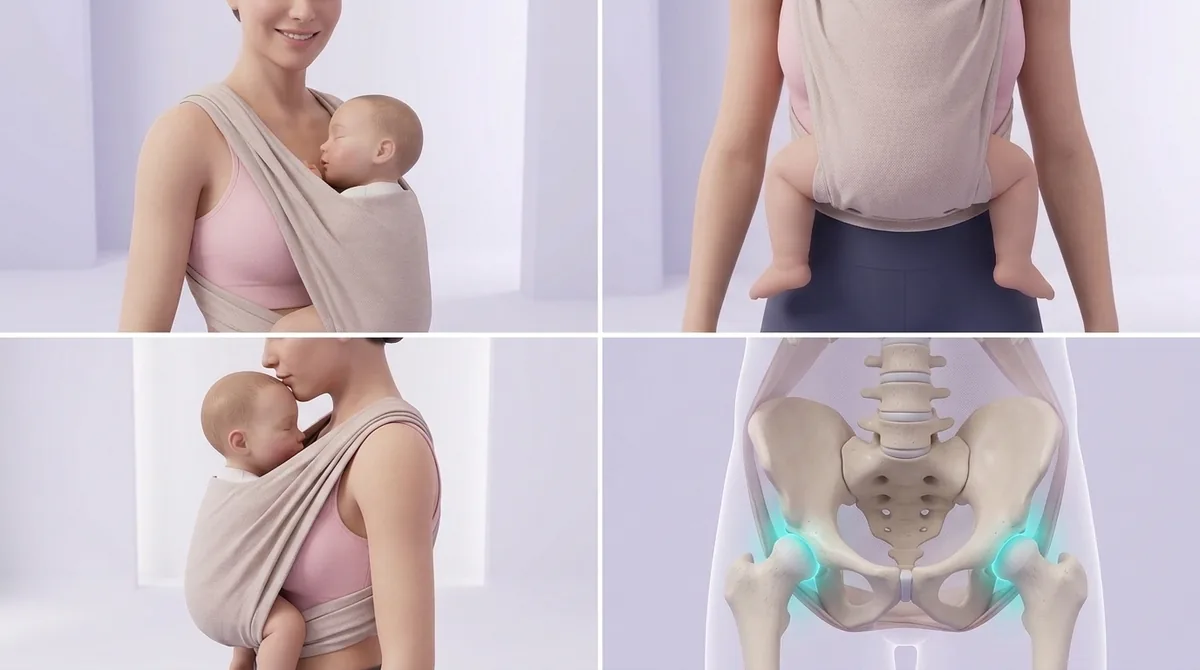
A sling or carrier can be a lovely way to keep your baby close and your hands free — done safely. The must-haves: your baby’s face stays uncovered and visible at all times, with the chin off the chest so the airway stays open (you should be able to fit a finger under the chin). Carry them high enough to kiss, with the back supported in a natural, rounded position — knees higher than the bottom, in an “M” shape. In the early months, facing them in towards you makes all of this easy to check. Many parents use the “T.I.C.K.S.” reminders — tight, in view at all times, close enough to kiss — as a quick safety check.
Your questions, answered
How long do I need to support the head?
Until your baby can hold their head up steadily on their own, which is usually around 3 to 4 months. Until then, support the head and neck every time you lift, hold or lay them down.
When can I carry my baby facing outwards?
In the early months, carrying your baby facing in towards you makes it easy to keep their face visible and their airway clear, with the head and back well supported. Wait until your baby has strong, steady head control before considering an outward-facing position, and follow your carrier’s guidance.
Sling or structured carrier — which is better?
Both can be safe and comfortable. What matters is the same in either: face visible, chin off the chest, baby high and close, and the back supported in a natural rounded position with knees higher than the bottom. Choose whichever you can position correctly and check easily.
Can I babywear after a caesarean?
Often yes, but with care — the weight and the carrier’s waistband can press on a healing scar. Build up gently and check with your midwife or doctor about the right time and set-up for you before you start.
Also worth reading: Safe sleep: the simple habits that protect your baby and Tummy time: building your baby’s strength.
The everyday how-tos, close at hand
With Mama4care, keep your baby’s diary and milestones in one place, follow their head-control progress week by week, and ask the assistant whenever a hands-on question comes up.
Download the appSources
This article is for information only and has been reviewed by the Mama4care team. It does not replace medical advice: for any question about your health or your baby's, talk to your midwife, doctor or paediatrician. In an emergency, call your local emergency number.