The pelvic floor: understand it, prepare it, and recover it
The pelvic floor is one of those parts of the body no one mentions until pregnancy — and then it turns out to matter a great deal. It carries you through these months and plays a real part in your recovery afterwards. The reassuring news: it responds beautifully to a little gentle attention, and any difficulties are common and very treatable. Here is how to understand it, look after it, and rebuild it, at your own pace.
What the pelvic floor actually is
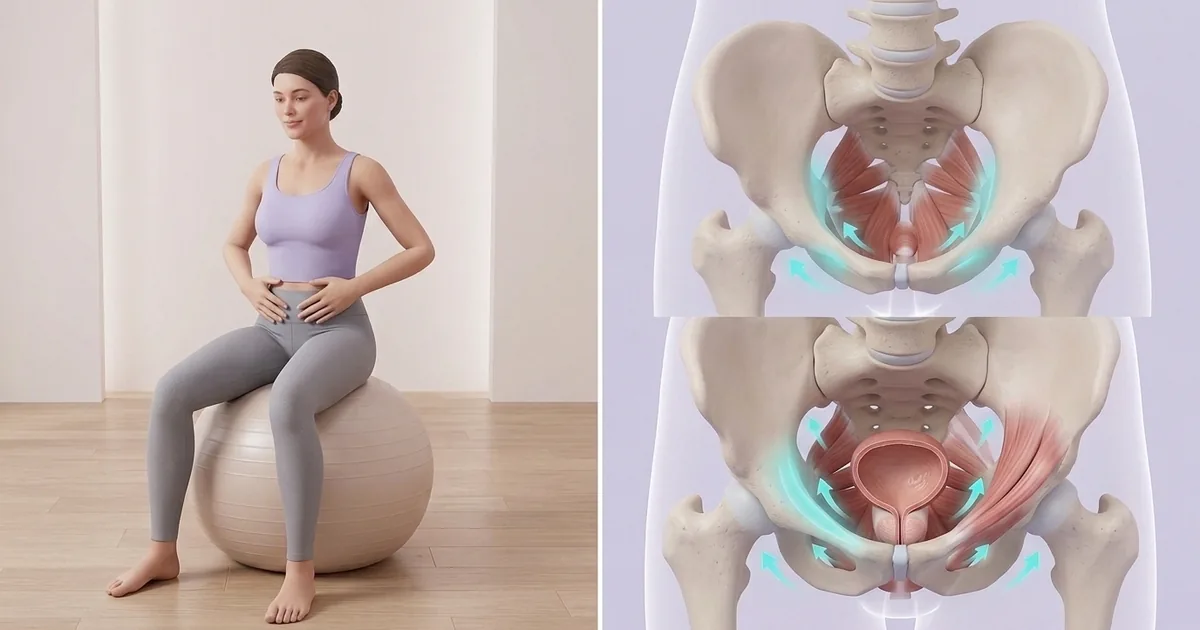
Picture a hammock of muscles slung across the base of your pelvis, from the pubic bone at the front to the tailbone at the back. That is your pelvic floor. It quietly supports your bladder, uterus and rectum, helps you hold and release wee and wind, and takes real strain during pregnancy — first from the growing weight it carries, then from birth itself. Knowing what it does makes the exercises make sense: you're looking after the sling that holds everything up.
During pregnancy: gentle awareness and toning
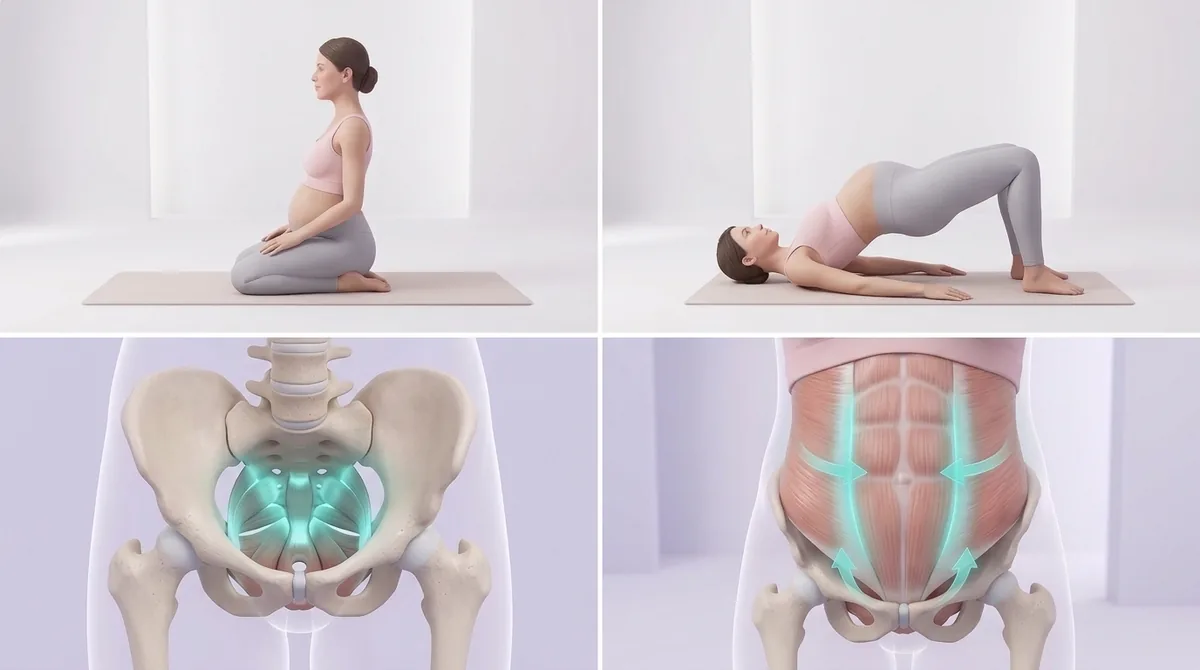
You don't need anything special — just a way to find these muscles and give them a little work. The move is simple: tighten as if you were stopping yourself from passing wee or wind, hold for a moment, then fully let go. As you do it, keep breathing normally and try not to clench your buttocks, tummy or thighs — the effort should be low down and quiet. A few repetitions, several times a day, is plenty. It's the kind of thing you can do waiting for the kettle, and consistency matters far more than intensity.
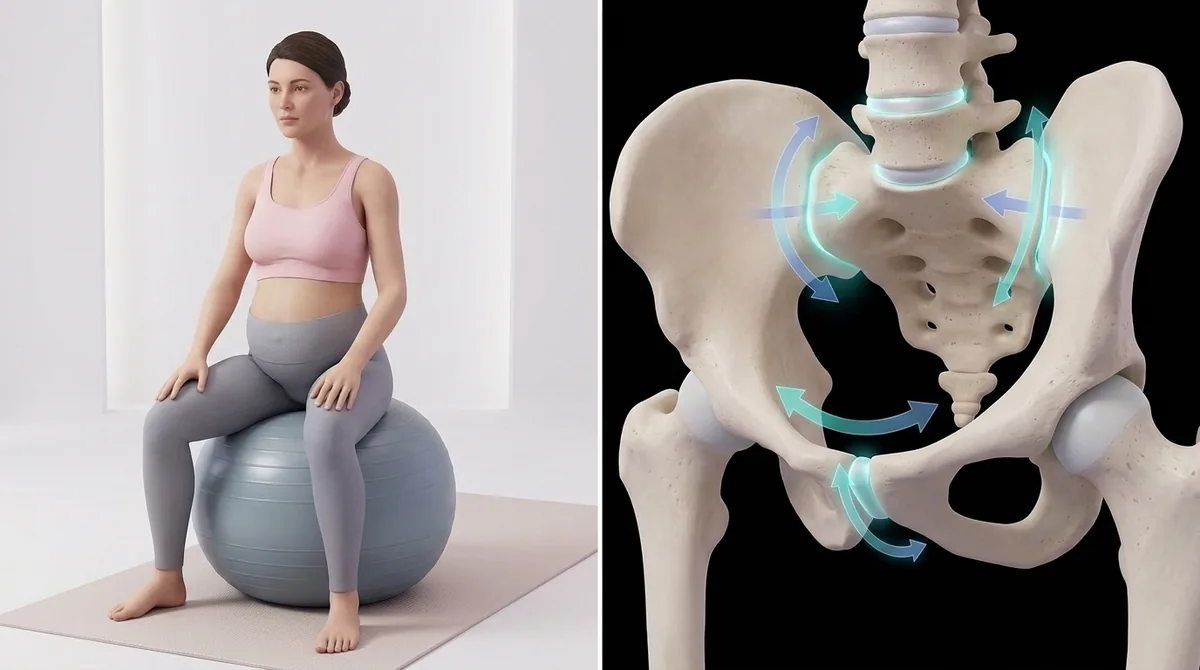
Alongside this, gentle mobility helps the whole area feel freer. A birth ball and open, hip-mobilising positions ease movement in the pelvis and are lovely late in pregnancy. And perineal massage in the final weeks is something some mums find useful — do talk it through with your midwife first, so you have the right guidance for you.
After birth: go slowly, in the right order
Recovery is a gradual, kind process — there's no medal for rushing it. In the early weeks, ease off heavy lifting and let your body knit back together. The key sequence to know: pelvic floor rehab comes before any return to high-impact sport such as running or jumping. Rebuilding the support first protects you from problems down the line, and a midwife or a pelvic health physiotherapist can guide the exercises and tell you when your body is ready for more. Fast is not the goal; solid is.
Leaks and heaviness: common, and very treatable
Here's the message that too few mums hear: if you have urinary leaks, a feeling of heaviness or a bulge in the vagina, or general discomfort, this is common — and you do not have to simply "live with it". These things respond well to proper pelvic floor rehab. Mentioning them to your midwife or doctor isn't making a fuss; it's the first step to feeling like yourself again. The sooner you raise it, the sooner it's sorted.
Your questions, answered
How do I find and squeeze the right muscles?
Imagine stopping yourself from passing wee and wind at the same time, and lifting gently — that inward-and-up squeeze is your pelvic floor. Keep breathing, and try not to tense your buttocks, tummy or thighs. If you're unsure you've found them, a midwife or pelvic health physiotherapist can check with you.
How many exercises should I do a day?
A few repetitions, several times a day, is a good general aim. Little and often, done consistently, works better than one long, tense session. A midwife or physiotherapist can tailor a routine to you.
When can I start rehab after the birth?
Recovery is gradual, and rehab should come before any return to impact sport. Your midwife or a pelvic health physiotherapist can tell you when to begin and guide the exercises for your situation — timing varies from one mum to the next.
Is perineal massage worth doing?
Some mums find it useful in the final weeks of pregnancy. It's best done with guidance, so talk it through with your midwife first — they can show you how and advise whether it suits you.
Also worth reading: Postpartum recovery: being kind to your body after birth · Prenatal yoga: gentle movement through pregnancy
Rebuild at your own pace, with a nudge when you need it
With Mama4care, follow your postpartum recovery step by step, set gentle exercise reminders, and ask the assistant your pelvic floor questions — the kind that are easier to type than to say out loud.
Download the appThis article is for information only and has been reviewed by the Mama4care team. It does not replace medical advice: for any question about your health or your baby's, talk to your midwife, doctor or paediatrician. In an emergency, call your local emergency number.