Dressing your baby for the season: the simple rule that works
Too warm? Not warm enough? Standing in front of the wardrobe, every parent has asked the question — often at 7 a.m., with an impatient baby tucked under one arm. Good news: there's a dead-simple starting rule, a built-in "thermometer" your baby carries around, and a handful of seasonal traps worth knowing. After this article, you'll have it sorted in thirty seconds.
The starting rule: one layer more than you
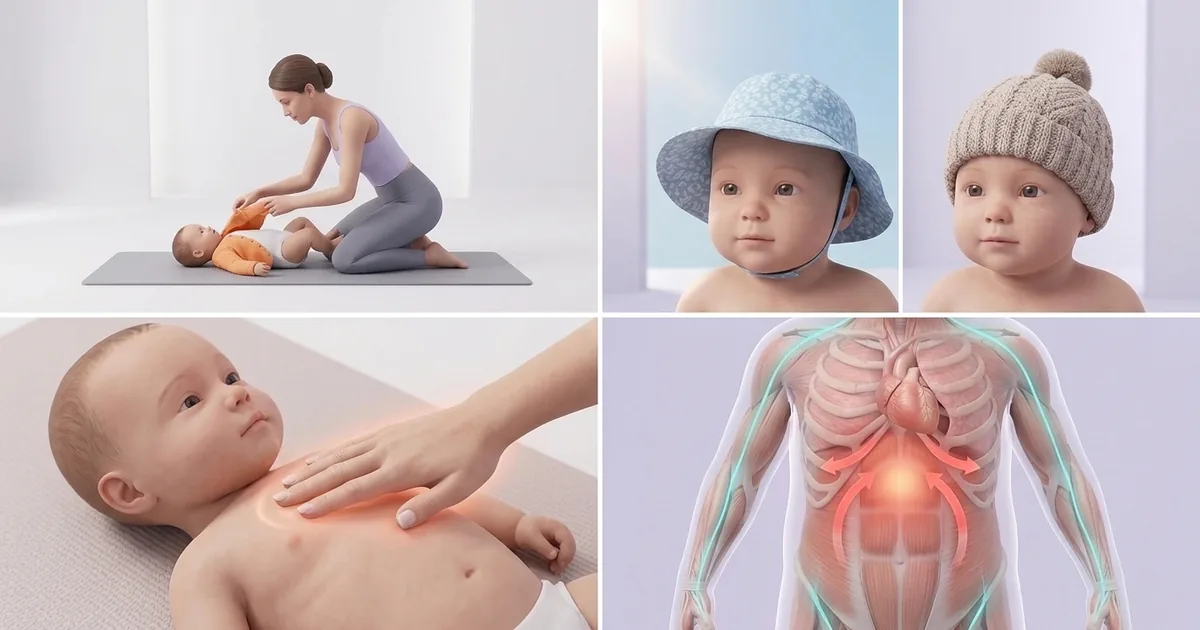
A baby regulates their temperature less well than an adult. The rule of thumb midwives use: dress your baby in one layer more than you're wearing in the same room. Comfortable in a t-shirt yourself? A bodysuit plus a light sleepsuit for them. Wearing a jumper? Add a cardigan. It's a starting point, not a law: some babies feel the cold more than others, and that's where the back of the neck comes in.
The real thermometer is the back of the neck
A baby's hands and feet are often cool — that's their normal circulation, not a sign they're cold. To check they're comfortable, place two fingers on the back of their neck. Warm and dry? Perfect. Clammy? They're too warm — take a layer off. Cool? Add one. That single check is worth more than any temperature chart.
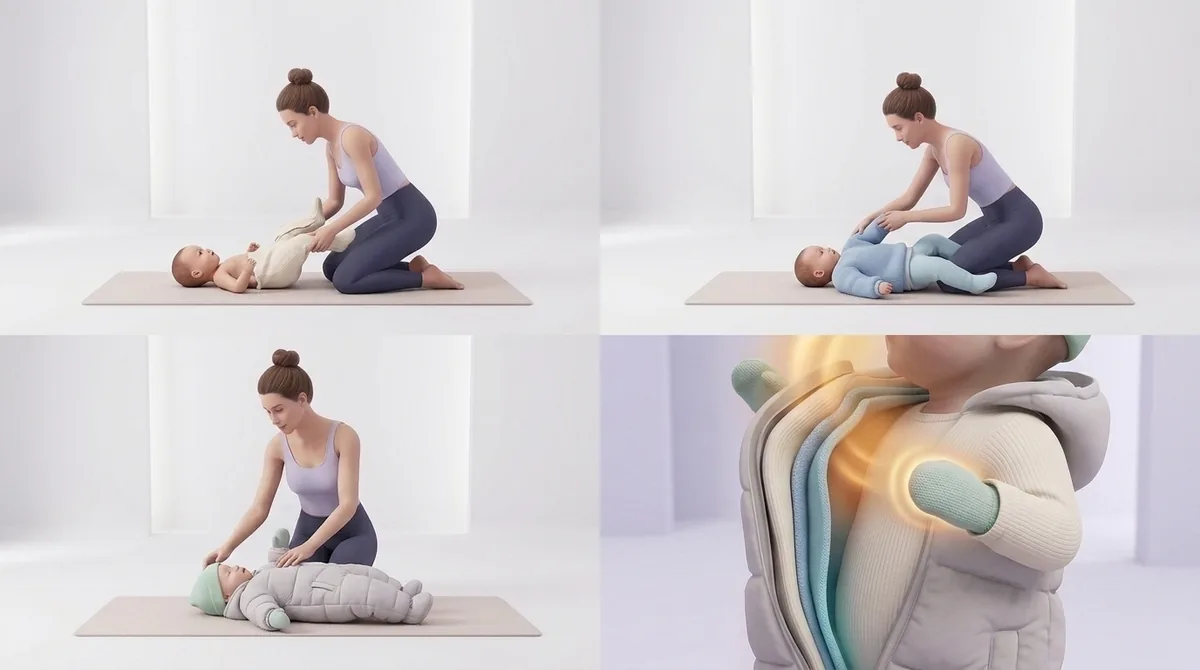
In winter: several thin layers, not one thick one
Three thin layers insulate better than one thick jumper, and above all they adjust: you take one off, put one back on, as the day goes and as you move between indoors and out. A hat is essential outdoors (a baby loses a lot of heat through the head) — and comes off the moment you're back inside. Same reflex in the car: the cabin warms up fast, so unzip.
In summer: light, covered from the sun, never in full glare
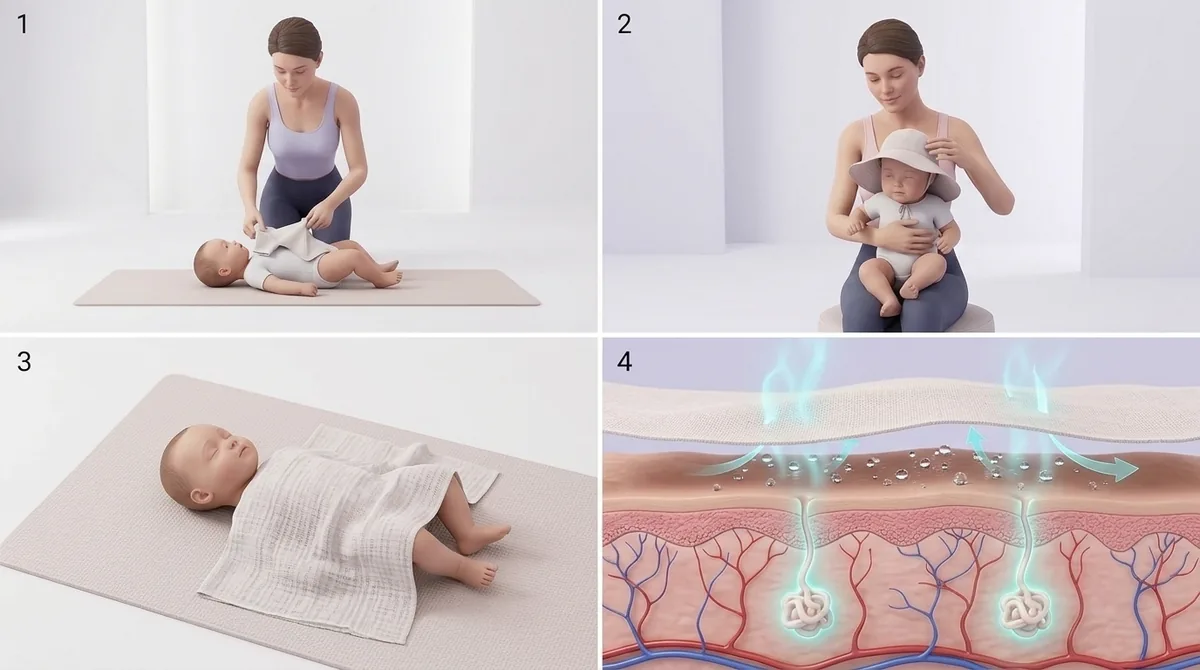
In summer, a single layer of light cotton is often enough — sometimes just a bodysuit. The essentials lie elsewhere: a wide-brimmed hat, loose clothes that cover, and shade. Before 6 months, a baby's skin should not be exposed to direct sun: keep the pram in the shade or under a parasol (never a muslin draped over a closed pram — the temperature climbs underneath), go out before 11 a.m. and after 4 p.m. rather than midday, and offer more frequent breastfeeds or bottles when it's hot.
And at night?
For sleep, no blanket before one year: the sleeping bag does the job, in a room at around 18-20°C. They come in summer (light cotton) and winter (padded) versions — it's the night-time equivalent of the layering rule. Heatwave? Just a bodysuit, or even just a nappy under a very light sleeping bag: a baby who's too warm sleeps badly, and overheating is a known risk factor.
Your questions, answered
How do I know if my baby is too warm at night?
A clammy neck, damp hair, very red cheeks, fast breathing: take a layer off or air the room. On waking, a sleepsuit damp with sweat is also a sign the outfit was too warm.
My baby has cold hands — should I add more layers?
Not necessarily: cool extremities are normal in a newborn. Trust the back of the neck. If it's warm and dry, all is well, even with chilly little hands.
Sunscreen for a 4-month-old baby?
Before 6 months, shade and covering clothes are the absolute priority, not cream. After 6 months, a baby-suitable sunscreen as a complement to — never a replacement for — shade and a hat.
Someone gave me a bedding set with a matching duvet…
Keep it to decorate the room or for after one year: a baby's cot takes no duvet, no pillow, no cot bumper. The sleeping bag keeps them comfortable and safe.
Also worth reading: Safe sleep for your baby: the essentials · Baby's bath: a calm, simple routine
A doubt at 7 a.m.?
The Mama4care assistant answers your everyday questions — "it's 24°C, how do I dress them for their nap?" — and the app keeps track of the weather through your days with your baby.
Download the appSources
This article is for information only and has been reviewed by the Mama4care team. It does not replace medical advice: for any question about your health or your baby's, talk to your midwife, doctor or paediatrician. In an emergency, call your local emergency number.