Travelling while pregnant: the right time, and the right habits
Good news if there's a trip on the horizon: travelling while pregnant is generally safe. A babymoon, a work trip, visiting family — none of it is off the table just because you're expecting. There's a comfortable window that suits it best, and a handful of simple habits that make the journey easier on your body. Get those right and you can pack your bag without a knot in your stomach.
When to go: the second trimester wins
If you have a choice of dates, the second trimester (around 14 to 28 weeks) is usually the sweet spot. The early nausea and heavy tiredness of the first trimester have often eased, and the bulk and fatigue of the final weeks haven't arrived yet — so you feel more like yourself and move more easily. It's not that travel is off-limits at other times; it's simply that this middle stretch tends to be the most comfortable for a trip.
Flying: keep moving, wear the belt low
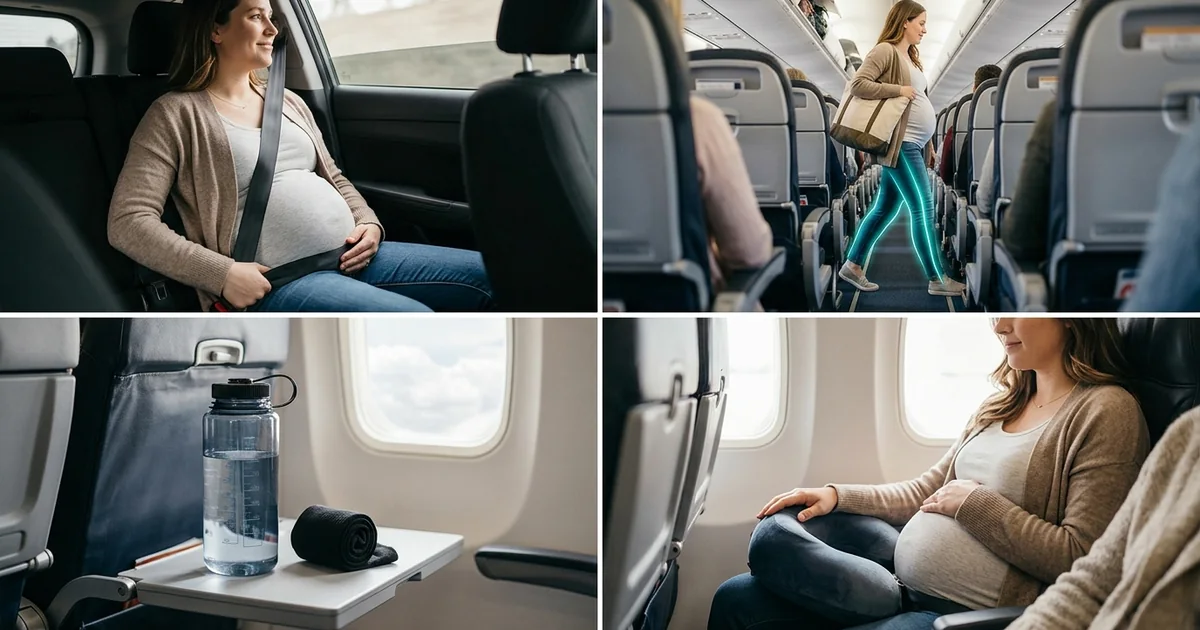
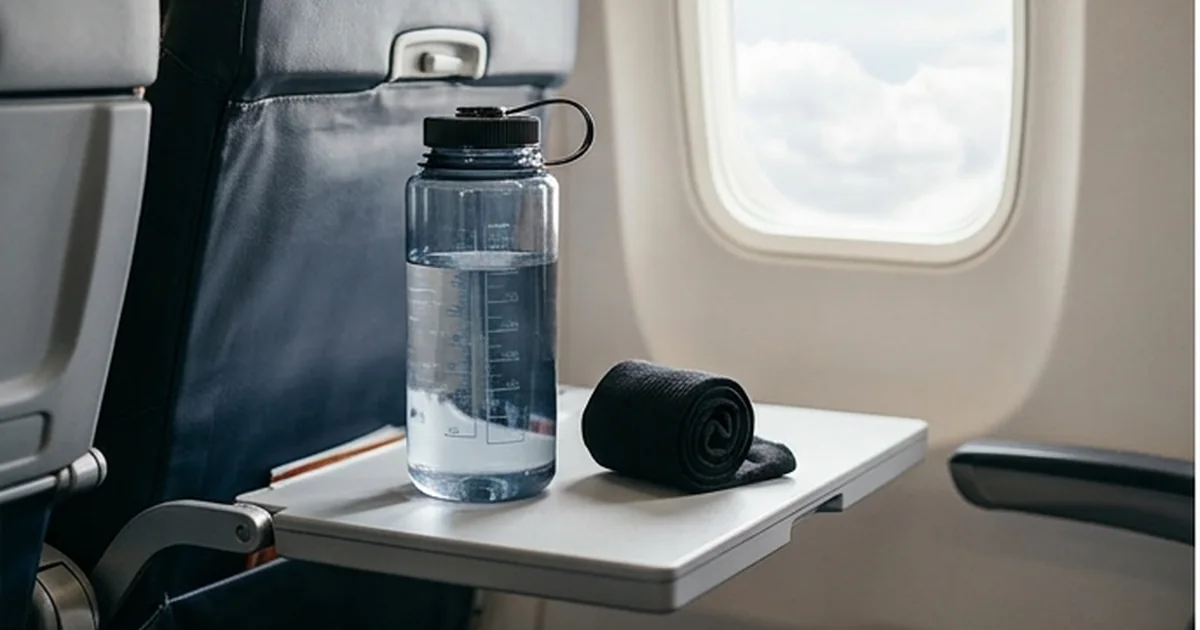
Many airlines accept pregnant passengers up to around 36 weeks, and often ask for a certificate after roughly 28 weeks — so check the airline's policy before you book, as it varies. On board, the real thing to manage is staying still for too long, which can affect the circulation in your legs. Get up and walk the aisle regularly, keep well hydrated, consider compression stockings, and wear the seatbelt under your bump, low across the hips. Small, frequent movements are what keep a long flight comfortable.
By car: the seatbelt, worn the right way
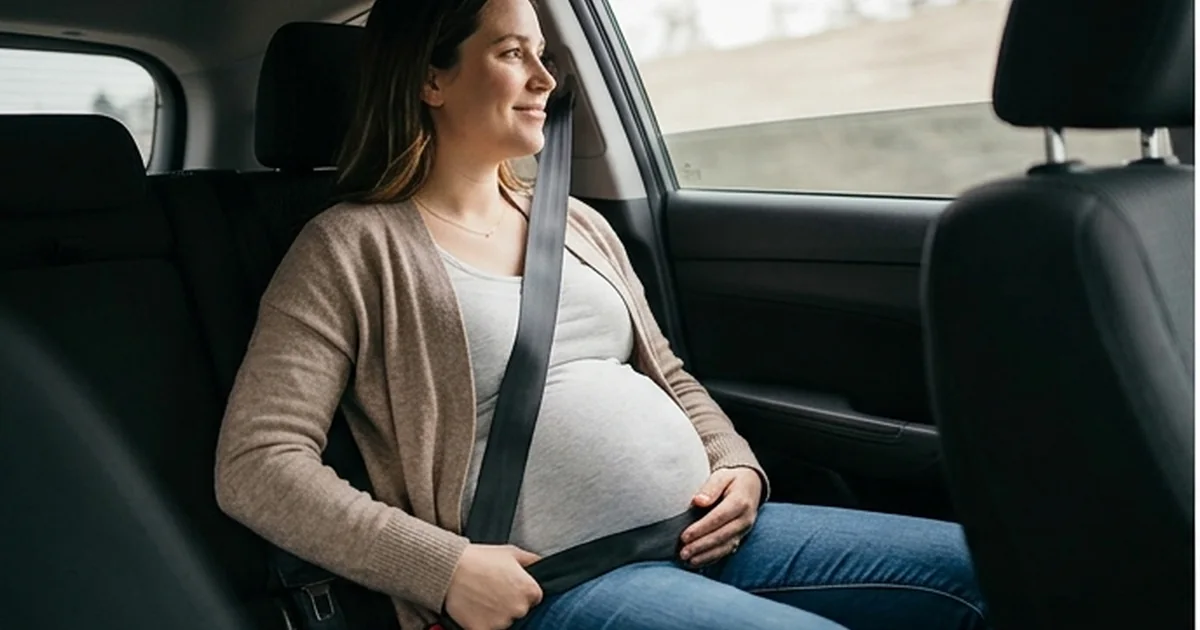
In the car, the three-point seatbelt stays essential — the question is only how you wear it. Put the lap strap low, under your bump and across your hips, never over the top of it, and run the diagonal strap between your breasts and to the side of the bump. On longer drives, stop roughly every two hours to get out, stretch and walk a little, which does your back and your circulation a favour. The belt isn't a risk to your baby; worn properly, it's exactly what protects you both.
Before you leave: a short checklist
A little planning smooths the way. If your pregnancy is being followed as higher-risk, ask your midwife or doctor before booking. Pack your maternity notes, look up where you'd get care at your destination and check that your travel insurance covers pregnancy. Some destinations need extra thought — areas with Zika or malaria, for instance, warrant medical advice beforehand. And the everyday basics still apply: stay hydrated, don't run yourself into the ground, and build in rest.
Your questions, answered
How late in pregnancy can I fly?
Often up to around 36 weeks, but it depends entirely on the airline — many ask for a certificate after roughly 28 weeks. Always check the specific policy before booking, and carry any certificate they require with you.
Isn't the seatbelt dangerous for the baby?
No — the seatbelt is essential and protects you both. The key is placement: the lap strap goes low, under your bump, across your hips, with the diagonal strap between your breasts. Worn that way, it's exactly right.
Can I travel in the first trimester?
Yes, it's possible. The main thing is that early nausea and tiredness can make it less comfortable, which is why many women find the second trimester an easier time to go. If you feel well, there's no rule against travelling earlier.
Also worth reading: The hospital bag: the checklist that takes the stress away · Contractions: how to recognise real labour (and the 5-1-1 rule)
Mama4care comes with you, wherever you go
Tracking, reminders and your assistant travel in your pocket — so even far from home, you can keep an eye on how you're doing and get answers to the small questions along the way.
Download the appThis article is for information only and has been reviewed by the Mama4care team. It does not replace medical advice: for any question about your health or your baby's, talk to your midwife, doctor or paediatrician. In an emergency, call your local emergency number.