Nappy changes without the drama (and how to keep rash away)
You’ll do this thousands of times, so it’s worth doing it comfortably: the nappy change (or diaper change, depending on which side of the Atlantic you learned the word) is one of the great rituals of the first year. The good news is that it’s simple once you have a routine — and that the same small habits that make changes calmer also keep nappy rash away. Here’s the whole thing, step by step, without the stress.
Set up before you start — everything within arm’s reach
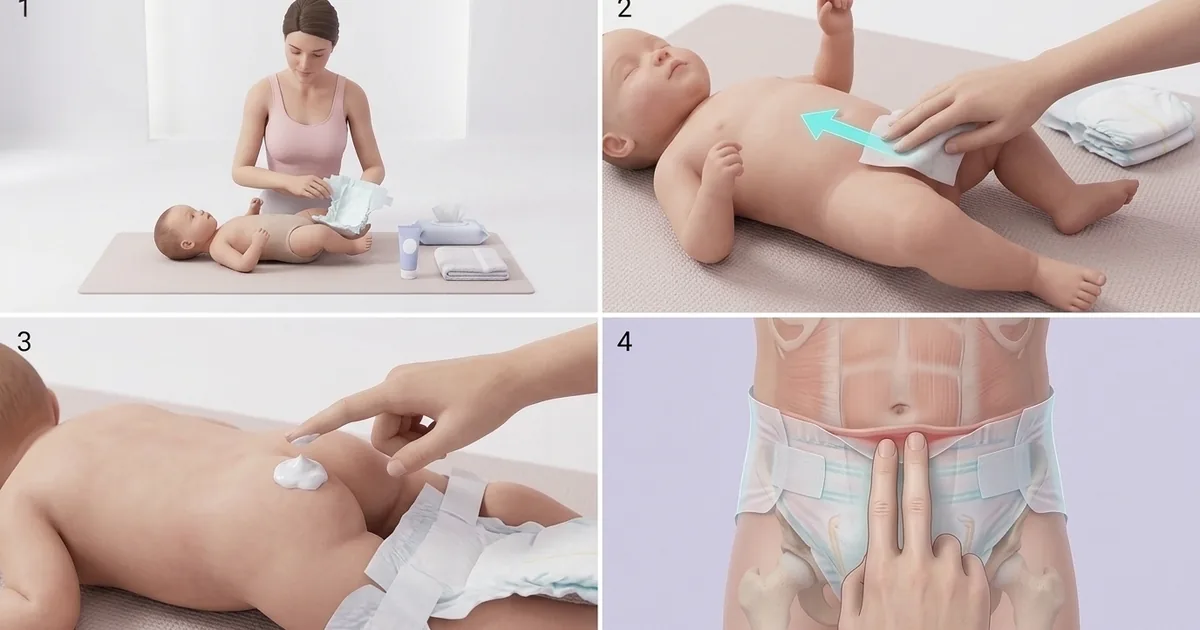
The golden rule of changing happens before the nappy comes off: gather everything you need first. That means a fresh nappy, wipes or cotton wool with warm water, barrier cream, and a change of clothes for the inevitable surprise. On a raised changing table, keep one hand on your baby at all times — even a newborn can wriggle in a way that catches you off guard, and it only takes a second. Never step away, and let the phone ring. If you’d rather not think about it at all, there’s a beautifully simple alternative: change your baby on a mat on the floor. Nobody can fall off the floor — it’s the zero-risk option, and plenty of parents use nothing else.
The gentle clean, step by step
Open the nappy, use its clean front edge for a first swipe if needed, and clean thoroughly — including in all the little folds, where moisture likes to hide. Always wipe front to back, which matters especially for girls: it keeps germs away from the urinary area. Then pat the skin dry rather than rubbing; damp skin under a fresh nappy is exactly what rash loves. And once a day or so, let your baby have a little nappy-free air time on a towel — bare-bottom kicking is both excellent for the skin and, frankly, adorable.
Keeping rash away
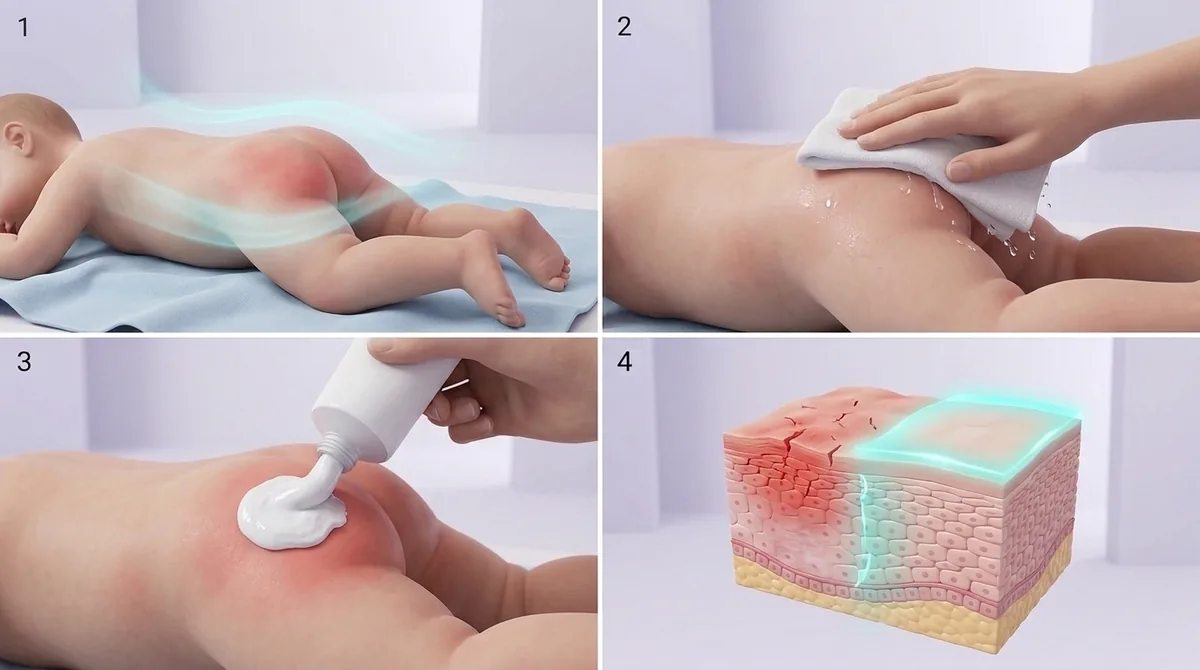
Most nappy rash comes down to one thing: skin sitting too long against wetness. So the best prevention is beautifully boring — change promptly after every poo, change wet nappies often, and finish with a thin layer of barrier cream (a zinc oxide type) to shield the skin until the next change. Fit matters too: a nappy that’s too tight traps moisture and rubs, while one that’s too loose leaks. Check the size on the packet as your baby grows, and do the two-finger check — you should be able to slide two fingers flat between the nappy and your baby’s waist. With these habits, most mild rashes settle within a few days, and many never appear at all.

The cord-stump weeks
In the first days, your baby still has their umbilical cord stump — and it does best when it stays clean and dry. The trick at changing time: fold the top edge of the nappy down below the stump so it sits in the open air instead of rubbing against the nappy or catching moisture. Keep doing this until the stump falls off on its own, then carry on changing exactly as before, one fold lighter.
Making changes calmer for both of you
A nappy change is also a little face-to-face date, several times a day. Warm hands, a song, a running commentary on the state of affairs — babies love the attention, and a distracted baby is a cooperative baby. A small toy reserved only for the changing mat can buy you precious seconds with an older, flippier baby. And if a change goes badly — tears, mess, a strategic wee mid-change — that’s not a failure, that’s Tuesday. Reset, laugh if you can, and know that you’ll both get faster at this than you can currently imagine.
Your questions, answered
How many nappies a day is normal for a newborn?
Many — and that’s a good thing. Frequent wet and dirty nappies are one of the most reassuring signs that your baby is feeding well. The exact count varies from baby to baby and settles into its own rhythm; if your baby’s nappies suddenly become much rarer, mention it to your midwife or doctor.
Wipes, or cotton wool and water?
For the first weeks, or for sensitive skin, plain warm water and cotton wool are the gentlest option. Later on, fragrance-free wipes are perfectly fine for everyday changes — and undeniably handy when you’re out and about.
Should I use talcum powder?
No — talc isn’t recommended for babies. It doesn’t protect the skin the way a barrier cream does, and the fine powder isn’t good for little lungs. A thin layer of zinc oxide cream does the job better and more safely.
Should I wake my baby at night for a change?
Only if the nappy is soiled or truly soaked — otherwise, let them sleep. When a night change is needed, make it quick, dim and deliberately boring: low light, no chatting, no play. The message is “night is for sleeping”, and babies take the hint surprisingly well.
Also worth reading: Tummy time: the 5-minute habit that builds your baby’s strength
Your baby’s rhythm, at a glance
Log nappies and feeds in Mama4care with one tap — the pattern view helps you see what’s normal for your baby, and spot early when something changes. And the assistant is there for your questions, 24/7.
Download the appThis article is for information only and has been reviewed by the Mama4care team. It does not replace medical advice: for any question about your health or your baby’s, talk to your midwife, doctor or paediatrician. In an emergency, call your local emergency number.