Coping with labour pain: your comfort toolkit before the epidural
- Before an epidural — or right alongside one — plenty of drug-free methods genuinely help: breathing, movement and a birth ball, massage and counter-pressure, heat, water, TENS, and a calm room.
- They work to different degrees for different people, they carry low risk, and they stack.
- Your birth partner has a real, hands-on role in most of them.
- Reaching for these doesn't rule out asking for medical pain relief later — it was never either/or.
Why the "comfort toolkit" is having a moment
More and more women are walking into labour wanting to know what they can do themselves before, or instead of, an epidural. It's not about being a hero or scoring points — it's about having options in the room, especially in early labour when an epidural may not be on the table yet. The good news is that the toolkit is real and well established. None of it promises to erase the pain, but each piece can take the edge off, keep you feeling in control, and buy you calm. And because these methods are low-risk, you can combine several at once and swap between them as your labour changes.
Keep moving — your body already knows the way
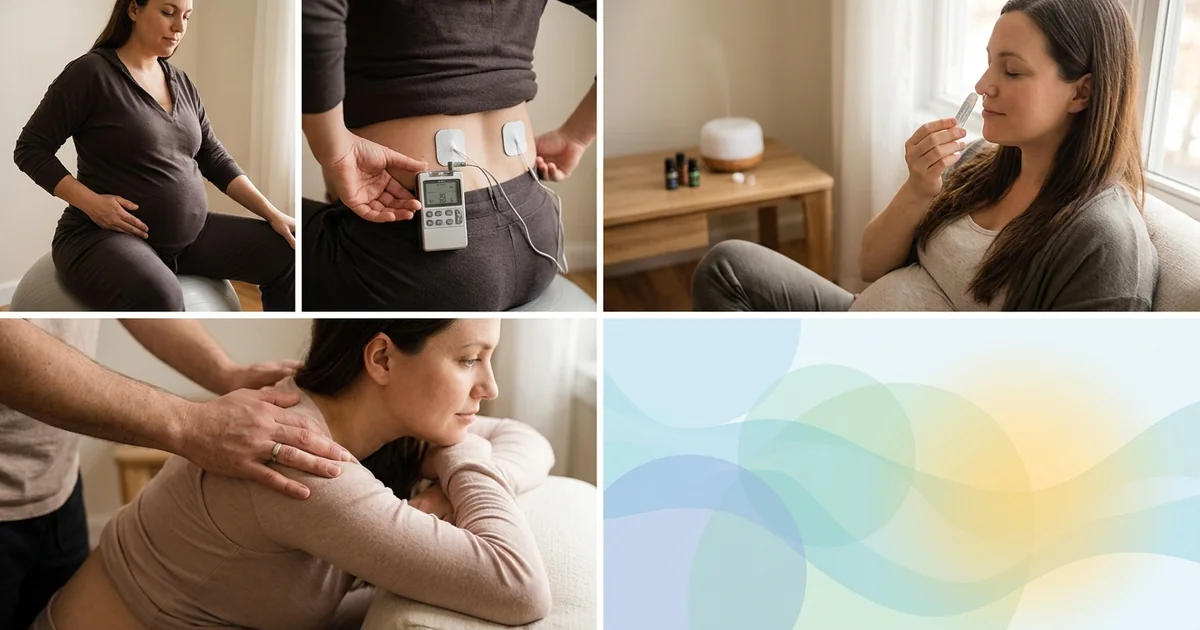
Staying upright and mobile is one of the most underrated things you can do. Walking, swaying, rocking on a birth ball, leaning over the bed, getting onto hands and knees — changing position helps you cope with each contraction and can help your baby find their way down. A birth ball in particular gives you somewhere to rock and open your hips without holding your own weight. The instinct to stay still and brace is understandable, but movement usually serves you better than stillness. Follow what your body reaches for.
Breathe long, and soften the fear
Breathing sounds almost too simple to matter, until you try it under a contraction and feel it work. The core idea is to make the out-breath longer and slower than the in-breath, which nudges your nervous system out of panic mode. Add a calm image to settle into — a wave rising and falling, a place you feel safe — and you've got the backbone of relaxation for labour. This is exactly the territory that hypnobirthing builds on: less fear means less tension, and less tension means the pain has less to grip. A few minutes of practice in the weeks beforehand pays off when it counts.
The power of a good pair of hands
This is where your partner earns their place. Firm massage on the lower back, and steady counter-pressure — pressing into the base of the spine or hips during a contraction — can be a real relief when back pain is fierce. It gives your partner something concrete and genuinely useful to do, instead of hovering and feeling helpless, and it gives you a point of contact to lean into.

Heat, water, TENS and a room that feels safe
A warm compress on your lower back, a hot shower, a soak in a warm bath — heat and water are old, reliable friends in labour, easing tension and offering somewhere to escape the intensity for a while. A TENS machine is another option: a small device that sends gentle electrical pulses through pads on your lower back, most useful in early labour and best started early rather than once things are full-on. And don't underestimate the room itself — dim lighting, your own music, a familiar smell. Aromatherapy and a calm atmosphere won't take pain away, but comfort is worth having for its own sake. The message underneath all of it: starting with these tools and then asking for more if you need it is not a failure. It's a plan.
Also worth reading: Giving birth in water · Hypnobirthing, explained
Walk into labour feeling prepared
Mama4care helps you practise breathing and relaxation, plan your comfort tools, and note the questions you want to ask your midwife — so nothing gets lost on the day.
Download the appInformation current as of July 20, 2026. Recommendations evolve, and your midwife or doctor remains the reference for your situation.
This article is for information only and has been reviewed by the Mama4care team. It does not replace medical advice: for any question about your health or your baby's, talk to your midwife, doctor or paediatrician. In an emergency, call your local emergency number.