Giving birth in water: is a water birth right for you?
- Sinking into warm water during labour helps you relax and take the edge off the pain — it's one of the gentlest tools on the menu.
- It's offered for low-risk pregnancies, always with midwives present.
- You can labour in the pool and step out to give birth, or actually give birth in the water — both count as "water birth."
- The team checks you're a good fit and may ask you to leave the pool if anything needs a closer look.
- It isn't available in every unit, so it's worth raising early rather than on the day.
Why the pool keeps winning people over
Ask around and you'll notice water birth coming up more and more — in birth plans, in antenatal classes, in the questions mothers bring to their midwives. The appeal isn't hard to understand once you've felt what warm water does to a tired, aching body. It makes you lighter. Suddenly you can shift position, kneel, lean and float in ways that feel impossible on a bed, and that freedom of movement matters when you're working through contractions. The warmth loosens tense muscles, the buoyancy takes weight off your back and hips, and the whole experience tends to lower the tension that feeds pain. Less tension, more calm, more control — for a lot of women that adds up to genuinely better pain management, without a single drug involved.
Labouring in water vs. being born in water
These two get blurred together, but they're worth separating in your head. You might choose to spend part of your labour in the pool purely for comfort and then climb out to actually deliver your baby on dry land — that's using the water as pain relief. Or you might stay in and have your baby born into the water, which is a water birth in the fullest sense. Neither is more "correct" than the other, and you don't have to decide the whole thing in advance. Plenty of women plan to give birth in the pool and change their mind mid-labour, or plan only to labour there and end up staying. Both doors stay open.
Who it's usually offered to, and how it actually works
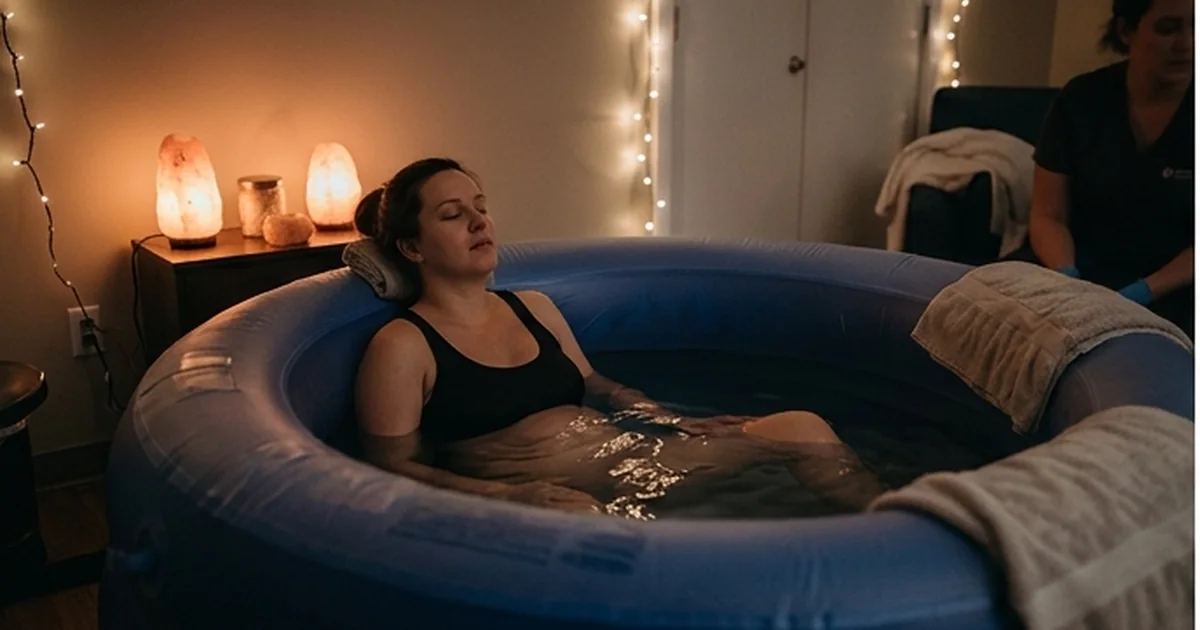
Water birth is generally offered when the pregnancy is straightforward: full term, low risk, a single baby lying head-down, and no complications flagged along the way. If that's you, here's roughly how it looks. You settle into a birth pool or purpose-built bath filled with water kept at around body temperature — comfortably warm, never hot. Trained midwives stay with you throughout, and they keep an eye on your baby's heartbeat using a waterproof Doppler that works while you're submerged, so monitoring carries on without you having to get out for it. The room is usually quiet and dimly lit, which is part of the point — the water is doing calming work, and the setting is there to back it up rather than fight it.
What it means for your birth plan
If the idea draws you in, write it into your birth plan so the team knows it's what you're hoping for — while holding it loosely. A birth plan is a set of preferences, not a contract, and water birth is a preference that depends on how the day unfolds and what's available. Look into whether your chosen place offers it, visit if you can, and understand that you're allowed to change your mind at any point: get in, get out, ask for other pain relief, or step away from the whole idea. The water is there to serve your labour, not to lock you into it.
Also worth reading: Coping with labour pain without medication · Recognising real labour with the 5-1-1 rule
Plan the birth you want, one step at a time
Mama4care helps you build your birth preferences, keep your questions for your midwife in one place, and understand your options as your due date gets closer.
Download the appInformation current as of July 20, 2026. Recommendations and local availability change over time, and your midwife or doctor remains the reference for your situation.
This article is for information only and has been reviewed by the Mama4care team. It does not replace medical advice: for any question about your health or your baby's, talk to your midwife, doctor or paediatrician. In an emergency, call your local emergency number.