Harvesting colostrum before birth: what antenatal expressing is really about
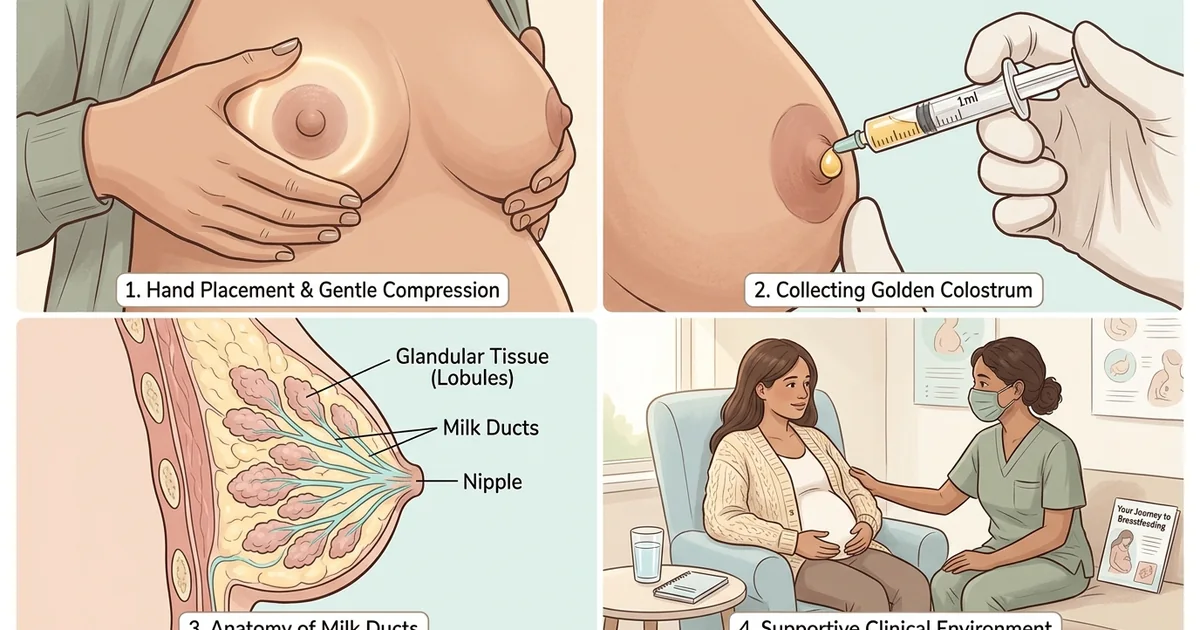
- Antenatal expressing means hand-collecting a few drops of colostrum in late pregnancy — often from around 36–37 weeks — to build a small stash.
- It's especially useful if you have diabetes, or if there's a chance your baby might need a top-up early on.
- Only start with your midwife's go-ahead: stimulating the nipples can bring on contractions.
- You freeze it in labelled syringes and bring them in to the hospital when your baby arrives.
First, what colostrum actually is
Before your mature milk comes in, your body makes colostrum — the very first milk, produced in tiny amounts and often a rich golden colour. Small doesn't mean unimportant: colostrum is concentrated, packed with antibodies and exactly what a newborn's system is built for in the first days. Your breasts are already making it during pregnancy, which is the whole reason it's possible to collect a little ahead of time.
Why some mothers collect it ahead of time
The idea catching on lately is simple: gather a small reserve before the birth, so it's ready if you need it. For most women it's a bit of reassurance — a head start on feeding, a backup tucked in the freezer. For some it's more practical than that. If you have diabetes, for instance, your baby can be more prone to low blood sugar in the early hours, and having your own colostrum on hand can mean feeding them your first milk rather than reaching for formula. It can also smooth things if your baby is expected to need a little extra support. None of this is a requirement — it's a small safety net that some families like to have.
How antenatal expressing is actually done
It's done by hand, gently, never by yanking or forcing. Wash your hands first. Warmth helps — many women express after a warm shower. You massage the breast softly, then compress the areola (the darker area around the nipple) between finger and thumb, easing rather than pinching, and catch the drops that appear on a small syringe. A few minutes per breast is plenty; this is drops, not ounces, so don't measure your success in volume. Cap the syringe, label it, freeze it. Your midwife or a breastfeeding supporter can show you the technique so it feels natural before you try it on your own.
When to start — and why there's zero pressure
For a term pregnancy, expressing usually starts around 36–37 weeks, and only when your midwife has said it's right for you. Think of it as an optional extra, not a box to tick. If you do it, lovely — you've got a small cushion ready. If you don't, nothing is lost and nothing has "failed": your body will make colostrum on the day just the same, and plenty of feeding journeys start beautifully with no stash at all. The point is peace of mind, and it only counts as peace of mind if it isn't stressing you out.
Also worth reading: Breastfeeding positions and a good latch · Expressing and storing breast milk
A calmer run-up to feeding your baby
Mama4care keeps your late-pregnancy plans and questions in one place, so you can raise antenatal expressing with your midwife and prepare for feeding with confidence.
Download the appInformation current as of July 20, 2026. Guidance evolves, and your midwife or doctor remains the reference for whether antenatal expressing is right for you.
This article is for information only and has been reviewed by the Mama4care team. It does not replace medical advice: for any question about your health or your baby's, talk to your midwife, doctor or paediatrician. In an emergency, call your local emergency number.