Foods to avoid in pregnancy — and the easy swaps that keep you eating well
Read enough lists online and pregnancy can start to feel like one long menu of "no". The reality is much kinder: the foundation stays a varied, balanced diet, and the genuine watch-points are surprisingly few. A handful of foods carry a small risk of infection or of too much of a certain vitamin — and almost every one of them has a simple swap. So this isn't a guide about giving things up. It's a guide about eating well, with confidence, right through your pregnancy.
The short list that actually matters
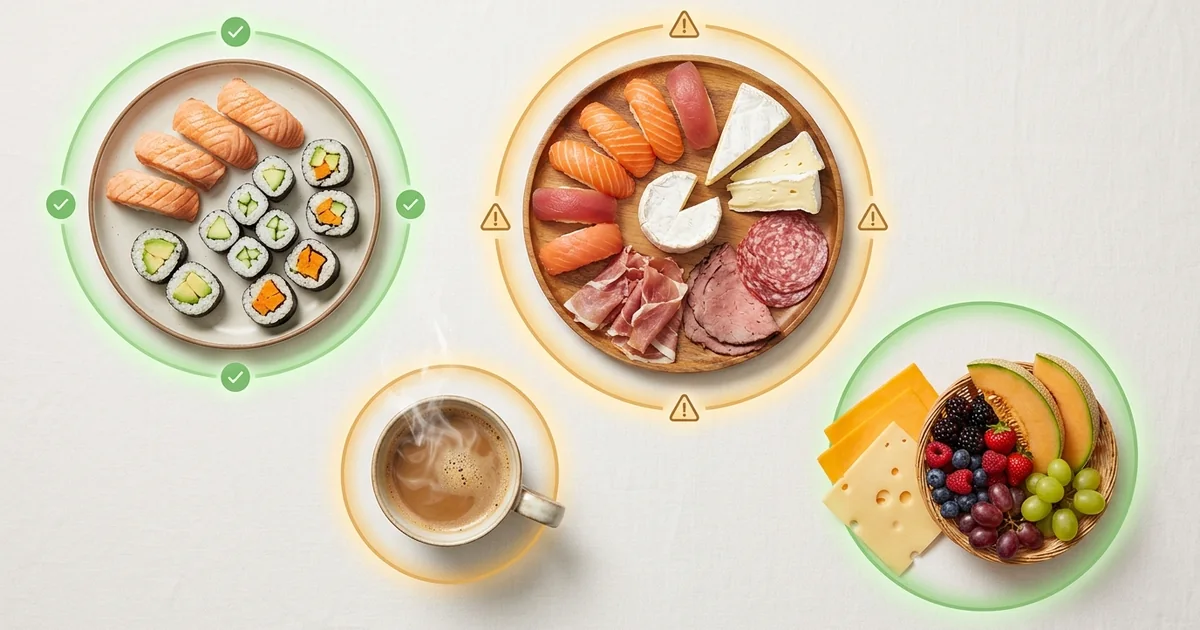
A few foods are best set aside because of infections like listeria, toxoplasmosis or salmonella, or because of an excess of vitamin A. The ones worth knowing: unpasteurised cheeses and soft mould-ripened cheeses (the bloomy-rind kind); raw cured charcuterie and any raw or undercooked meat and fish; raw or lightly cooked eggs; high-mercury fish such as swordfish, shark and marlin (and tuna kept to a limit); liver and pâté, which are very rich in vitamin A; and unpasteurised milk and dairy. Two more simple rules round it off: keep caffeine to about 200 mg a day (roughly two mugs of filter coffee, remembering that tea, cola and chocolate count too), and alcohol at zero. Wash fruit and vegetables well before eating them, which takes care of the toxoplasmosis question.
The swaps that mean you're not missing out
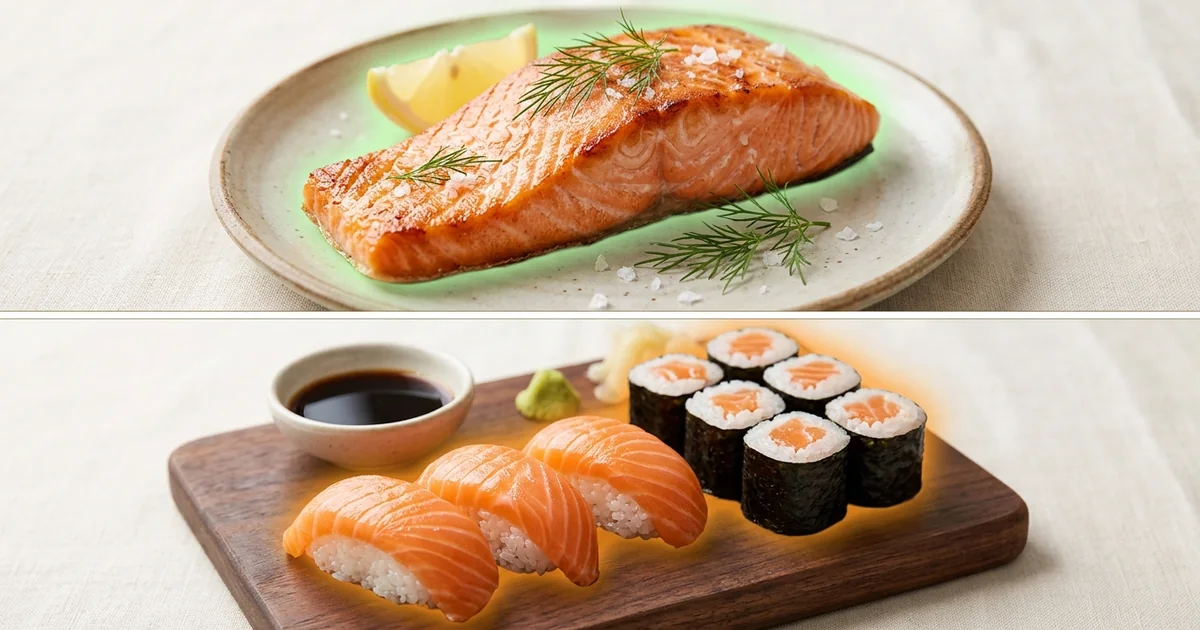
Here's the good news the scary lists forget to mention: for nearly everything on the "careful" side, there's a version you can enjoy freely. Craving sushi? Go for the cooked or vegetarian rolls. Love cheese? Pasteurised ones are on the menu — mozzarella, hard cheeses like cheddar or parmesan, pasteurised feta. Missing charcuterie? Cooked ham and other fully cooked options do the trick. Fish stays a friend when it's well cooked — salmon, for instance, is a lovely choice. And for the aperitif, a mocktail keeps the ritual without the alcohol. Put together, that's a plate that's still generous, colourful and full of pleasure.
Cooking and storing: small habits, big reassurance
Beyond the shopping list, a few kitchen habits keep things safe. Cook meat, poultry and fish right through, so there's no pink or translucent centre. Keep the fridge properly cold and don't leave cooked food sitting out. Wash your hands, boards and knives after handling raw meat, and rinse salads, fruit and vegetables carefully — soil is where toxoplasmosis hides. And if you garden or empty a cat's litter tray, gloves and a good hand-wash afterwards are the sensible move. None of this needs to be stressful: it's the same care that makes any kitchen a little safer, turned up a notch.
Keep eating for two kinds of pleasure
It's easy to fixate on the small "no" list and forget how much stays firmly on the "yes" side: colourful vegetables and fruit, wholegrains, pulses, well-cooked eggs and meat, pasteurised dairy, nuts, well-cooked fish a couple of times a week. Eating well in pregnancy is far more about what you add — variety, colour, regular meals — than about what you remove. If nausea, cravings or a tight budget make some days harder, that's completely normal; do what you can, and let the overall picture across the week be your guide rather than any single meal.
Your questions, answered
Can I still eat fish?
Yes, and it's encouraged — fish is a great source of protein and good fats. Eat it well cooked, vary the types across the week, and simply limit the high-mercury ones (swordfish, shark, marlin) and keep tuna moderate. Well-cooked salmon, cod and similar are excellent everyday choices.
I ate a "forbidden" food without realising — should I panic?
Most of the time, no. A single slip rarely causes any harm. Don't spiral over it — just mention it at your next appointment, and keep an eye out for any fever or flu-like symptoms in the following days, which is the one thing worth flagging sooner.
How much coffee is okay?
Up to about 200 mg of caffeine a day, which is roughly two mugs of filter coffee. Remember that tea, cola, energy drinks and chocolate add to the total, so count them in when you're pacing your day.
Are all cheeses off the table?
Not at all. The ones to set aside are unpasteurised cheeses and soft mould-ripened (bloomy-rind) types. Pasteurised hard cheeses — cheddar, parmesan, and the like — plus mozzarella and pasteurised feta are all fine. Checking the label for "pasteurised" answers most cheese questions.
Also worth reading: Eating well in the first trimester: the 5 things that count · Prenatal vitamins: the essentials (and what to skip)
Not sure about a food or a product? Scan it
In Mama4care, snap a photo or scan the barcode of a food or a cosmetic, and get a clear read in seconds — so you can settle the "can I have this?" question on the spot and get on with your day.
Download the appThis article is for information only and has been reviewed by the Mama4care team. It does not replace medical advice: for any question about your health or your baby's, talk to your midwife, doctor or paediatrician. In an emergency, call your local emergency number.